
REVIEW · SAN FRANCISCO
Grace Cathedral: Explore the Beauty (Entry + Self-Led Tour)
Book on GetYourGuide →Operated by Grace Cathedral · Bookable on GetYourGuide
Grace Cathedral feels like a whole city lesson in stone and light. I love the Gothic architecture and the way the stained glass turns a simple walk into something memorable. I also love the two labyrinths, plus the Interfaith AIDS Chapel, which gives the visit real heart, not just postcard views.
You’ll get the most value if you’re the type who likes to wander and read at your own speed. The one possible drawback: it’s self-guided, so if you want a live guide explaining everything step-by-step, you may feel a little less “taken care of.”
In This Review
- Why Grace Cathedral Makes Sense for a One-Hour Stop
- Key Things to Notice as You Walk
- Nob Hill Arrival: Getting to Grace Without Stress
- Your $14 Ticket: What You Actually Get in One Hour
- Entering the Cathedral: Gothic Architecture and Stained Glass
- The Ghiberti Doors: Stop, Look, Then Look Again
- Interfaith AIDS Chapel: Where the Visit Gets Personal
- Walk One Labyrinth: A Simple Ritual You Can Do Solo
- Art Inside the Cathedral: Sacred Meets Secular
- Aeolian-Skinner Pipe Organ: The Sound You Might Feel More Than Hear
- Using the 14 Interactive Displays (and the Kids Map)
- How This Visit Flows: A Simple, Efficient Circuit
- Price and Value: Is $14 Worth It?
- Who Should Book This Cathedral Entry
- Quick Practical Notes Before You Go
- Should You Book Grace Cathedral Entry and Self-Guided Tour?
- FAQ
- How much does entry cost?
- How long is the Grace Cathedral experience?
- Is this entry ticket self-guided or guided?
- What languages are available for the interactive tour?
- What should I know about photography inside the cathedral?
- Where is the meeting point / entrance?
- Is Grace Cathedral wheelchair accessible?
- Are there age rules for children?
- What’s included for families?
Why Grace Cathedral Makes Sense for a One-Hour Stop
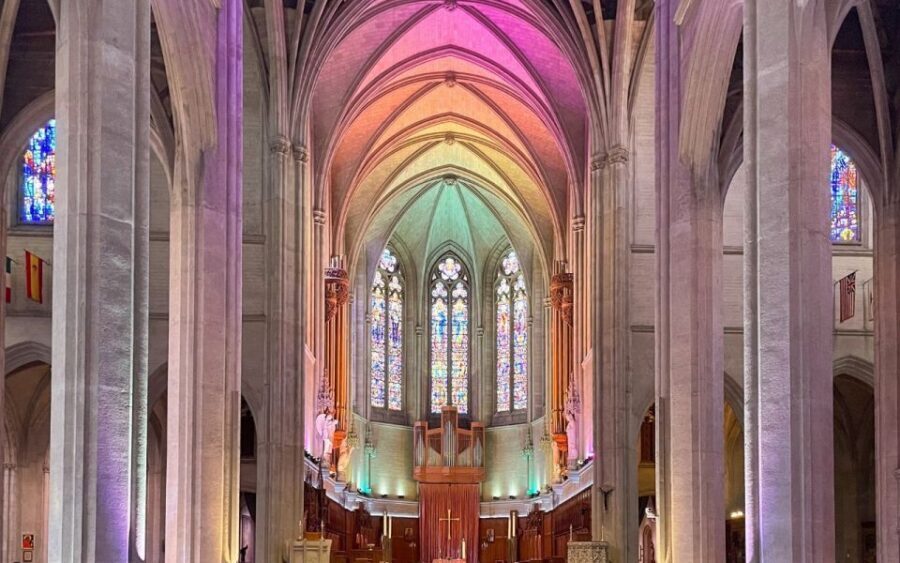
Grace Cathedral is an Episcopal church on San Francisco’s Nob Hill, and it wears its mission on its sleeves and walls. The building is famous for its labyrinths, the Ghiberti doors, stained glass, the Interfaith AIDS Chapel, and an attitude of inclusion that shapes what you’ll see. This ticket lets you step inside and explore on your own schedule, with interactive learning built in.
The cathedral’s location matters too. You’re on Nob Hill, a steep, scenic area where San Francisco history feels close at hand. After the 1906 fire, the city rebuilt its identity—and Grace Cathedral is tied into that story, along with broader world events like the founding of the United Nations.
Key Things to Notice as You Walk
- Gothic design you can literally track through arches, stonework, and the way light moves across the interior
- Stained glass that’s not just pretty—it’s part of the cathedral’s storytelling
- The Ghiberti doors, a standout artistic feature you’ll want to slow down for
- Two labyrinths that give you a simple, guided-feeling activity without needing a group
- Interfaith AIDS Chapel, where the cathedral’s social justice focus becomes very real
- 14 interactive displays in multiple languages, plus a kid-focused treasure hunt map
You can also read our reviews of more tours and experiences in San Francisco.



Nob Hill Arrival: Getting to Grace Without Stress
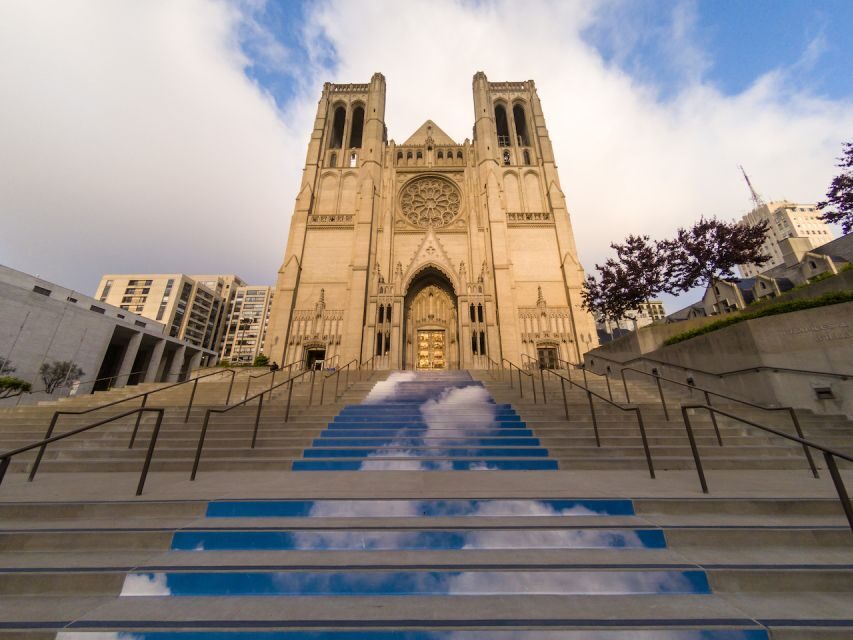
Your experience starts at the top of Nob Hill, with the cathedral reached via the great steps on Taylor Street. That matters because Grace Cathedral is a bit of an “up on a hill” situation—plan a little extra time if you’re coming in on foot, especially if you’re with kids or anyone who prefers to minimize stairs.
For most people, the simplest approach is: get to 1051 Taylor Street, then look for the cathedral entrance. If you’re using the accessible route, Grace has an accessible entrance from the sidewalk right by the steps area, just north of the great steps.
Here’s the accessible path that’s spelled out clearly: enter through the double glass doors at 1051 Taylor Street, turn left, walk down the hall, turn right past the restrooms, continue until you reach the elevator on your right, then take the elevator to the main floor by pushing the button for floor 1. The Grace Cathedral Garage uses the same accessible entrance and has signs directing you.
You don’t need to memorize all that unless you’re using accessibility supports, but it’s a relief that the directions are specific and straightforward.
Your $14 Ticket: What You Actually Get in One Hour
For $14 per person, you’re not paying for a guided hour with a talking head in front of you. You’re paying for entry plus a self-guided learning experience that’s designed to move at your pace.
The ticket includes:
- Entry to explore the cathedral
- An interactive self-guided tour, available in English, Spanish, Chinese, and Korean
- The chance to walk one of the cathedral’s two labyrinths
- A children’s map that turns the visit into a treasure hunt
The biggest “value” here is that the cathedral’s highlights are spread throughout the space, and the learning tools are there to help you connect what you’re seeing. With only one hour, you’ll get more out of your stop if you treat it like a focused circuit: don’t try to read everything cover-to-cover. Pick what matters most to you—architecture, art, social justice, or the labyrinth—and spend your time there.
Entering the Cathedral: Gothic Architecture and Stained Glass
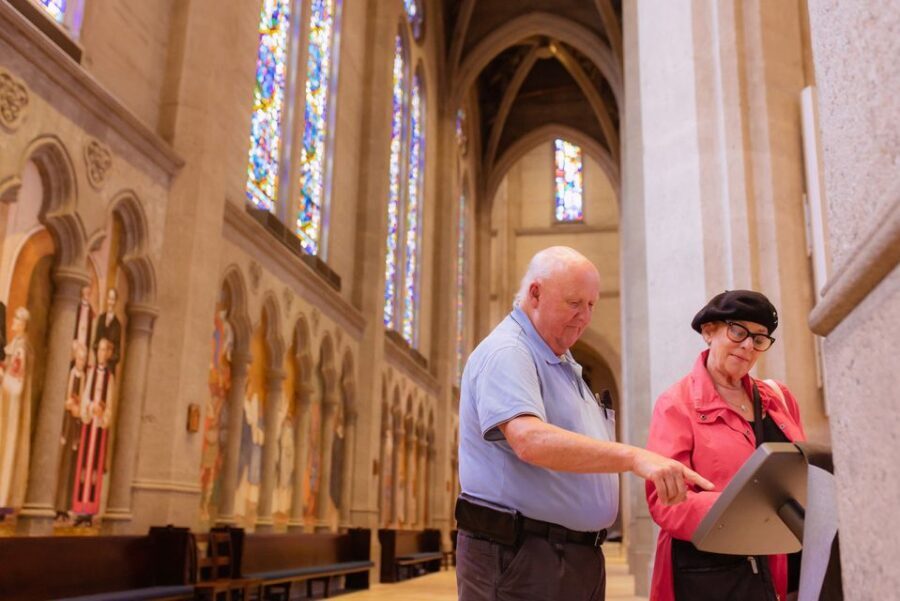
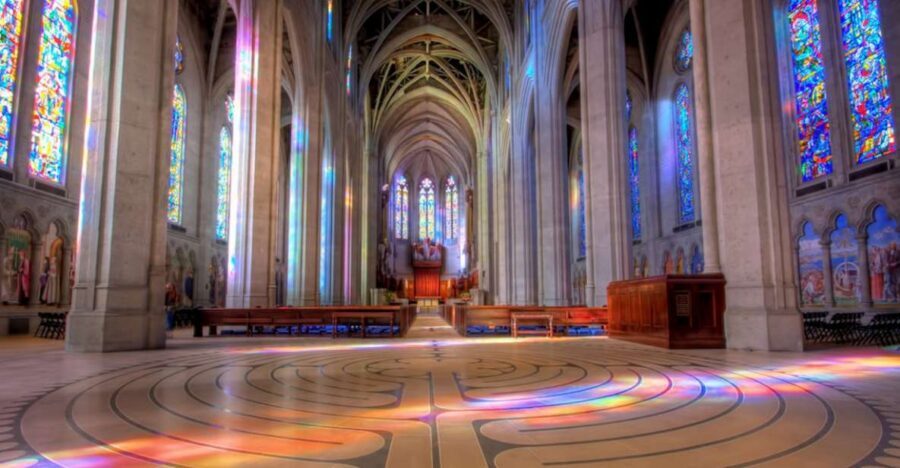
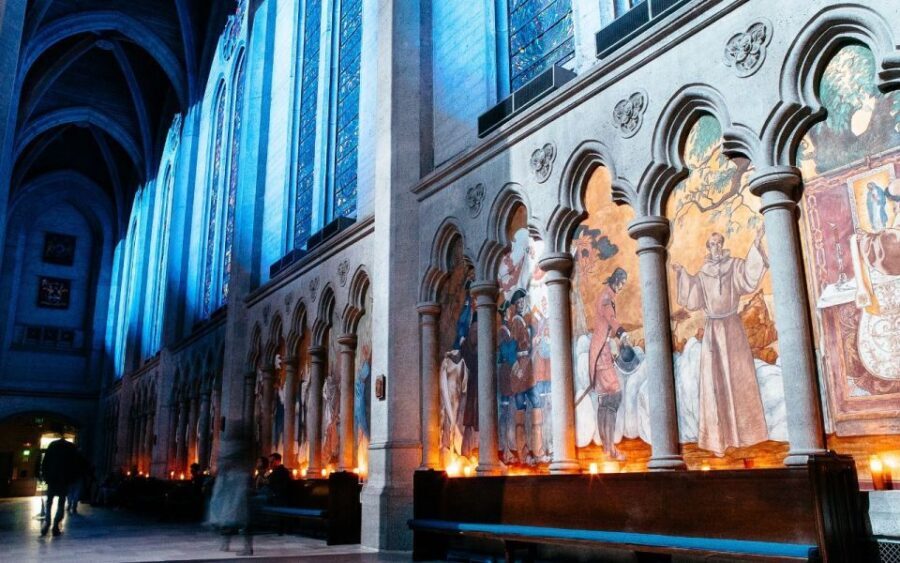
Once you’re inside, the first thing I’d prioritize is how the space works. Grace Cathedral is a Gothic building, and Gothic design isn’t only about old-school romance. It’s about structure—how arches guide your eye, how stone shapes create depth, and how light makes the interior feel layered.
Start by taking your time with the stained glass. These windows aren’t just background decoration; they’re part of the cathedral’s visual language. As you walk, notice how the colors change the mood of the room. Even if you’re not the type who reads every label, the stained glass does most of the explaining for you.
Then look for key architectural features that you can spot quickly: the way the interior frames viewpoints, the cathedral’s dramatic vertical lines, and the carefully placed art elements. You’re moving through a space where the building itself feels like part of the exhibit.
The Ghiberti Doors: Stop, Look, Then Look Again
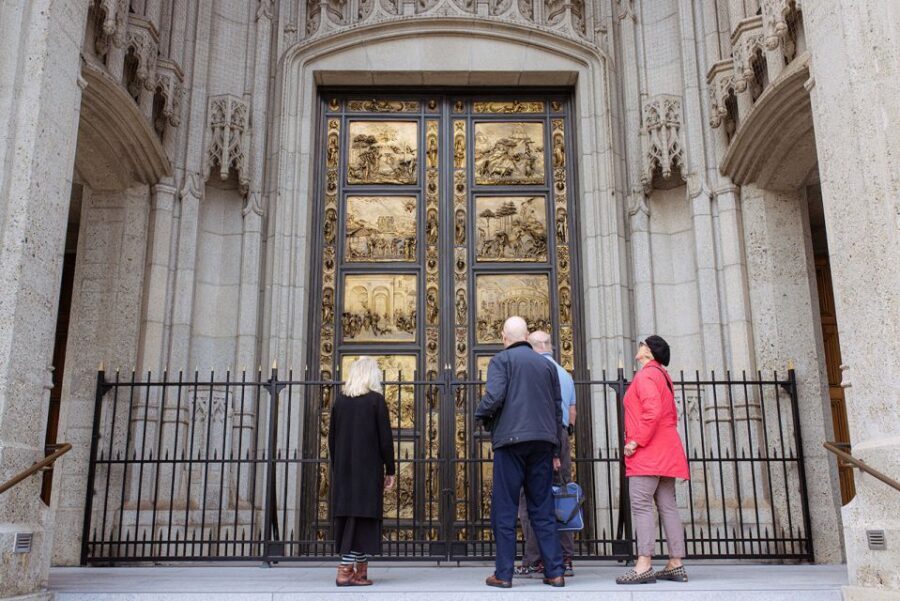
Grace Cathedral is famed for the Ghiberti doors, and they’re the kind of feature that’s worth treating like a mini destination inside the larger cathedral. Doors can be easy to rush past when you’re walking between highlights, but here the doors are a headline item.
When you reach them, slow down and do two passes:
1) First pass for overall design and carving style
2) Second pass to pick out details you might have missed while moving too fast
This is one of those moments where self-guided can actually work in your favor. With no scheduled lecture, you can take the exact time you need to feel like you really saw what you came to see.




Interfaith AIDS Chapel: Where the Visit Gets Personal
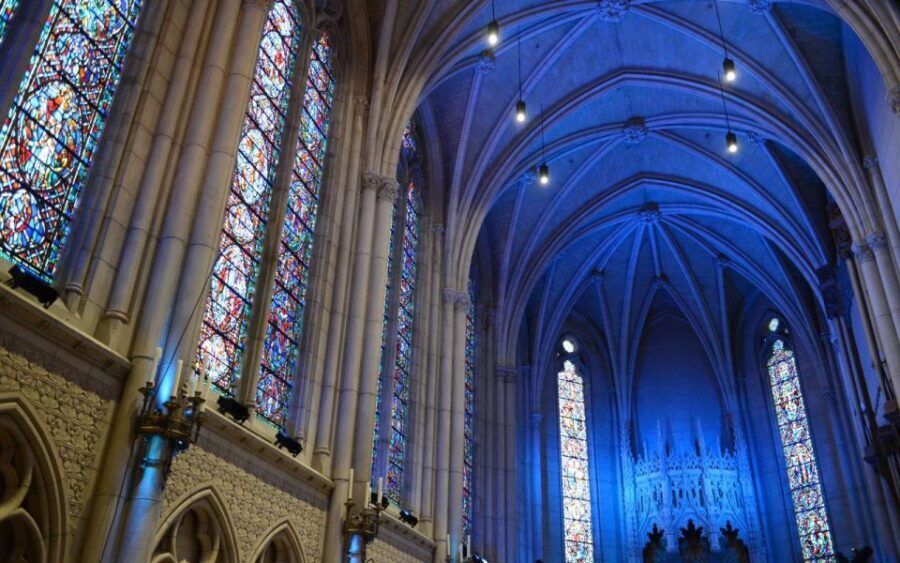
One of the most meaningful parts of Grace Cathedral is the Interfaith AIDS Chapel. It’s not just another room. It reflects the cathedral’s social justice focus and its commitment to inclusion.
What I like about including a chapel like this inside a major tourist site is the way it changes your posture. You’re still in a gorgeous church building, but you’re also in a place with a clear purpose. If you care about human stories, you’ll likely find yourself reading more here than you do elsewhere.
The chapel also fits with the cathedral’s broader mission: Grace isn’t presenting faith as an isolated thing. It ties spirituality to community responsibility and historical realities. That’s part of why the ticket feels more substantial than a quick look at famous architecture.
Walk One Labyrinth: A Simple Ritual You Can Do Solo
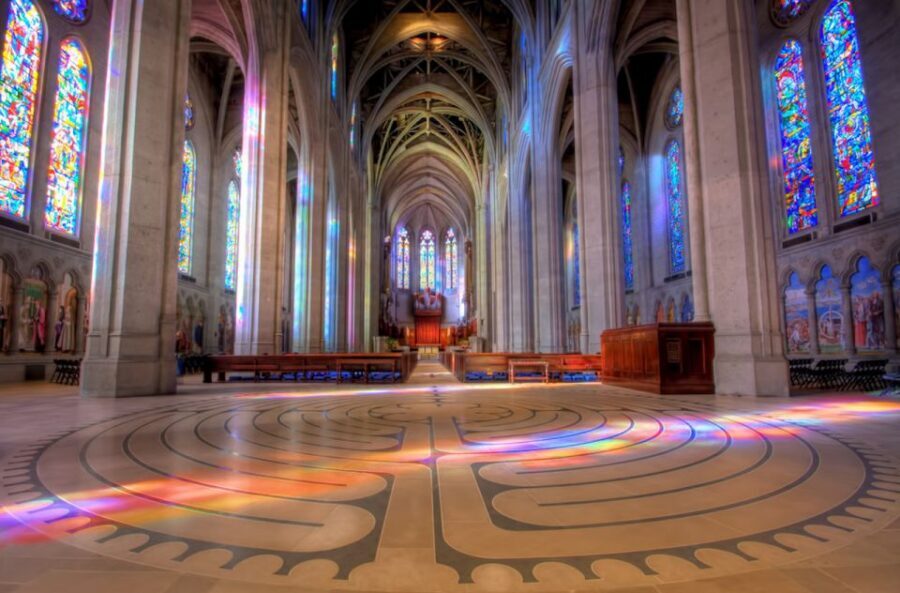
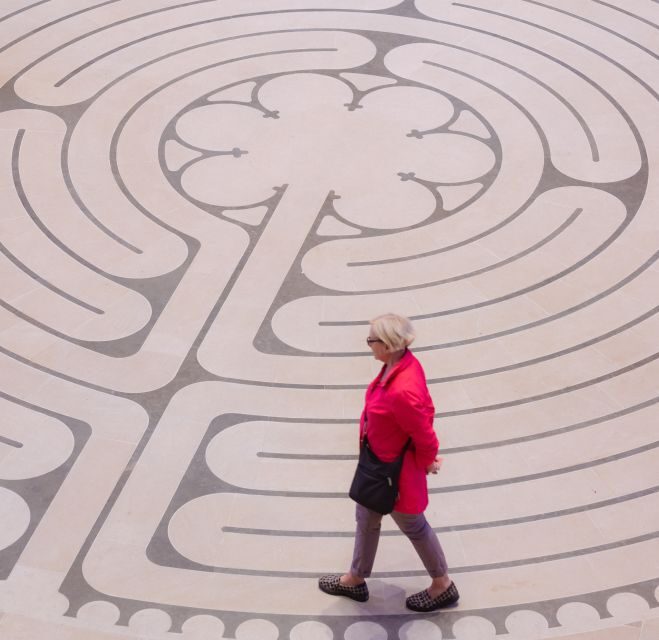
Grace Cathedral is known for labyrinths, and this ticket includes time to walk one of the cathedral’s two labyrinths. Even if you’ve never done one before, you’ll likely understand quickly. A labyrinth offers a structured walk without the complexity of a maze. It’s a clear activity that gives you something to do with your body while your mind catches up.
Since your visit is self-guided, this is a smart way to build in quiet time. Think of it as a reset during your one-hour circuit. If you’re traveling with kids, you can still use the labyrinth as a “calm break” between more visual stops.
If you want the most out of this part, don’t treat it like a photo moment. Let it be a walk first. Photos come afterward, once you’ve finished your path.
Art Inside the Cathedral: Sacred Meets Secular
Grace Cathedral mixes religious and secular art, and that blend is part of its identity. You’ll see works by artists including Keith Haring, David LaChappelle, and Ansel Adams, among others. That matters because it signals what the cathedral thinks art can do: connect people across differences and bring meaning into public space.
What I find practical here is that art becomes an interpretive shortcut. If you’re unsure what you’re looking at, your best move is to follow your instincts first, then use the interactive exhibits to connect the dots.
And because the cathedral is an Episcopal church with an explicit inclusivity mission, the art choices feel intentional rather than random. You’re watching the building make a point: faith and culture aren’t separate worlds.
Aeolian-Skinner Pipe Organ: The Sound You Might Feel More Than Hear
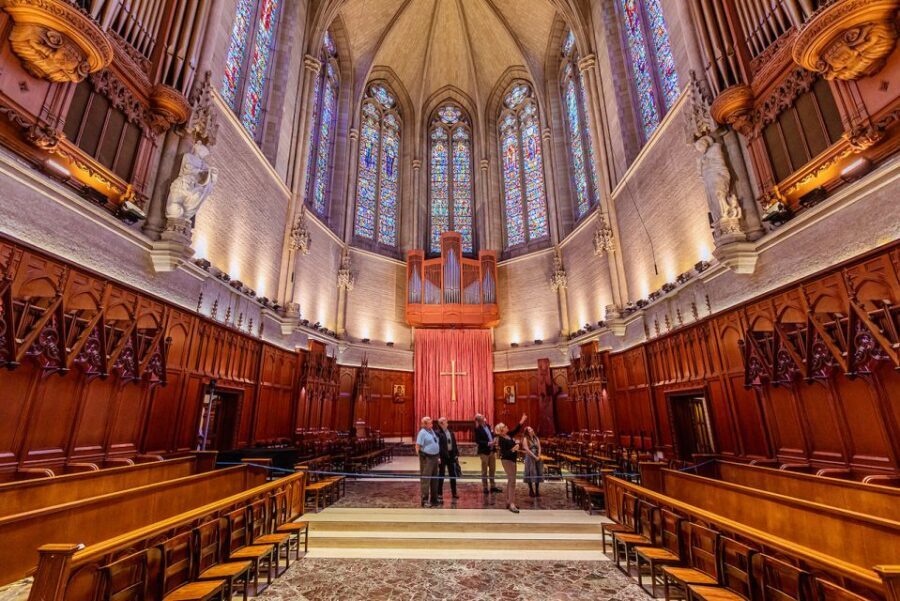
Grace Cathedral also features the Aeolian-Skinner pipe organ. Even if you don’t catch any performances during your visit, the organ’s presence reminds you this is not a museum that treats sacred space as a relic.
The practical takeaway: treat the organ area as a landmark. Pause, look around, and notice how the cathedral’s design supports sound and scale. Pipe organs are built for resonance, and even in silence, you can sense why the cathedral structure would matter.
If your trip plans are flexible enough to align with an organ moment, that would be great. But even without a performance, this is still one of the cathedral’s recognizable “signature” features.
Using the 14 Interactive Displays (and the Kids Map)
This is one of the strongest reasons to buy the ticket instead of simply walking past a landmark. The interactive self-guided tour includes 14 interactive displays and is available in English, Spanish, Chinese, and Korean.
You can think of these displays like “choose-your-own-explanation.” They help you understand the church’s history, art, religion, architecture, and social justice initiatives without forcing you into one rigid narrative.
In a one-hour visit, your best strategy is selection:
- If you care about San Francisco history, prioritize the displays that mention the 1906 fire and the cathedral’s ties to major civic stories
- If you care about art and design, lean into the displays explaining architecture and the featured works
- If you’re traveling with kids, use the children’s map like a game plan so the visit doesn’t turn into wandering
The kids map is designed as a treasure hunt across the cathedral. For families, that can be the difference between a short, tolerable stop and an hour that actually holds attention. Even if your children don’t finish every step, the hunt structure keeps the visit moving.
How This Visit Flows: A Simple, Efficient Circuit
You don’t need an elaborate itinerary. The goal is to see the cathedral’s main points in a way that doesn’t burn you out.
A sensible one-hour plan looks like this:
- Start with the main architectural impressions and stained glass so your brain sets the scene
- Move to the Ghiberti doors while you’re still warmed up and scanning details
- Add the Interfaith AIDS Chapel next if you want the emotional center of the visit early
- Fit in the labyrinth as a reset—quiet, focused, and uncomplicated
- Finish with your remaining art highlights and a quick pass by the organ feature
Because you’re exploring at your own pace, you can also reverse the order. If stained glass is your #1 reason for coming, start there and save the labyrinth for when you feel ready to slow down.
One small tip: since flash photography isn’t allowed, plan on using your eyes. If you want photos, rely on natural lighting and keep it quick so you’re not stuck adjusting settings for a no-flash rule.
Price and Value: Is $14 Worth It?
For $14, the big question is whether the ticket adds meaning beyond what you’d get by just walking in or looking from outside. The answer is usually yes, because the experience includes entry plus a built-in educational system.
In particular, the interactive displays in multiple languages help you make sense of:
- Gothic architecture
- Major cathedral highlights (labyrinths, AIDS Chapel, organ, doors)
- Featured art by recognized artists
- The connection between the cathedral’s mission and San Francisco’s bigger story, including the 1906 fire and ties to the founding of the United Nations
If you enjoy museums where you read, then click through exhibits at your own speed, this will feel like a good deal. If you’re the type who wants a live guide narrating every detail, you might feel like the hour is short and the learning is on your shoulders.
Who Should Book This Cathedral Entry
Grace Cathedral fits best if you:
- Want a beautiful, meaningful stop in one hour
- Like self-guided exploring more than scheduled tours
- Want both art and social justice in the same place
- Are traveling with kids and want a structured scavenger-style activity
It may be less satisfying if you:
- Need a live guide to keep you engaged
- Want to spend several hours reading and soaking in every corner in detail
Quick Practical Notes Before You Go
Grace Cathedral is an Episcopal church, so it has a living religious identity, not only historical value. Also keep the basics straight: flash photography is not allowed, and ages 11 and younger must be accompanied by an adult.
If you’re planning your day, remember the stop is designed as a one-hour experience with a self-guided journey. That’s perfect as part of a Nob Hill walking route. It’s also a strong option if you want a cultural stop that’s less dependent on timed tours.
Should You Book Grace Cathedral Entry and Self-Guided Tour?
I think you should book it if your goal is to see a famous San Francisco landmark with built-in learning. For $14, you’re getting more than access—you’re getting a way to connect Gothic architecture, major artworks, the Interfaith AIDS Chapel, and the labyrinth experience without needing a guide.
If you prefer self-paced visits, this is an efficient win. If you want constant narration or you dislike walking and reading on your own, you may want to pair it with another guided option elsewhere in the city.
Either way, this is the kind of place where your hour can feel longer—in good ways—because the cathedral keeps rewarding your attention as you move through it.
FAQ
How much does entry cost?
The price is $14 per person.
How long is the Grace Cathedral experience?
Plan for about 1 hour (starting times vary, so check availability).
Is this entry ticket self-guided or guided?
It’s self-guided. The ticket includes an interactive self-guided tour.
What languages are available for the interactive tour?
The interactive displays are available in English, Spanish, Chinese, and Korean.
What should I know about photography inside the cathedral?
Flash photography is not allowed.
Where is the meeting point / entrance?
The cathedral is best accessed via the great steps on Taylor Street, at 1051 Taylor Street.
Is Grace Cathedral wheelchair accessible?
Yes. There is an accessible entrance from the sidewalk, and an elevator route is available.
Are there age rules for children?
Yes. Ages 11 and younger must be accompanied by an adult.
What’s included for families?
A children’s map is included, designed as a fun treasure hunt throughout the cathedral.