REVIEW · SAN FRANCISCO
Greater Bay Area Seaplane Tour
Book on Viator →Operated by Seaplane Adventures · Bookable on Viator
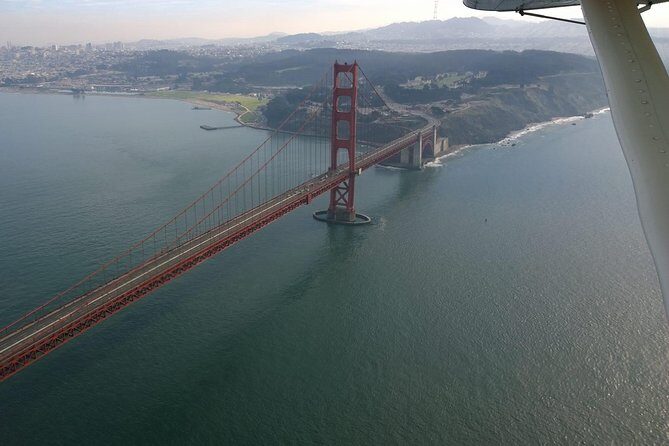
A small airplane over SF changes everything. You’re up close to the Golden Gate, redwoods, and the coastline, with a pilot who talks while you fly. The window-seat guarantee means you won’t be stuck craning your neck for photos.
I especially like the sense of scale. From the air, you quickly understand why the Bay Area feels so spread out, and how landmarks line up in real space. I also like that you’re not stuck in car traffic or tour-bus schedules.
One consideration: the route can shift with weather/visibility, and a cloudy day can mean fewer wow moments than a clear one.
In This Review
- Key things I’d circle on your planning list
- Why a seaplane beats sightseeing on the ground
- Price and the real value of 45 minutes at $376
- Sausalito logistics: shuttle from Fisherman’s Wharf or DIY arrival
- Before takeoff: what happens on the dock and in your seat
- The flight route: Golden Gate, Muir Woods redwoods, and the coast line
- Stop by stop: what each moment means from the air
- Sausalito takeoff over Richardson Bay
- Mount Tamalpais State Park and the coastline outside the Bridge
- Muir Woods-area redwoods: the nature contrast
- Great camping beach and the Stinson Beach stretch
- Golden Gate Bridge pass, then Crissy Field and downtown SF
- Alcatraz, Angel Island, and the immigrant-gateway viewpoint
- Landing back in Richardson Bay
- What the pilot adds (and why it matters)
- The best kind of traveler for this tour
- Weather reality: when the view plan can change
- Is it worth skipping a regular SF day?
- Should you book the Greater Bay Area Seaplane Tour?
- FAQ
- How long is the seaplane flight?
- Where does the tour start and end?
- Do I get a window seat?
- Is there an option to get a shuttle from San Francisco?
- What sights are included in the flight?
- How big is the group?
- Is there a minimum number of adults per booking?
- What should I know about route changes?
Key things I’d circle on your planning list
- Guaranteed window seats so you can actually see what you paid for
- 45 minutes that feels like a true SF highlight reel, not a quick loop
- Small size (max 6 passengers) with headsets so you can hear route notes
- Sausalito takeoff/landing for that sea-base, on-the-water vibe
- Route flexibility if visibility changes (ask questions the day of)
- Pass over major icons like Alcatraz, Angel Island, Crissy Field, and Oracle Park
Why a seaplane beats sightseeing on the ground
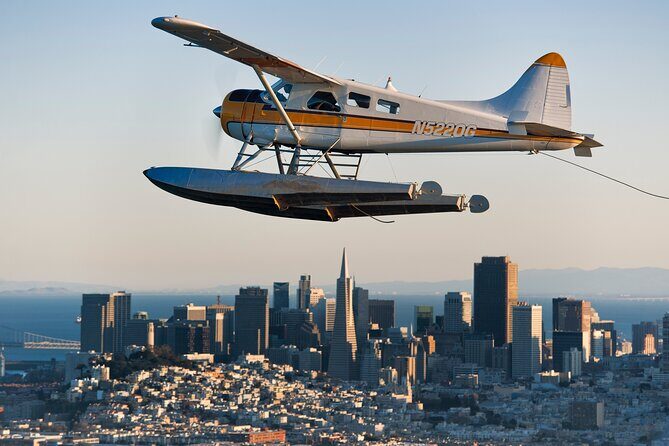
San Francisco from land is great, but it’s also crowded. Hills, bridges, and viewpoints can turn into lines and traffic. In the air, the city stops being a grid of stops and becomes a connected place.
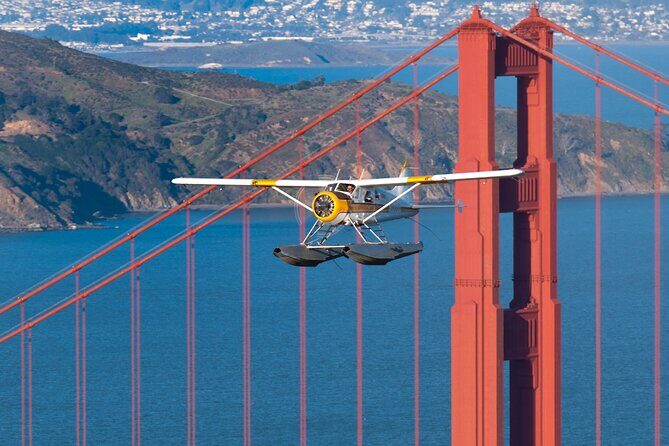
This tour is built for that. You take off from the seaplane dock in Sausalito Bay and fly a loop that stacks famous sights together: Golden Gate Bridge, Muir Woods-area redwoods, and the waterfront stretch that runs from Crissy Field toward downtown. You’ll also pass over Alcatraz and Angel Island, the kind of landmarks that feel distant from street level but read clearly from above.
And yes, it’s a little thrill. Takeoff and landing on water are different from an airport runway. If you’re the type who likes your memories with a sensory hook, this one delivers.
You can also read our reviews of more tours and experiences in San Francisco.



Price and the real value of 45 minutes at $376
At $376 per person, this isn’t a budget play. It’s a premium way to see the Bay Area, and you should treat it like one. The value comes from three things you can feel right away: time in the air, the vantage point, and the small-group setup.
First, 45 minutes is long enough to get multiple “wait, wow” moments. You’re not just skimming the Bridge; you’re flying out along the coast, over water, and back with recognizable landmarks stitched into the route.
Second, you get the window-seat guarantee. That matters because Bay Area sights are visual puzzles: where you stand on land doesn’t show the full pattern. From above, you can line up bridge spans, shoreline curves, and the relationship between city and hills.
Third, the plane is tiny. You’re on a seaplane with a maximum of 6 passengers, so you’re not one of hundreds. That size also helps the pilot’s commentary land, and it tends to make the flight feel personal even though you’re still in a shared seat.
The main value risk is simple: if the weather turns out poor, the route may change and some views can be less crisp. I’d book with that in mind.
Sausalito logistics: shuttle from Fisherman’s Wharf or DIY arrival
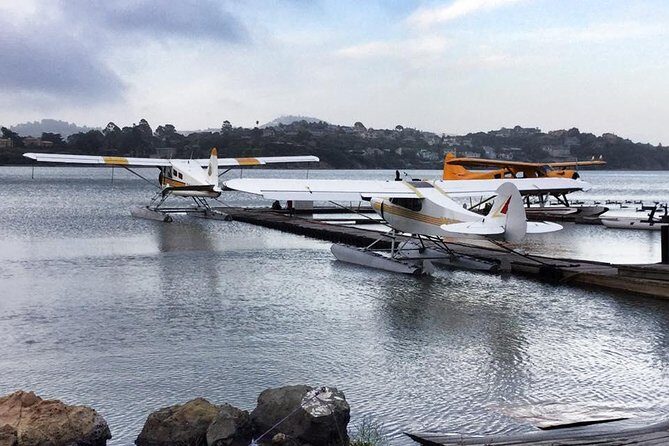
The flight itself starts in Sausalito. Meeting point details are practical: this experience begins and ends back at the meeting point, with a start time of 3:15 pm.
You have two ways to get to the seabase station in Sausalito:
- Make your own way there
- Or choose the complimentary shuttle from Fisherman’s Wharf (you select the preference when you book)
If you don’t love parking or navigating late-afternoon traffic, take the shuttle option. It also makes your day flow easier because your time goes into the experience, not into transit stress. If you’d rather move on your own schedule, DIY is fine—just plan for the extra time it can take to get into Sausalito and back.
Before takeoff: what happens on the dock and in your seat
This is not a giant aviation operation. Think check-in, a short safety briefing, then straight to the water-side setup. Some passengers have been given wellington boots for walking near the plane depending on tide conditions, which is a nice touch if you’re worried about getting your shoes wet.
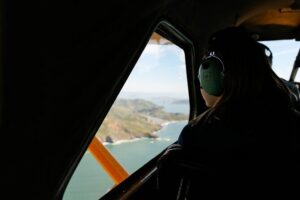
Once you’re seated, you’ll get headsets so you can hear the pilot’s narration clearly. That makes a big difference on a small plane, where wind noise can otherwise drown out everything useful.
And every seat is positioned for views. The tour specifically says every seat is guaranteed a window seat, so you can count on seeing the route without playing seat roulette.
The flight route: Golden Gate, Muir Woods redwoods, and the coast line

The planned route is designed like a highlight map of the Bay Area’s identity. You’ll fly out from Sausalito, pass over the Golden Gate National Reserve, head along the rugged coastline, then swing toward sights tied to both nature and city life.
You’re also likely to see:
- Mount Tamalpais State Park
- Stinson Beach
- Crissy Field
- A pass over downtown San Francisco with views that can include Oracle Park
- Alcatraz
- Angel Island
- Then a smooth landing back at Richardson Bay
A useful nuance: the route may vary due to weather or other factors. One traveler described a cloudy-day change where the flight didn’t include the same coastline portion they expected, making the experience feel less “Greater Bay Area” and more “nearby Bay landmarks.” That’s the trade-off with air travel: you get the perspective, but mother nature gets a vote.
If conditions are good, you’ll get the classic combo this tour promises—Bridge + redwoods + iconic islands—in one continuous loop.




Stop by stop: what each moment means from the air
Below is how the tour reads as a story in flight time. The sequence helps you know what to look for when you’re looking out the window.
Sausalito takeoff over Richardson Bay
The flight starts right across the Golden Gate from the city. Sausalito’s waterfront and the bay water give you an immediate sense of the geography—SF isn’t a single destination; it’s a peninsula shaped by water on multiple sides.
When the plane lifts off, you’ll get the first “pattern moment”: the coastline curves, and the city’s shape becomes obvious in a way that street-level overlooks often hide.
Mount Tamalpais State Park and the coastline outside the Bridge
Next you move toward the higher inland terrain, including Mount Tamalpais State Park. From the air, hills and ridgelines become easy to read. It also helps you understand why the Bay Area feels like a patchwork of microclimates.
Then the route pushes out along the coast beyond the Golden Gate National Reserve. This is where you’ll see coastline structure more clearly—water, rock, and shoreline forms that are hard to grasp from a viewpoint turnout.
Muir Woods-area redwoods: the nature contrast
One of the key promised moments is flying over the majestic redwoods of Muir Woods. From above, the trees read as texture. You don’t just see a park—you see how forested land interrupts the urban edge.
This is a great counterpoint to the city icons. It’s also a reminder that the Bay Area’s famous sights aren’t only man-made; they’re a mix of geology, climate, and habitat.
Great camping beach and the Stinson Beach stretch
The route includes a stop that references a camping beach area and then Stinson Beach. Even if you don’t know a beach from a map, from the air you can tell the difference between a quiet inlet and a more open shoreline.
Stinson Beach also signals you’re moving along the north-facing coast in a way that feels like you’re getting out of the city’s shadow.
Golden Gate Bridge pass, then Crissy Field and downtown SF
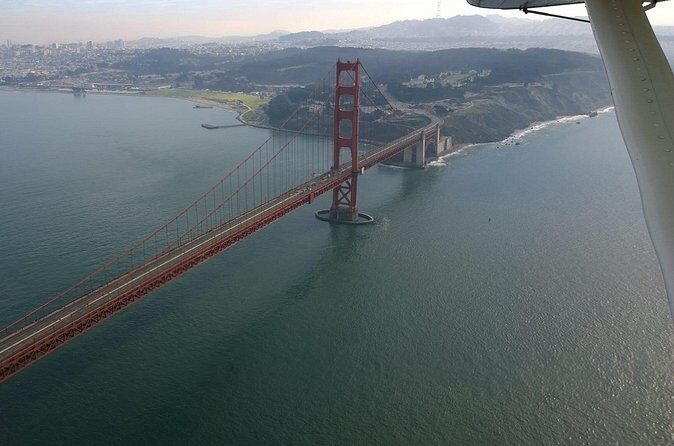
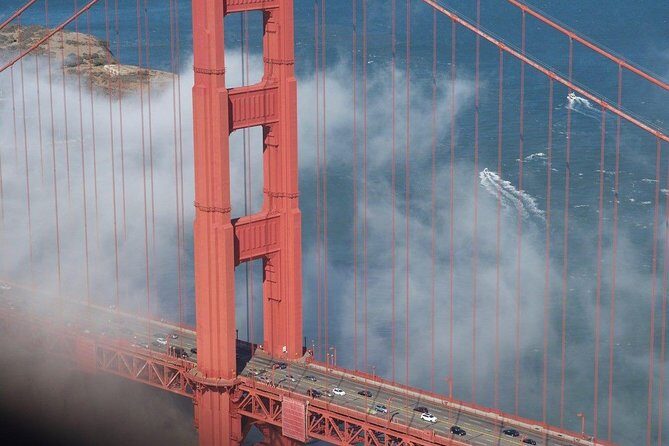
After the coastline segment, the tour returns to landmark-heavy territory. Flying over the Golden Gate Bridge in this context—already having seen the hills and coastline—makes it feel less like a postcard and more like an engineering answer to brutal geography.
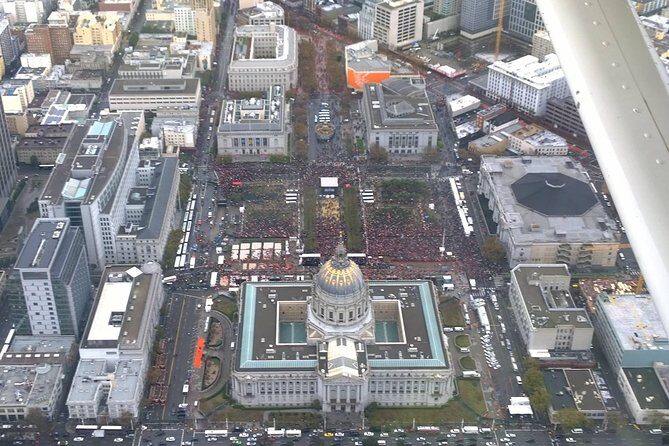
Then comes Crissy Field and a pass over downtown, including Oracle Park. From the air, the stadium and waterfront sit inside a larger urban-water grid. It’s the kind of perspective that helps first-timers get their bearings fast and helps repeat visitors notice what they usually miss.
Alcatraz, Angel Island, and the immigrant-gateway viewpoint
Finally, you pass over Alcatraz and then Angel Island, described as the immigrant gateway to the West. From the sky, island scale becomes clearer than any shoreline ferry view. You also see how these islands sit as chokepoints—small pieces of land surrounded by open water.
The best part here is contrast. You’re moving from nature (redwoods and coast) to city markers (Oracle Park) to islands with heavy historical symbolism, all while the Bay keeps moving underneath you.
Landing back in Richardson Bay
The flight ends back at Richardson Bay in Sausalito. Landing on water brings you back to real life fast: you’re suddenly aware of the dock, the movement, and the calm after the engine noise.
It’s a smooth finish, and it makes the whole loop feel complete rather than “fly out, fly back.”
What the pilot adds (and why it matters)
A seaplane tour succeeds or fails on one factor: the pilot’s ability to guide your eyes. In the reviews, the pilot and owner Aaron comes up again and again for being kind and communicative, with commentary that sticks. People also appreciated his willingness to tailor the experience, including a special flight organized for an 83-year-old father’s birthday.
You can expect a running narrative as you cross landmarks. The headsets mean you’re not guessing. If you like learning as you look, this is part of the value.
The best kind of traveler for this tour
This tour fits you if:
- You want a first-timer overview that still feels exciting
- You’ve been to SF before, but you’d like to see familiar icons from a new angle
- You prefer fewer crowds over adding a bus-and-wait schedule
- You want a photo-heavy experience without standing for hours at viewpoints
It’s also a good family option for many people because the flight is short, the group is small, and you’re not bouncing between long stops. One traveler noted their kids had been asking for months to fly on a seaplane, and the flight delivered.
If you’re prone to motion sensitivity, plan for possible turbulence. One review described some bumpiness and a passenger feeling queasy late in the flight. The flight is often smooth, but small aircraft + natural conditions means you should take that possibility seriously.
Weather reality: when the view plan can change
The tour says the flight route may vary due to weather or other factors, and that’s not a loophole—it’s the rule of flying safely.
One traveler described a cloudy-day cancellation warning followed by a decision to fly once visibility improved. On that same day, the route ended up closer to nearby landmarks rather than the broader coastline plan they expected. In other words: when weather is mixed, you might still fly, but the “Greater Bay Area” feeling can shift.
What you should do: keep your expectations flexible. If your goal is the full highlight list—Golden Gate, redwoods, coast—aim for a day that looks clear. And if you’re traveling at peak time, understand that last-minute operational changes can happen.
Is it worth skipping a regular SF day?
For $376, you’re not buying just transportation—you’re buying a perspective you can’t get from ground-level planning. If you try to recreate this by doing viewpoints, ferries, and car shuttles, it gets long fast, and the “whole-Bay” understanding takes longer.
If you hate crowds and traffic, a seaplane loop is a clean solution. You trade some budget for time in the air and a concentrated route that hits nature and big-city icons in one go.
Should you book the Greater Bay Area Seaplane Tour?
Book it if you want the quickest way to see why the Bay Area is so visually unique—and you’re excited by the idea of flying over Golden Gate, Muir Woods-area redwoods, Alcatraz, and Angel Island without waiting through ground congestion. The window-seat guarantee and small group size make this feel like a premium experience rather than a mass tour.
Consider passing or moving it to a more reliable weather window if:
- You’re very sensitive to motion and turbulence
- You need a strict checklist route and can’t handle weather-related changes
- Your budget can’t stretch for a 45-minute flight
If your priority is perspective, this is one of the most satisfying ways to get it.
FAQ
How long is the seaplane flight?
The flight is approximately 45 minutes.
Where does the tour start and end?
It starts at the Seaplane Dock in Sausalito Bay and ends back at the meeting point.
Do I get a window seat?
Yes. The tour says every seat is guaranteed a window seat.
Is there an option to get a shuttle from San Francisco?
Yes. A complimentary shuttle to and from Fisherman’s Wharf is available if you select that option at booking.
What sights are included in the flight?
The route includes passes over major landmarks such as the Golden Gate Bridge, Muir Woods redwood area, Stinson Beach, Crissy Field, downtown San Francisco/Oracle Park, Alcatraz, and Angel Island.
How big is the group?
The seaplane seats a maximum of 6 passengers, and the overall tour/activity lists a maximum of 6 travelers.
Is there a minimum number of adults per booking?
Yes. A minimum of two adults is required per booking. If you book for one passenger, you’ll need to pay the price for a second passenger directly to the operator upon check-in.
What should I know about route changes?
The flight route may vary due to weather or other factors.