REVIEW · SAN FRANCISCO
San Francisco: Airplane Elite Bay Tour
Book on GetYourGuide →Operated by Fly San Francisco Tours · Bookable on GetYourGuide
San Francisco looks different from a Cessna window. On this 1-hour Airplane Elite Bay Tour, you get the kind of overhead perspective that makes landmarks click into place fast—Golden Gate, Alcatraz, and the shoreline all from the air. I especially liked the tight, personal feel of flying in a small aircraft, and I also love how the route pulls you across downtown water-adjacent neighborhoods instead of just circling one view.
Two big wins for me: the Golden Gate Bridge and Alcatraz angles are far more dramatic from above, and you’re set up for steady, photo-friendly sightlines as you move across the bay. There’s also a live English guide, plus pilots who know how to point out what you’re seeing while you’re up there.
The main drawback to consider is comfort. You’ll be in a small Cessna, at a few thousand feet, and the flight can feel a bit nerve-rattling for people who don’t like tight aircraft or open-air feeling, even though the pilots are handling everything.
In This Review
- Key things I’d pay attention to
- Why a 1-hour bay flight changes how you see San Francisco
- From Hayward Airport to the bay: what your flight timing feels like
- Golden Gate Bridge and Alcatraz: the views you’ll talk about later
- Fisherman’s Wharf, Pier 39, and the waterfront in one overhead sweep
- Angel Island plus Tiburon and Sausalito: the bay’s nicer side
- Overflying San Francisco International Airport: why it’s more interesting than it sounds
- Small group and private setup: what that means in real life
- Flying in a Cessna 172: comfort, nerves, and the photo reality
- Value check: does $339 for an hour make sense?
- Who should book this flight—and who might skip it
- A note on getting help after you land
- Should you book the Airplane Elite Bay Tour?
- FAQ
- Where does the tour meet?
- How long is the flight?
- What will I see during the flight?
- What kind of aircraft is used?
- Is there a guide on board?
- Can wheelchairs be accommodated?
- Are unaccompanied minors allowed?
- Is there a weight limit?
Key things I’d pay attention to
- Small-aircraft viewing: A Cessna 172 ride means you feel the motion more than you would in a big jet, but the views stay close and clear.
- Golden Gate and Alcatraz from above: You’re not just seeing them—you’re getting angles you can’t easily recreate from shore.
- A route that moves along the bay: Fisherman’s Wharf/Pier 39 and the surrounding waterfront come into view as you fly, not just as a distant backdrop.
- Angel Island and the Marin towns: Tiburon and Sausalito appear in the same sweep, so the whole bay story makes sense.
- Pacific coast glimpses: Over-water flying plus open-coast sightlines is where the trip feels most “San Francisco.”
- Friendly, help-when-you-land support: Some groups report extra kindness after the flight, like help getting to the nearest BART station.
Why a 1-hour bay flight changes how you see San Francisco
San Francisco is a place you can “understand” from maps. This flight helps you understand it from the sky. In an hour, you cover enough of the city-and-bay arc that you stop thinking in neighborhoods and start thinking in geography—bridges, inlets, and coastlines.
The aircraft is a Cessna 172 Skyhawk with seating for three passengers plus the pilot. That small size is part of the magic. It also means you’ll want to be ready for basic aircraft sensations: engine sound up close, changes in cabin feel with banking turns, and that quick awareness that you’re up there with nothing between you and the bay.
You’ll also have a live English guide to keep things readable. It’s not just sightseeing; it’s interpretation. The guide’s job is to help you connect names to what you’re actually looking at, so you can take better photos and remember what you saw when you land.
You can also read our reviews of more tours and experiences in San Francisco.



From Hayward Airport to the bay: what your flight timing feels like
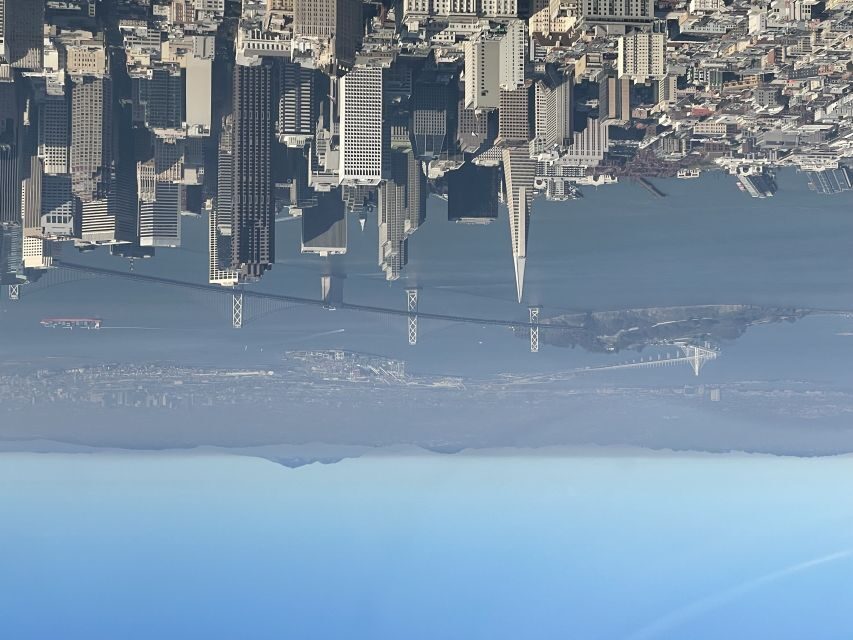
Your tour departs from Hayward Airport. The meeting point is 20995 Skywest Dr, Hayward, CA 94541—go earlier than you think you need. Small-aircraft tours run on a tight schedule, and you’ll enjoy the trip more when you’re not sprinting to find the correct entrance.
Once you’re aboard, you’ll climb and head out toward the Pacific coast, then work your way over the Golden Gate Bridge and toward the San Francisco waterfront. The “one hour” duration is short enough to fit into a busy day, but long enough that you don’t feel cheated by flying—there’s time to actually see multiple anchors of the city.
An important practical point: there’s a stated total passenger weight limit of 575 pounds (260 kilos). If you’re traveling with others, it’s worth taking that seriously when planning who will be in the cabin together.
Golden Gate Bridge and Alcatraz: the views you’ll talk about later
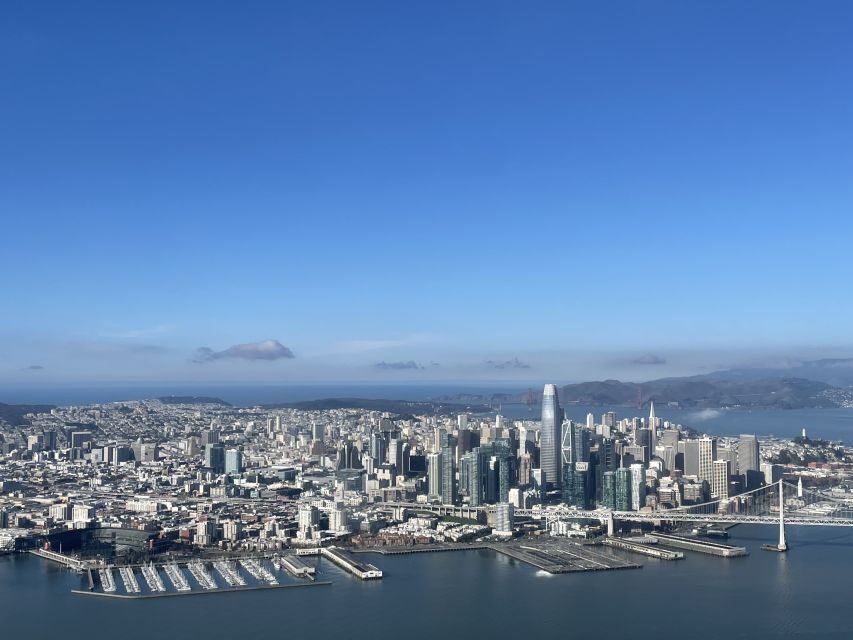
If you only do one San Francisco “above the water” experience, make it this part of the flight. The route is built around Golden Gate Bridge sightlines and Alcatraz from the air, so you get the landmarks in context—bridge to island to the city’s coastline, all in one sweep.
From the air, the Golden Gate Bridge doesn’t just look tall. It looks engineered. You can see how it spans the channel and how the water curves around the land. That’s the difference between seeing it from a viewpoint and seeing it the way pilots see it: a crossing between two shapes of land.
Then comes Alcatraz, and this is where the bay feels real. You don’t just spot a dot in the water. You see its relationship to the shoreline and the way the bay grid is laid out beneath you. It’s the kind of view that makes old stories feel new, because the geography is suddenly obvious.
Photo tip that matters: because you’re moving, you’ll want to keep your camera ready but don’t over-fiddle with settings mid-turn. The best shots usually come when you anticipate the approach to each landmark and let the pilot’s path do the work.
Fisherman’s Wharf, Pier 39, and the waterfront in one overhead sweep
What I like about this flight is that it doesn’t restrict you to icons floating in the distance. You’ll look down at Fisherman’s Wharf and Pier 39 from above as you continue along the waterfront.
Those areas are busy at ground level. From the air, you get a different kind of understanding: the shoreline shape, the spacing between piers, and how the water meets the city blocks. It turns “that’s where X is” into “this is how the city sits against the bay.”
This is also where the trip becomes efficient for your day. You can plan to do ground attractions afterward knowing where they are relative to the harbor. Even if you don’t hop back out to do a full second-day plan, you’ll still carry a better sense of layout.
Angel Island plus Tiburon and Sausalito: the bay’s nicer side
After downtown and the inner bay landmarks, you head toward Angel Island, then along the coast with views of towns such as Tiburon and Sausalito. This is the stretch that tends to make the flight feel like a journey instead of a checklist.
Angel Island is a good example of why aerial views help. From shore, it can feel like a scenic backdrop. From above, it becomes a clear piece of the bay’s “system”—a landmass shaped by water access and position.
Then you see Tiburon and Sausalito, and the bay starts to look like a connected ring rather than separate destinations. Houses, coves, and shoreline contours appear in quick flashes. You’re moving fast enough to keep the excitement, but slow enough to take in what you’re looking at.
If you like scenery that feels less “museum” and more “outdoors,” this portion is where you’ll likely feel the biggest payoff.



Overflying San Francisco International Airport: why it’s more interesting than it sounds
You’ll also get views around San Francisco International Airport as part of the route. For some people, that might sound like the least exciting detail. I get it.
But from the air, the airport isn’t a random stop—it’s part of the larger picture of the Bay Area. You can see the scale of the region and how infrastructure fits into open space, water, and coastal terrain. It’s a quick reality check that helps the rest of the flight feel grounded.
It also often makes the flight feel smoother. You get a broader sense of what lies ahead in a way that helps reduce that small-aircraft “where are we going?” feeling.
Small group and private setup: what that means in real life
This is listed as a private group, and with a cabin sized for just a handful of people, that setup matters. You’re not getting lost in a crowd, and the guide and pilot can focus on the group you’re with.
The live English guide also helps. Even if you’re comfortable picking out landmarks on your own, having prompts keeps you from missing the best angle. The goal is simple: look, understand, photograph, repeat.
One more thing: the skip-the-line approach using a separate entrance helps keep the experience from turning into a waiting game before you even fly.
Flying in a Cessna 172: comfort, nerves, and the photo reality
The plane is small. That’s not marketing language—it’s physics. In a small aircraft, you feel the turns more and you notice how close you are to the cockpit and cabin walls.
Gerard’s feedback captured a common reaction: exhilarating, with a touch of nerves because you’re high up in a craft that feels like it could fit in a big parking lot. If you know you get anxious in small planes, consider that reality before booking.
On the practical side, keep your expectations aligned with the environment:
- You’ll want to dress in layers because air can feel cooler at altitude.
- Hold your phone/camera steady and be ready to shoot when landmarks appear, not when you’re reading signage.
- If you’re sensitive to motion, take a moment to settle before climbing.
The good news: this tour is built around an experienced pilot experience. The flying is about giving you sightlines, not doing stunts.
Value check: does $339 for an hour make sense?
At $339 per person for about one hour, it’s not a “cheap and cheerful” activity. But it can be good value if your goal is a high-impact viewpoint that you can’t replicate from land.
Here’s how I’d judge the price:
- You’re paying for access to an aerial route that hits multiple major anchors in a short time: Golden Gate Bridge, Alcatraz, Angel Island, and waterfront areas.
- You’re flying in a small aircraft rather than a large group experience. That tends to mean better attention and easier photo moments.
- The tour saves time. Instead of building a half-day around multiple viewpoints, you can get a “big-picture” view in roughly an hour.
If you already have a full itinerary packed with ground stops, this flight can act like the perfect opener. It helps you orient yourself for later exploration, and the views are strong enough that it still feels like a standout even if you do other classic attractions.
Who should book this flight—and who might skip it
I’d point you toward this tour if you:
- Want the iconic Bay Area landmarks from a perspective you can’t easily get from ground level
- Enjoy photography and want moving, aerial sightlines rather than static views
- Have limited time and still want a big-scope San Francisco experience
I’d think twice if you:
- Strongly dislike small aircraft or have anxiety about flying in a Cessna-sized plane
- Need a very calm, predictable ride feel without any sense of banking turns
- Are traveling with unaccompanied minors, since unaccompanied minors are not allowed, and passengers under 18 must be accompanied by a parent or guardian
Also plan around the stated weight limit, especially if you’re close to it as a group.
A note on getting help after you land
One small detail I appreciated from the experience reports is the extra kindness around the end of the flight. In at least one case, the pilot drove the group to the nearest BART station afterward. That’s not something to count on blindly, but it’s a nice sign of attitude.
When you finish, ask the staff what the easiest onward connection is for you. It’s the kind of practical question that can save time and stress.
Should you book the Airplane Elite Bay Tour?
I think you should book it if you want a short, high-impact way to see San Francisco’s core geography—especially Golden Gate Bridge and Alcatraz—from the air. For $339, the deal makes sense when you value unique viewpoints over saving money.
Skip it if small-plane flying makes you uneasy, because the experience is not trying to hide that it’s intimate and closer than you’d expect. If that’s your situation, there are other ways to see the city, but they won’t give you the same “wow, I finally get it” overview.
If your main goal is a memorable aerial route that makes the bay feel like a single connected place, this one-hour flight is a strong choice.
FAQ
Where does the tour meet?
The meeting point is 20995 Skywest Dr, Hayward, CA 94541, USA.
How long is the flight?
The scenic flight is approximately 1 hour.
What will I see during the flight?
You should see aerial views of San Francisco and the bay, including the Golden Gate Bridge, Alcatraz, Fisherman’s Wharf and Pier 39, Angel Island, Tiburon, Sausalito, and views of the Pacific coast.
What kind of aircraft is used?
The flight is aboard a small Cessna 172 Skyhawk.
Is there a guide on board?
Yes, there is a live tour guide in English.
Can wheelchairs be accommodated?
Yes, the tour is wheelchair accessible.
Are unaccompanied minors allowed?
No. Unaccompanied minors are not allowed, and passengers under 18 must be accompanied by a parent or guardian.
Is there a weight limit?
Yes. The total passenger weight limit is 575 pounds (260 kilos).