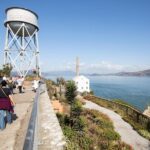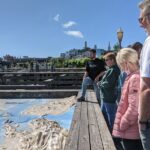
San Francisco has a way of surprising you on foot. This four-peak tour threads through Eureka Valley and the surrounding hills, mixing lookout spots with small, off-the-main-street surprises. You get a guided walk across the Castro, Tank Hill, and Corona Heights, then wind up at Randall Museum with one last payoff view.
What I love most is the value for the money and time. For about 3 to 4 hours, you’re paying a flat $65 and moving between multiple hilltops that most people only glance at from afar. Second, I really liked how the walk stays physical and specific: secret staircases, hidden concrete slides, and little pieces of the built environment that you’d miss on your own.
One thing to consider: this is hill country. Even with moderate fitness, you’ll be on inclines and steps, so if you’re sensitive to walking uneven pavement or climbing, plan to go slow and bring good shoes. Also, the tour depends on decent weather.
In This Review
- Key takeaways before you go
- Eureka Valley: why this area works so well on a tour
- Starting in the Castro at Market and Castro
- Tank Hill: the view stop that feels worth the effort
- Corona Heights: where the streets feel cut from the hill
- The secret staircases and concrete slides you’ll actually hunt for
- Randall Museum finish: a strong ending point
- Price and time: does $65 feel fair?
- How strenuous is it, really? Shoes, pace, and group rhythm
- Who this tour suits best (and who should skip it)
- A quick note on the one thing that can go wrong
- Should you book the San Francisco Four Peaks Tour?
- FAQ
- Where does the tour start and end?
- How long is the tour?
- Is the tour admission-free at the stops?
- What’s included in the price?
- Is there a snack provided?
- How physically demanding is it?
- How big are the groups?
- What’s the weather situation?
- How does cancellation work?
Key takeaways before you go
- Four hilltop viewpoints across the Castro, Tank Hill, and Corona Heights
- Hidden features on the route like staircases, concrete slides, and small garden pockets
- A guide who brings the neighborhood to life with story-driven stops (often Ryan)
- Good value at $65 for a 3 to 4 hour guided hike
- Small group size with a max of 8 travelers
- A clear finish at Randall Museum at the Corona Heights peak
Eureka Valley: why this area works so well on a tour
Eureka Valley sits in a sweet spot for walking tours because it’s both close to downtown energy and far enough uphill to feel like a different world. The area was once the edge of San Francisco—where city boundaries felt looser—and you can still sense that layered feel as you move from the Castro toward Twin Peaks-adjacent terrain.
On this tour, that history isn’t delivered like a lecture in a classroom. It’s attached to the streets and the grades. When your feet are climbing, you understand why people built homes where they did, why certain streets feel like they were carved out, and how neighborhoods changed over time. You’re not just seeing views; you’re reading the city through the route.
And you get a clean shape to the day. You’ll start at the Castro, work through three major hill sections, then finish on the Corona Heights side with Randall Museum as the endpoint. That makes it easier to pace yourself and plan your day after.
You can also read our reviews of more tours and experiences in San Francisco.

Starting in the Castro at Market and Castro
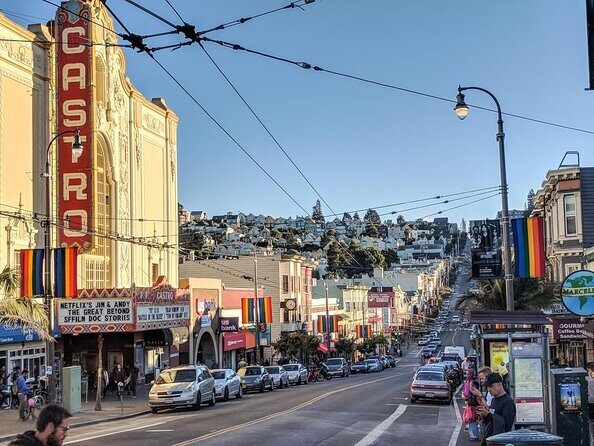
Your walk kicks off at Castro St & Market St, right at the border between city bustle and neighborhood character. This is where you can get oriented fast—busy corner, lots of foot traffic nearby, and public transport options close by.
The early stop in the Castro focuses on how Eureka Valley used to sit on the city’s outskirts. You’ll hear about the shift from that earlier edge-of-town feel to a more established neighborhood. Even in a place that looks lively today, the stories help you notice why the street layout and community centers matter.
One practical bonus: this is also a good spot to reset before the climbs. If you’re traveling with someone who needs a slower start, it’s an easier beginning than jumping straight into a steep hill.
Tank Hill: the view stop that feels worth the effort
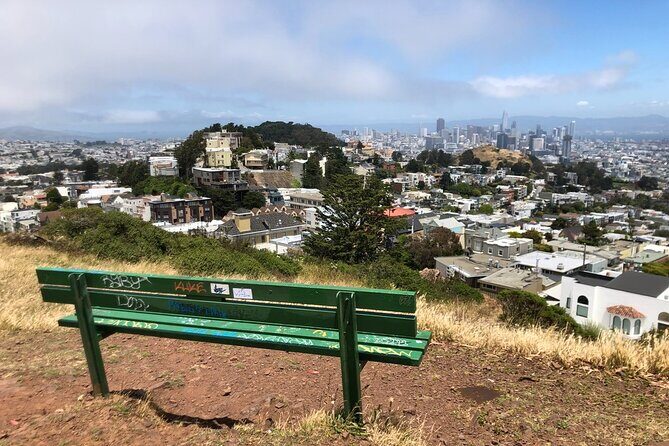
Next comes Tank Hill, and this is the moment many people come to San Francisco for: the feeling that the city opens up beneath you. The stop is short—around 40 minutes—but it’s structured to give you real lookout time, not just a quick photo and move on.
Tank Hill is famous for panoramic city angles, and on this tour the guide explains what you’re seeing in a way that helps you keep your bearings. You’ll likely notice how the different parts of San Francisco stack against each other—neighborhood shapes, street grids, and that sense of rolling hills that never look flat, even when you’re standing still.
Here’s the key value: this isn’t only about views. The route and the commentary connect the vantage point back to the neighborhood stories you heard earlier. So when you look out, you’re not thinking, Okay, pretty skyline. You’re thinking, I understand why this area grew where it did, and how the surrounding hills shaped movement and community.
Corona Heights: where the streets feel cut from the hill
Then you’ll shift to Corona Heights, a neighborhood area that stretches between Buena Vista Park and the Eureka Valley side. The standout detail here is that the terrain and the built form are tied together. The streets within Corona Heights were literally cut out of a hill that once covered a larger area.
That matters for two reasons. First, it explains the feel of the walk. The gradients can change quickly, and some streets seem to drop away in a way that makes you appreciate why the city looks the way it does from street level. Second, it keeps the tour grounded in physical reality. You aren’t just hearing about history; you can sense it in the street geometry.
During this segment you’ll also connect the dots between multiple community phases over time, including the Irish community churches from the 1890s era and later neighborhood changes. The tour also points you toward the parts of the city that have been abandoned and brought back as the community evolved.
Expect some small “pause and look” moments too. The kind where you notice a secluded garden pocket, a corner that feels like it was designed to be overlooked, or a quirky structure detail—like a podium with a missing statue you’re meant to look for. Those are the moments that make the walk feel personal.
The secret staircases and concrete slides you’ll actually hunt for
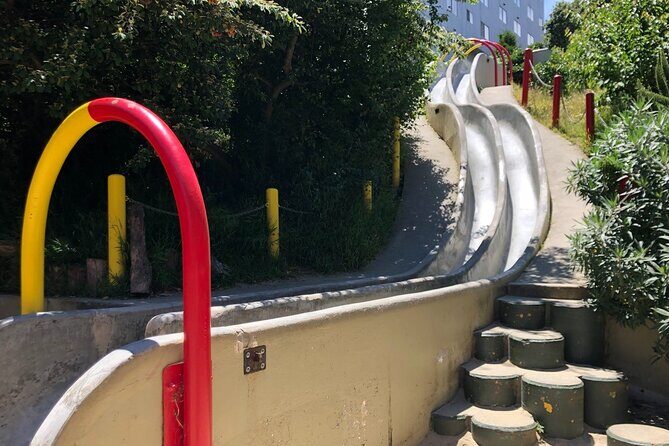
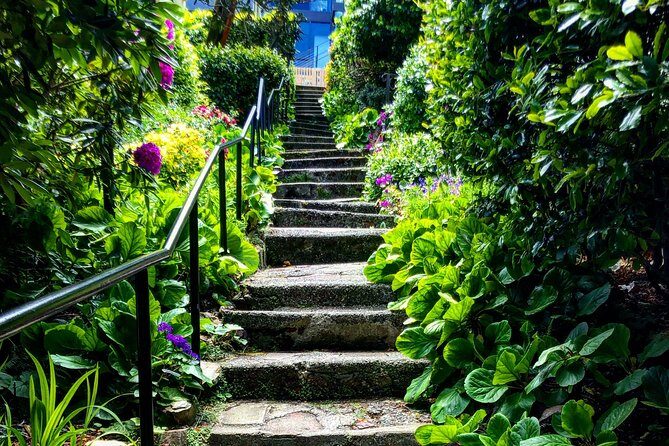
One of the most memorable elements on this kind of hill tour is when it turns into a light treasure hunt. This experience explicitly includes stops that feature secret staircases and hidden concrete slides, plus little tucked-away spaces such as secluded gardens.
Why I think this works: it turns a workout into a set of goals. You’re not just walking uphill; you’re working toward a series of specific, on-the-ground discoveries. That keeps attention high and makes the tour feel different from the standard “walk, stop, photo, move on” format.
It also helps you understand how San Francisco’s infrastructure can be both practical and playful. Stairs and slides aren’t just random urban leftovers. They tell you how people once used space—how they navigated slopes, how children played, and how neighborhoods adapted.
You’ll get the most out of this part if you keep your eyes up and around, not just straight down at your feet. Watch where the path angles. Look for entryways that don’t look like they were meant for wide crowds. And if something feels slightly out of place, that’s often exactly what the guide is pointing to.


Randall Museum finish: a strong ending point
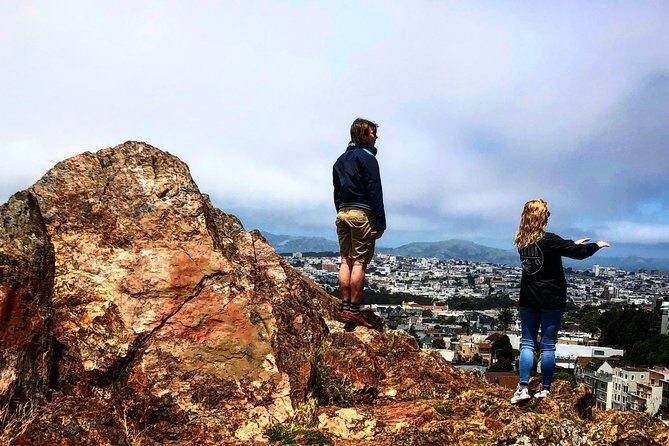
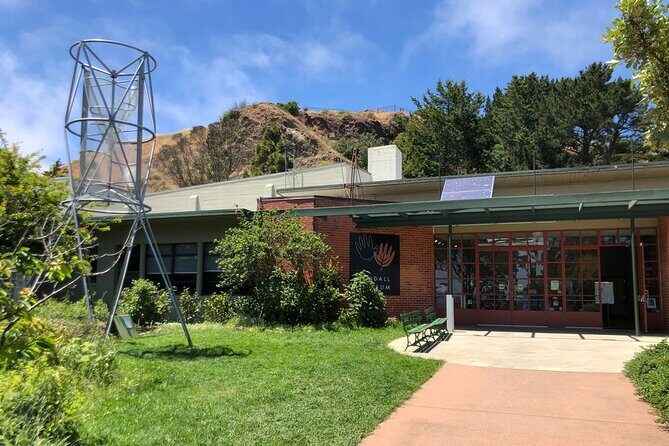
The tour concludes at Randall Museum after you reach the peak of Corona Heights. This is a smart ending because it gives you closure at a destination that feels like more than a random street corner. You finish elevated, you catch your last views, and you have a clear “this is where the tour ends” anchor.
From a reader’s perspective, I like endings like this. It makes it easier to plan where you’ll go next—whether you head back to the Castro area, grab lunch, or simply enjoy the surrounding neighborhood moment before you break off.
Also, there’s a built-in “snack stop” concept. The tour mentions Hot Cookie as a famous option where you can purchase something if you want it. It’s not included as a cost item, but it’s a convenient way to handle the afternoon energy dip without derailing the group.
Price and time: does $65 feel fair?
At $65 for about 3 to 4 hours, this sits in the sweet spot between a free self-guided walk and a full-day paid hike. You’re not paying for a long day. You’re paying for a focused route, added context, and—most importantly—someone steering you toward the spots you’d likely skip.
What you get for that money:
- A guided route across multiple hilltops instead of one viewpoint
- Specific neighborhood context tied to the streets you walk
- A small group size (max 8), which usually means less waiting around
There’s also the practical detail of a mobile ticket, which reduces friction. And the stops listed as admission free help keep costs predictable once you’re on the route.
Is it “cheap”? Not exactly. But it’s fair if you want the guided context and the hidden features. If you’d rather wander on your own and you don’t care about learning the neighborhood stories, you could probably cobble together a similar route. But the whole point here is that you’re walking with a plan—and a guide who helps you see what’s worth seeing.
How strenuous is it, really? Shoes, pace, and group rhythm
This tour is listed for travelers with moderate physical fitness. That’s the right label for a city-hill walk, but it still deserves your attention. You’ll be doing uphill sections and likely covering uneven sidewalks and steps near the “secret staircase” type areas.
My advice:
- Wear hiking shoes or sturdy sneakers with grip.
- Go slower than you think at first. Hills feel manageable until you add repeated climbs.
- If you need breaks, take them. Small-group tours work best when you use your own pace instead of trying to match someone else’s stride.
The group is capped at 8 travelers, which typically keeps the tour from becoming a herd. That makes it easier to ask quick questions and to stop long enough for viewpoints without feeling rushed.
One more practical thing: because the tour requires good weather, plan for a day when you’re not counting on perfect conditions. If the forecast looks rough, you’ll want to be ready to move plans around.
Who this tour suits best (and who should skip it)
This experience fits best if you want a guided walk that mixes big viewpoints with on-street oddities. It’s ideal for:
- First-time visitors who already know the big-ticket sights but want a different San Francisco angle
- People who like learning through streets, not just museums
- Anyone who enjoys city hikes where the path itself is part of the story
It might not be the best match if:
- You struggle with steps or long uphill segments
- You hate any walking that requires careful footing on uneven pavement
- You want a fully stroller-friendly experience (not stated, and the route includes hill climbs)
Also, service animals are allowed, and it’s near public transportation, which makes it easier to plug into the rest of your day without needing a car.
A quick note on the one thing that can go wrong
I did see one serious caution raised: a late cancellation due to child care, followed by frustration about refund handling and missed communication. I can’t predict whether that will happen to you. But it’s a reminder to keep an eye on day-of messages and have a flexible plan in case the operator needs to adjust timing.
That’s true with any small tour operator. With this one, the small group size makes the experience feel personal—but it also means last-minute changes can hit harder.
Should you book the San Francisco Four Peaks Tour?
I’d book it if you want San Francisco in a way that feels local and specific. The best parts—Tank Hill views, Corona Heights street form, and the hunt for staircases and concrete slides—make it more than a typical neighborhood walk. Plus, the guide-led context turns those “wait, what is that?” moments into something you actually remember.
I’d skip or reconsider if you’re worried about hill effort or step-heavy sections. And if your schedule is tight and you’d be stressed by a last-minute change, keep a backup plan for the rest of your day.
If you match those two realities—comfortable walking uphill and happy to learn through streets—this is a strong use of a half-day, especially for the price.
FAQ
Where does the tour start and end?
It starts at Castro St & Market St, San Francisco, CA 94114. The activity ends back at the meeting point.
How long is the tour?
The tour runs about 3 to 4 hours.
Is the tour admission-free at the stops?
The itinerary lists the stops with admission ticket free for the main segments. A snack is available for purchase separately at a local place.
What’s included in the price?
You get all fees and taxes included. The tour also mentions customizations available.
Is there a snack provided?
A snack stop is mentioned at Hot Cookie, but snacks are not included. You can buy something if you want.
How physically demanding is it?
It’s designed for travelers with moderate physical fitness. Wear hiking shoes, since the route includes hills and walking.
How big are the groups?
The tour has a maximum of 8 travelers.
What’s the weather situation?
The tour requires good weather. If it’s canceled due to poor weather, you’ll be offered a different date or a full refund.
How does cancellation work?
You can cancel for a full refund up to 24 hours in advance. If you cancel less than 24 hours before the start time, the amount paid is not refunded.