REVIEW · SAN FRANCISCO
San Francisco Golden Gate Seaplane Tour
Book on Viator →Operated by Seaplane Adventures · Bookable on Viator
Golden Gate views from the sky beat photos. This San Francisco seaplane tour gives you big-window, high-wing sightseeing with a guaranteed window seat for every passenger, plus live landmark spotting from the cockpit narration (and yes, you’ll notice it right away). On a max-6-seat plane, you get that rare feeling of being close to the scenery without the chaos of a big bus day.
The main thing to watch is that flight paths can shift with weather and other factors, so the moments you care about most may land better on one side of the aircraft than the other—even with your window seat. The good news: the view is still spectacular throughout, and pilots like Mike and Captain Aaron are the kind of people who keep the whole experience smooth and fun.
In This Review
- Key takeaways before you book
- Why a 30-minute seaplane works for San Francisco
- From Sausalito water takeoff to the first big views
- Marin highlights: Stinson Beach, Muir Woods, and the Marin Headlands
- Golden Gate Bridge overhead: the moment you came for
- City views that go beyond the typical skyline shot
- Alcatraz and Angel Island: bay landmarks with real presence
- Tiburon, Belvedere, and Sausalito from above
- Window-seat reality: side matters more than you think
- How value stacks up at $326 per person
- After landing: time in Sausalito and an easy follow-up
- Who should book (and who should consider alternatives)
- Should you book this Golden Gate seaplane tour?
- FAQ
- How long is the seaplane flight?
- Is every passenger guaranteed a window seat?
- How many passengers are on each seaplane?
- What major landmarks does the flight cover?
- What happens after the flight ends in Sausalito?
- Are there any booking requirements or weather limitations?
Key takeaways before you book
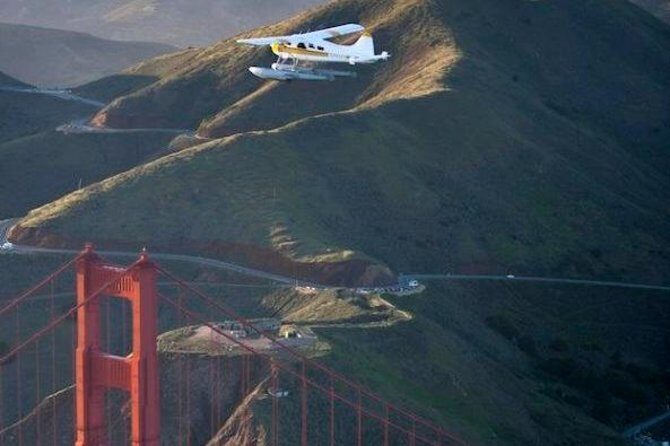
- Guaranteed window seat on a small max-6-passenger seaplane
- Muir Woods to the Golden Gate in one short, efficient flight
- Alcatraz and Angel Island viewed from directly overhead angles
- Golden Gate, Financial District, and Wharf landmarks on the city side
- Sausalito landing gives you time to explore after the flight
- Route can vary with weather, so seat side can matter for photo timing
Why a 30-minute seaplane works for San Francisco
San Francisco can be a lot. Hills. Traffic. Fog that rolls in like it has a schedule. A seaplane turns the whole day into one clean decision: get above the bay and let geography do the storytelling.
I like that this tour is built around the Bay Area’s “wow” zones. You’re not just skimming the shoreline for a pretty postcard. You’re flying over the Golden Gate approach, circling parts of the bay, and getting overhead angles on places that look completely different from the water—or from land. The seaplane setup helps too: high wings and large windows make it easier to track the scenery as the pilot talks through landmarks.
You also don’t have to worry about “which side is best” the way you do with some air tours. Every passenger gets a window seat, and with only up to 6 people onboard, you’re not stuck behind anyone’s head or turned shoulder.
Is it long? No—about 30 minutes of flight time (approx.). But that’s actually the point. If you’re spending limited days in San Francisco, this is one of those experiences that delivers a high hit-rate per hour. It’s the kind of add-on I’d choose when I want the skyline and the bridges without spending all day commuting between viewpoints.
You can also read our reviews of more tours and experiences in San Francisco.



From Sausalito water takeoff to the first big views
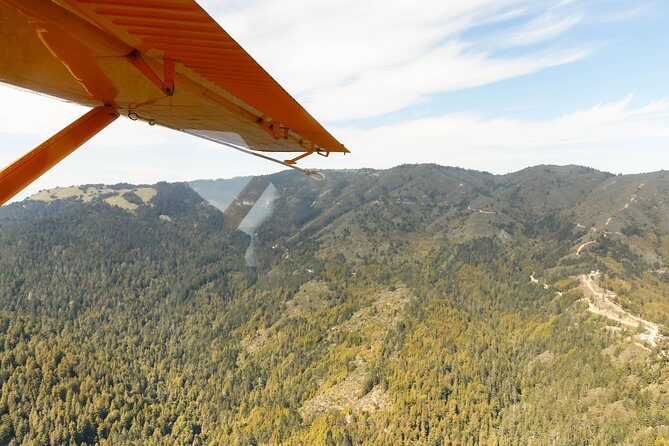
Your day starts with check-in, and then you board at Sausalito. The flight begins with a water takeoff, which is different from the usual “runway and go” feeling. You’ll feel the transition as the plane lifts off the water and the bay opens up below you.
That water takeoff matters for two reasons. First, it’s part of the memory, not just the sightseeing. Second, seaplane landings and takeoffs tend to feel smoother and more controlled than people expect—especially when the pilot is used to the route and conditions. In the reviews, I saw a repeated theme: pilots consistently manage the experience calmly, and the landing on the water can be surprisingly satisfying.
Once you’re airborne, the pilot’s job is to connect what you’re seeing to what it means. Expect the flight to include narration and landmark pointing as you move from the Marin side into the San Francisco side, so you’re not just staring out the window wondering what you’re looking at.
If you want to time your day well, pick a departure when you’ll still have energy afterward. You’ll return to Sausalito at the end, and that free time is part of the value.
Marin highlights: Stinson Beach, Muir Woods, and the Marin Headlands
The flight has a “nature-to-city” arc, and it starts with Marin. You’ll fly over Stinson Beach, then head toward Muir Woods National Monument. This is old-growth redwood country, and seeing it from above is a different kind of wow. Up close on the ground, you sense the scale by standing among the trees. From the sky, you sense it by seeing the density—how the forest canopy spreads and how the terrain shapes the view.
Then the route moves toward the southermost end of Marin, including the Marin Headlands. From the air, those headlands look dramatic and geometric—cliffs, curves, and the coastline layout show up fast. It’s the kind of view that helps you understand why San Francisco is surrounded by water but still feels like it has its own weather system.
Practical note: with seaplanes, weather matters. If the skies aren’t cooperating, the flight can be moved or canceled. You’ll still have options, but you should plan for the day to be flexible.
Golden Gate Bridge overhead: the moment you came for
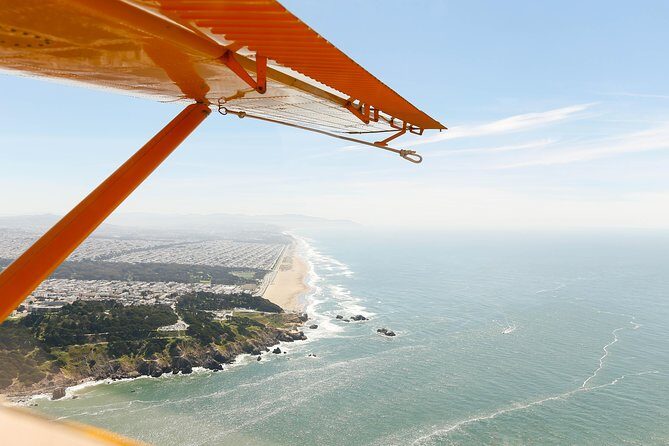
Then—yes—the Golden Gate Bridge. What you get here isn’t just “the bridge is red.” It’s scale and spacing: how the bridge spans the water, how the shoreline bends, and how the bay looks when you see it as a connected system instead of separate neighborhoods.
I love how the plane’s route turns the bridge into a moving landmark. You’re not stuck on one viewpoint. You’re seeing how the bridge sits between the Marin side and the city side, and you’re getting a sense of the water, currents, and the coastline shape that you simply can’t capture from street level.
The pilot calls it out as you’re approaching and circling, and that narration helps you place everything you’re seeing—especially if you’re the type who likes to understand what the camera can’t explain.
City views that go beyond the typical skyline shot
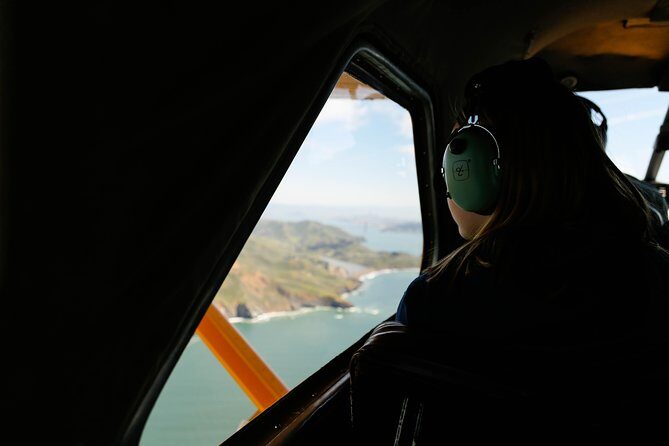
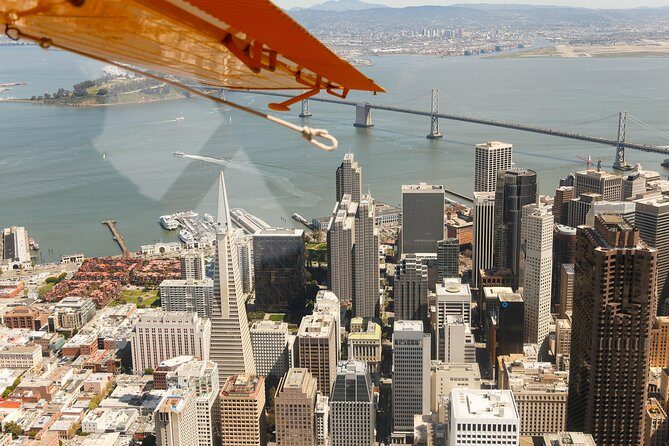
After the Marin portion, the flight crosses toward downtown. You’ll get overhead views of the Financial District and downtown areas, along with major landmarks like the Transamerica Pyramid. You’ll also pass over Pier 39 and Fisherman’s Wharf—both are busy on the ground, but from above they become clear map-points. Even if you’ve walked those streets before, the layout makes a lot more sense once you’ve seen it from height.
The city portion also gives you a “where everything sits” perspective. I’ve found that after a flight like this, you can look at a neighborhood from the street later and mentally connect it to the aerial view. That’s great if you like doing the follow-up exploring with a clearer game plan.
And because you’re in a small aircraft, your window view doesn’t feel like a compromise. You can pan your attention from district to district as the pilot narrates, instead of spending time trying to get good sightlines through crowds or barriers.




Alcatraz and Angel Island: bay landmarks with real presence
Two of the biggest emotional hits in this flight are Alcatraz Island and Angel Island.
From the air, Alcatraz stops being just a famous name. You see the isolation of its setting—how it sits in the bay, surrounded by water, with lines and distances that feel more concrete than any photo. It’s also the kind of sight that hits even if you’re not doing the full Alcatraz tour later.
Then there’s Angel Island, which is the largest natural island in San Francisco Bay. Overhead, you can grasp the size and shape quickly, and it gives you a sense of how this bay functions as more than just a backdrop. It’s full of landforms and movement, and seeing it from above brings that to the front.
Between Alcatraz and Angel Island, you’re also getting a broader “bay circle” feeling—like the route is designed to show you the system, not just the icons.
Tiburon, Belvedere, and Sausalito from above
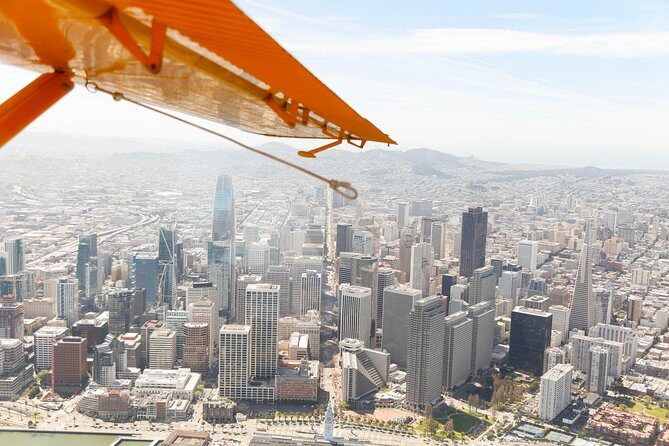
One of the best ways to understand the Bay Area is to stop thinking of it as only San Francisco. On this flight, you’ll see the smaller coastal towns around the bay—including Tiburon, Belvedere, and eventually Sausalito again.
From the sky, these places look tidy and distinct. The terrain shows you why these neighborhoods feel separate from the city core, even though they’re so close in straight-line distance. It’s also where the bird’s-eye perspective makes the trip feel more “complete.” You get both the big brand names and the surrounding communities that make the bay look like it’s been carved into sections.
It’s also a helpful reminder for planning your time after the flight. If you end up wanting to explore one of these towns, seeing them from above makes the choice feel easier.
Window-seat reality: side matters more than you think
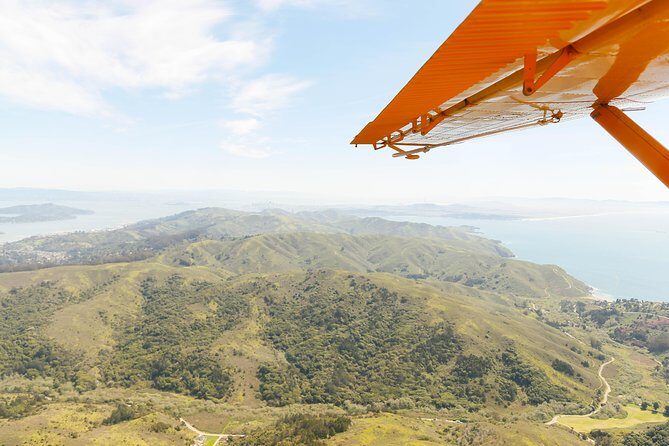
Here’s the part I think you should consider, and it comes straight from the reality of aerial viewing: a window seat doesn’t always guarantee the same timing on every landmark.
The flight route can vary with weather or other factors. That means the pilot may adjust the path, and your best views could depend on where you’re sitting. Reviews include both passengers who felt they got views from every angle and one experience where a customer felt the views favored one side and that the pilot didn’t shift the viewing moments as much as they hoped.
So what should you do with that? If the Golden Gate or Alcatraz is your top priority, go in with the expectation that you’ll see them, but you might get the most dramatic moments from one side. If you’re extremely photo-driven, you’ll want to be mentally flexible about seat placement.
The good news: even when one side gets a stronger view, the bay is still the bay. The scenery is wide open, and the pilot’s narration helps you track what you’re seeing so it doesn’t feel like guesswork.
How value stacks up at $326 per person
At $326 per person, this isn’t a budget activity. But for San Francisco, it’s also not overpriced compared to what you’re buying: a time-efficient aerial tour over multiple major icons, in a small aircraft with window access for everyone.
What helps the value here:
- Up to 6 passengers means less waiting and more personal space.
- Window-seat guarantee means you’re paying for the view, not hoping for one.
- The route covers several “must see” areas—Golden Gate, Alcatraz, Angel Island, Muir Woods, and key city neighborhoods—in one short flight.
What doesn’t help the value:
- You only get about 30 minutes in the air (approx.), so if you want an all-day experience, you’ll need to pair it with ground time.
- Food and drinks aren’t included, so plan snacks/water before or after.
If you’re comparing it to a boat cruise, think of it this way: the cruise can last longer, but it can’t give you the overhead angles. This tour is the opposite: shorter, sharper, and built for visual impact.
If this is a splurge day, I’d treat it like the “headline act.” Then fill the rest of the day with neighborhoods you can access easily from Sausalito—or with a slow city day after you’ve got the aerial map in your head.
After landing: time in Sausalito and an easy follow-up
When you land back in Sausalito, you’re free to explore on your own. This is a great buffer because it changes the experience from only an aerial ride into a half-day mini escape.
If you’d rather head back to San Francisco afterward, you can take the ferry back (own expense). Ask the pilot for helpful departure info. Since the flight schedule depends on conditions, that local timing guidance can save you guesswork.
Even if you don’t take the ferry, Sausalito itself is the kind of place you’ll enjoy more after flying over it. You can look at the shoreline and suddenly recognize the geography you just saw.
Who should book (and who should consider alternatives)
This tour fits best if you want:
- A high-impact way to see multiple San Francisco icons fast
- A small-group air experience with guaranteed window seats
- A mix of nature (Muir Woods) and big landmarks (Golden Gate, Alcatraz)
It may not be the best fit if:
- You’re mainly chasing a long, slow sightseeing day and don’t want a short flight window
- You’re extremely sensitive to seat placement and could feel frustrated if one side gets better timing
If you can only do one air experience while you’re here, this is a strong candidate because it connects Marin, the Golden Gate, and the city’s landmarks in one loop.
Should you book this Golden Gate seaplane tour?
I’d book it if you want the Bay Area at full scale. This is one of those San Francisco experiences that helps everything else click: you’ll understand where neighborhoods sit, why the coastline looks the way it does, and how the bay connects to the bridge and islands.
Go in with two realistic expectations: the flight is about 30 minutes, and the best landmark timing can vary by route and seat side. If you’re okay with that, the payoff is huge—clean views, real landmark narration, and a smooth, memorable ride over some of the world’s most recognizable sights.
FAQ
How long is the seaplane flight?
The flight is about 30 minutes (approx.).
Is every passenger guaranteed a window seat?
Yes. The tour guarantees a window seat for every passenger.
How many passengers are on each seaplane?
The seaplanes seat a maximum of 6 passengers.
What major landmarks does the flight cover?
You’ll see areas including Muir Woods National Monument, the Marin Headlands, the Golden Gate Bridge, the Financial District, Pier 39 and Fisherman’s Wharf, Alcatraz Island, Angel Island, plus bay-town views including Tiburon and Belvedere.
What happens after the flight ends in Sausalito?
After landing back in Sausalito, you’re free to explore on your own. If you want to return to San Francisco, you can take the ferry back (own expense) and ask your pilot for departure-time information.
Are there any booking requirements or weather limitations?
A minimum of two people per booking is required. The tour also requires good weather, and if it’s canceled due to poor weather you’ll be offered a different date or a full refund.