REVIEW · SAN FRANCISCO
San Francisco : Mission and Castro districts tour in French
Book on GetYourGuide →Operated by San Francisco Off Road · Bookable on GetYourGuide
The Castro and Mission feel like two different cities. This French-language small-group tour connects LGBT history in the Castro with classic Mission street life, murals, and Victorian architecture in just 3 hours. Two things I really like: the way the tour explains what you’re seeing (not just where to stand for a photo) and the mix of famous icons like the Rainbow Flag with specific, local-feeling stops. The main thing to consider is that it runs rain or shine, so you’ll want comfy shoes and a light rain layer.
For a set price of $65, you’re buying more than “a walk”: you get a French-speaking guide, a map with best addresses, and a follow-up email with a souvenir photo. Small group size (up to 10) helps the guide keep things clear and conversational. If you don’t speak French, this probably won’t be your best fit, since the whole experience is led in French.
In This Review
- Key points worth knowing
- Why a French-language neighborhood tour works in San Francisco
- Meet at Cafe de Casa: Castro to Mission in a single route
- Castro District Highlights: Rainbow Flag to Harvey Milk Plaza
- Mission District Highlights: Mission Dolores, Dolores Street, and Victorian homes
- Street art stops: Clarion Alley and the Women’s Building mural
- Valencia Street and Liberty Hill: boutiques, taquerias, and Victorian variety
- Dolores Park skyline finish: a view that feels earned
- Price and value: is $65 reasonable for 3 hours in French?
- Who should book this tour (and who might skip it)
- Quick practical advice before you go
- Should you book this San Francisco Mission and Castro tour?
- FAQ
- How long is the Mission and Castro districts tour in French?
- What language is the tour guide?
- How large is the group?
- Where does the tour start?
- Where does the tour end?
- Which neighborhoods are visited and what are the main highlights?
- What’s included in the price?
- What is not included?
- Is the tour rain or shine, and can I cancel if plans change?
Key points worth knowing
- French guide, small group (up to 10): better pacing and room for questions.
- Castro landmarks with context: Rainbow Flag, Harvey Milk Plaza, and the Castro Theatre.
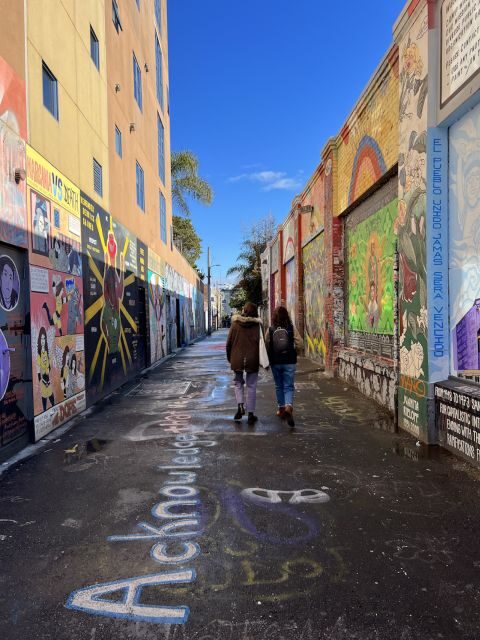
- Mission District culture: Mission Dolores, Dolores Street, and Latin Quarter murals.
- Street art that’s easy to spot: Women’s Building mural and Clarion Alley graffiti.
- Architecture and neighborhoods blend: Victorian homes plus the Liberty Hill district feel.
- Finish at a real viewpoint: top of Dolores Park for skyline views.
Why a French-language neighborhood tour works in San Francisco
San Francisco is visual, but it’s also full of stories. A guided tour in French matters because the meaning of places often sits in details like street names, local landmarks, and the reasons communities formed where they did. Instead of just spotting murals or taking photos, you get a thread that ties it together: the Castro’s LGBT story and the Mission’s long-running Hispanic roots.
You also get the benefit of a group approach. With up to 10 people, you’re less likely to lose the guide in the crowd, and you can keep moving without having to constantly check your phone. For me, the best part of this format is that it doesn’t ask you to be a historian. It guides you through what to notice.
One small practical note: this is a walking tour through several neighborhoods. If you’re sensitive to weather, plan for it. Since it operates rain or shine, bring a rain jacket and think about your shoe choice.
You can also read our reviews of more tours and experiences in San Francisco.
Meet at Cafe de Casa: Castro to Mission in a single route
The tour starts at Cafe de Casa, which is a sensible pick because you’re set up right away with the neighborhood rhythm. From there, the route focuses heavily on two areas—the Castro and the Mission District—with photo stops and guided segments totaling about 3 hours.
The structure is simple: you spend about 1.5 hours in the Castro and about 1.5 hours in the Mission District, plus some photo stops along the way. That time balance is helpful. You get enough minutes in each neighborhood to recognize what makes it distinct, without feeling like you’re on a marathon.
Because the tour also touches the wider area around these neighborhoods (including the Liberty Hill district feel), you’ll walk away seeing more of the “shape” of the city. It’s a good first pass if you want understanding quickly, especially if your Spanish/English isn’t ready for self-guided reading.
Castro District Highlights: Rainbow Flag to Harvey Milk Plaza
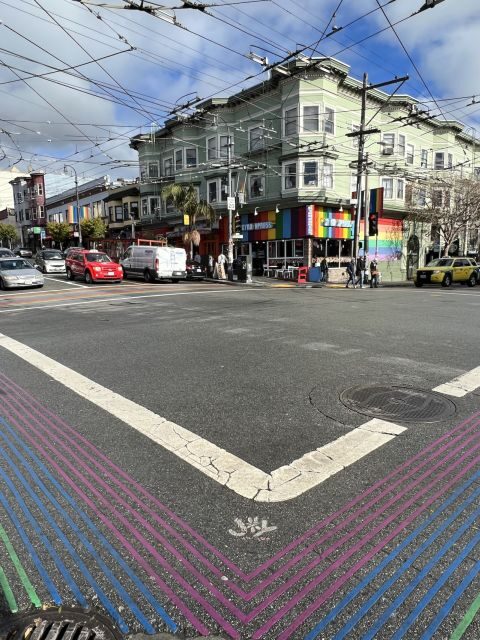
The Castro is where you go when you want to understand San Francisco’s identity in a very direct way. You can’t miss the arrival: there’s a giant Rainbow Flag that signals you’re in the heart of this LGBT neighborhood.
From there, the tour focuses on landmarks tied to people and political history, not just atmosphere. You’ll hear about Harvey Milk Plaza, the Castro Theatre, and a former photo store associated with America’s first openly gay elected official. Even if you already know the name, the guide framing helps you connect the dots between activism, community space, and what’s still visible on the streets today.
Two details I like in the Castro portion are:
- You’ll get a clear sense of how the neighborhood became a gathering place, not just a destination.
- You’ll see famous sights alongside smaller, quieter cues that explain why this area still “feels like itself.”
This is also the part of the tour where the guide’s French explanation really pays off. The Castro can look straightforward from a distance, but the meaning comes from the story behind each stop.
Mission District Highlights: Mission Dolores, Dolores Street, and Victorian homes
After the Castro, you shift into the Mission District, San Francisco’s oldest Hispanic neighborhood. The change is noticeable: the streets feel like they’ve got longer layers of daily life.
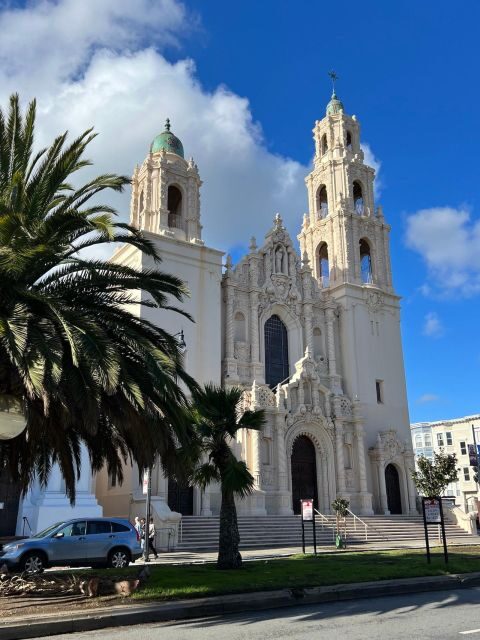
A key early stop is Mission Dolores, described here as the city’s oldest building. That’s a useful anchor point because it turns your walk into a timeline. From something very old, you move toward neighborhoods that developed later, with architecture and street culture shaping how people live today.
Then you’ll take in Victorian houses and architecture and the murals that decorate walls. There’s also a fun, specific local reference on the route: the blue house from a song by Maxime le Forestier is said to exist in this area and is pointed out during the tour. If you’re French, that kind of detail makes the city feel personal fast.
A stroll down Dolores Street follows, lined with palm trees. It’s the kind of street that helps you “get your bearings,” especially because it’s both everyday and photogenic. When you’re moving from plaza-landmarks to street life, this part of the route does a great job of switching gears.
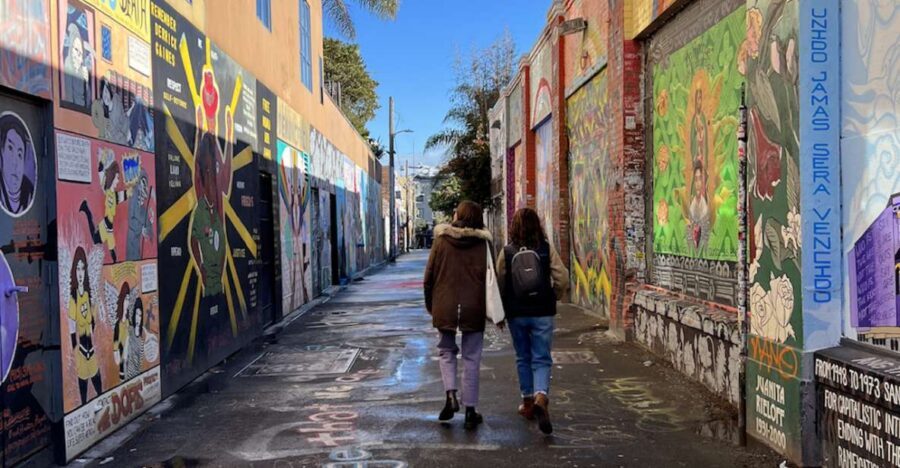
Street art stops: Clarion Alley and the Women’s Building mural
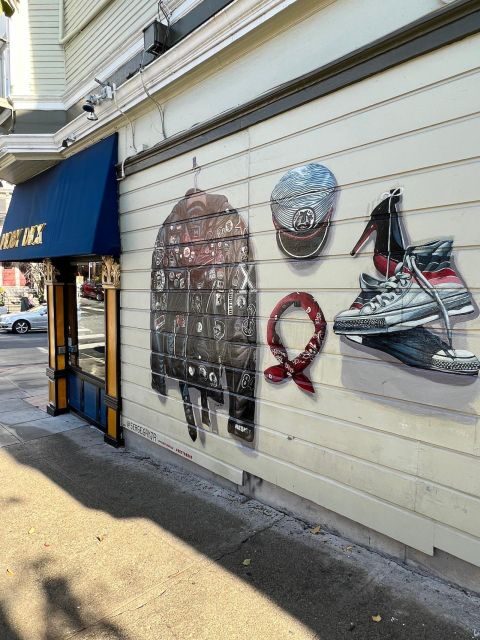
The Mission’s street art is part of the reason people plan trips here. This tour gives you places where you can actually look, not just pass by.
One of the signature murals on the route is at the Women’s Building. The other major stop is Clarion Alley, known for its urban graffiti. Together, these stops help you understand that street art here isn’t random. It’s tied to community expression and the kind of public message-making that turns a street into an open-air gallery.
If you like photography, this is where you’ll slow down naturally. If you don’t, it still works because the guide’s job is to translate what you’re seeing into context: who the artists are in spirit, what the imagery tends to communicate, and why the community keeps treating this as a visible form of identity.
One practical tip: bring a phone grip or a small camera strap if you use one. Murals are wide, so you’ll want to be able to step back and frame, then move in for close detail.
Valencia Street and Liberty Hill: boutiques, taquerias, and Victorian variety
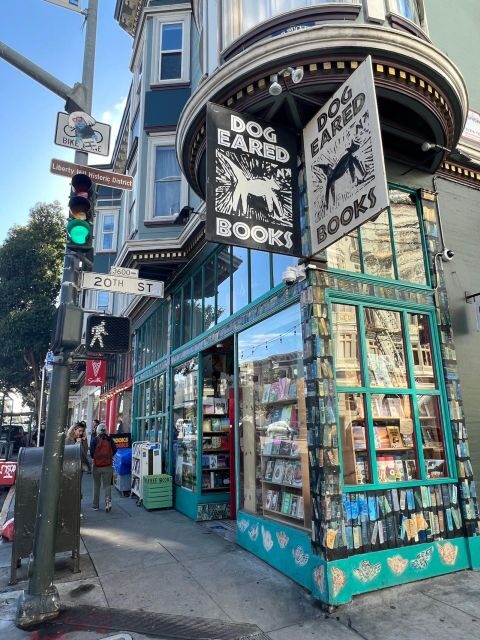
As you move deeper into the Mission’s energy, the tour heads to Valencia Street. This is where the vibe turns into everyday commerce: you’ll pass or look at atypical local boutiques, Mexican taquerias, thrift shops, and independent bookstores. The aim isn’t shopping for shopping’s sake. It’s to show you what makes the Mission feel like a place locals actually use.
This part is also a good “reset” moment. After looking at symbols, buildings, and murals, Valencia Street lets you see ordinary city life—colorful storefronts, everyday stops, and the kind of street-level culture that gives a neighborhood its real personality.
Then the tour shifts to a different architectural mood: Liberty Hill, described here as San Francisco’s first suburb. You’ll appreciate how styles range from simpler cottages to Victorian mansions, including the John McMullen House, noted as dating to the late 19th century. Even if you aren’t an architecture nerd, this is a smart inclusion because it widens the story beyond one neighborhood stereotype.
Dolores Park skyline finish: a view that feels earned
You’ll end at Mission Dolores Park, specifically around the top area. This is the payoff: after spending time on streets, walls, and historic buildings, you get open space and a city view.
The tour specifically calls out distant downtown skyscrapers, and that’s exactly what makes this finale work. You stop moving, look out, and you can place the neighborhoods you’ve just walked through in a bigger context.
If your legs are a little tired by this point, this is a relief. It’s also a great moment to do quick “memory photos” because you can capture the skyline and then remember where each mural or historic marker was in relation to it.
Price and value: is $65 reasonable for 3 hours in French?
At $65 per person for about 3 hours, the value depends on what you want from San Francisco.
If you’re the type who prefers wandering with a plan, you could maybe cobble together a self-guided walk. But you’d still face two challenges this tour solves:
- Context in the exact neighborhoods you’re seeing. The Castro’s LGBT landmarks and the Mission’s murals and historic sites make more sense with a guide explaining them in real time.
- Time efficiency. In one outing, you cover major symbols like the Rainbow Flag and Mission Dolores, plus street art spots like Clarion Alley and the Women’s Building.
Add the practical extras: you get a map with best addresses, plus an email after the visit reminding you of where you went and including a souvenir photo. That’s not huge, but it helps you revisit the areas you liked and figure out where to go next.
Also, small-group pricing usually makes sense when the group cap is real. Here, it’s limited to 10 participants, which tends to keep the tour from feeling like a lecture to a crowd.
Who should book this tour (and who might skip it)
This tour is a strong match if:
- You want a French-language introduction to San Francisco that doesn’t require you to plan every turn.
- You care about LGBT community history and street-level neighborhood identity.
- You like murals and graffiti but also want the “why,” not just the photo.
- You’re traveling with a mixed-age group. The tour has been enjoyed even with children, largely because the guide keeps the tone engaging across ages.
You might skip it if:
- You don’t speak French and don’t want to rely on your own translation.
- You prefer long museum time over street-level walking.
- Weather makes walking difficult for you. It does run rain or shine, so plan accordingly.
Quick practical advice before you go
- Wear comfortable walking shoes. This is mostly streets and sidewalks.
- Bring a rain layer. It runs rain or shine.
- If you’re sensitive to sun, plan for it around Dolores Street and Dolores Park.
- Have your camera ready, but don’t treat it like a race. The guide will time stops so you can look, not just click.
If you’re the kind of traveler who likes to return home with a mental map, this route does that. By the end, you’ll be able to say, Oh, that’s why the Castro feels symbolic and why the Mission feels expressive.
Should you book this San Francisco Mission and Castro tour?
Yes, book it if you want a compact, high-impact way to understand two San Francisco neighborhoods that define the city’s cultural identity. The French language adds real value, especially because the tour isn’t just scenic. It’s anchored to specific places like Harvey Milk Plaza, Mission Dolores, Clarion Alley, the Women’s Building, and the top of Dolores Park for the skyline finish.
If French is your language (or you’re practicing it), the guide experience can make or break the day. This tour has had guides like Jeremy and Lillian lead groups in French, and both approaches seem to focus on clear explanations and a friendly, approachable delivery.
If you want San Francisco in 3 hours with meaning attached, this is an easy yes.
FAQ
How long is the Mission and Castro districts tour in French?
It lasts about 3 hours.
What language is the tour guide?
The tour is guided in French.
How large is the group?
It’s a small group with up to 10 participants.
Where does the tour start?
It starts at Cafe de Casa.
Where does the tour end?
It ends at Mission Dolores Park.
Which neighborhoods are visited and what are the main highlights?
You’ll visit the Castro District and the Mission District, including landmarks such as the Rainbow Flag and sites connected to the LGBT community in the Castro, plus Mission Dolores, Dolores Street, street art locations like the Women’s Building mural and Clarion Alley, and the Valencia Street area.
What’s included in the price?
A French-speaking guide, a map with the best addresses of visited places, and an email after the tour with a reminder of what you saw plus a souvenir photo.
What is not included?
Beverages and any personal purchases.
Is the tour rain or shine, and can I cancel if plans change?
The tour runs rain or shine. You can cancel up to 24 hours in advance for a full refund, and you can also reserve now and pay later.