REVIEW · SAN FRANCISCO
San Francisco to Yosemite One-Way Transfer
Book on Viator →Operated by Extranomical Tours · Bookable on Viator
Yosemite transfer, minus the rental car stress. You’ll get early hotel pickup in San Francisco and a smooth one-way ride that drops you into Yosemite Valley with park entry for U.S. residents included. The trade-off is you start very early and you’re on a set route, so you won’t wander at your own pace for hours.
The good news: this trip is built for people who want the big sights without months of planning. You’ll travel with an expert guide, use a mobile ticket, and have free geo-based audio guides in 8 languages, plus the day is structured with clear stop times like Tunnel View and the Lower Yosemite Falls path.
In This Review
- Key points to know before you go
- Price and what your $99 covers (and what it doesn’t)
- Pickup timing in San Francisco: why this starts so early
- The Bay Bridge and Treasure Island warm-up stops
- Bay Bridge: the two-deck workhorse
- Treasure Island: world’s fair leftovers
- The Sierra Nevada in transit: what you’re really seeing
- Yosemite Valley: 3 hours that set the tone
- Tunnel View, Bridalveil Fall, and El Capitan: the quick-hit trio
- Tunnel View: the classic frame
- Bridalveil Fall: the breeze factor
- El Capitan: climbing’s giant poster
- Half Dome and the Valley’s big names (plus a timing reality)
- Waterfalls and mist: Horsetail Fall and Lower Yosemite Falls Trail
- Horsetail Fall: only when the timing is right
- Lower Yosemite Fall Trail: a short walk with real payoff
- Merced River, Yosemite Valley Lodge, and the Visitor Center
- Merced River: the water system under your feet
- Yosemite Valley Lodge: a family base
- Valley Visitor Center: maps, displays, and answers
- Audio guides in 8 languages: how to actually use them
- Winter months: safer days and smarter substitutions
- Where this one-way transfer shines (and who it fits)
- Common concerns: guide quality and safety details to watch
- Should you book the San Francisco to Yosemite one-way transfer?
- FAQ
- How long is the San Francisco to Yosemite one-way transfer?
- Where are the pickup locations in San Francisco?
- What’s included in the $99 price?
- Is Yosemite park entry included for non-U.S. residents?
- Are meals included?
- Do children need a car safety seat?
- What happens in winter when trails are unsafe due to snow and ice?
- Can I cancel for a full refund?
Key points to know before you go
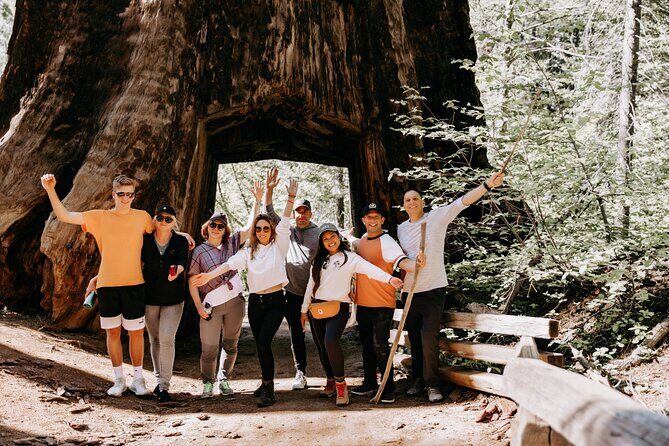
- Hotel pickup around Union Square and key downtown hotels means less hassle on Day 1
- Park entry included for U.S. residents (for the San Francisco to Yosemite option)
- Big Yosemite hits on a schedule: Yosemite Valley, Tunnel View, Bridalveil Fall, El Capitan, Half Dome
- Seasonal reality check for Horsetail Fall and winter trail swaps if conditions are unsafe
- Small-ish group with a maximum of 41 travelers, which helps keep stops moving
- Food is on your own even though the route builds in stops for breakfast, lunch, and dinner on the way back
Price and what your $99 covers (and what it doesn’t)
At $99 per person, this is priced like a practical “get me there” solution, not a leisurely private tour. What matters is what’s included: pickup from major San Francisco hotels, expert guide and commentary, and Yosemite park entry fee for U.S. residents for this specific one-way San Francisco to Yosemite transfer.
You also get free geo-based audio guides in 8 languages, which is a nice add-on when you want a little extra context while you’re standing in front of granite walls and big waterfalls. Your “not included” list is also clear: no accommodation, and no food.
That last part is where I’d plan carefully. The tour makes stops for breakfast and lunch, and there’s dinner on the trip back, but you pay for meals yourself. In other words, the transfer removes a lot of planning work, but it doesn’t make the trip fully all-inclusive.
You can also read our reviews of more tours and experiences in San Francisco



Pickup timing in San Francisco: why this starts so early
This is a one-way transfer, so you’ll be up before the sun. Pickup times run from about 5:20 AM through about 6:40 AM at select hotel areas (with one additional stop at a 7-Eleven in Livermore listed later).
If you want the simplest logistics, choose your pickup location carefully. The start point is the Hilton San Francisco Union Square (333 O’Farrell St), and the tour ends back at the meeting point. If your hotel isn’t listed, the note says to select Hilton Union Square so you’re covered.
I also like that the pickup list is built around recognizable downtown hotels and major streets like Van Ness Ave and Kearny St. That reduces the “Where do I go?” stress. Still, start your day with a buffer: early-morning pickup windows can be unforgiving if your phone’s on airplane mode or you’re stuck in hotel lobbies waiting for coffee.
Group size is capped at 41 travelers, so you’re not stuck in a massive cattle-car situation. But it’s still a bus day, not a stroll.
The Bay Bridge and Treasure Island warm-up stops
Before Yosemite, you get a couple of well-chosen stops that help break up the drive and give you a California snapshot.
Bay Bridge: the two-deck workhorse
The first stop is the San Francisco–Oakland Bay Bridge. Locally it’s called the Bay Bridge, part of Interstate 80 and the direct road between San Francisco and Oakland. The scale is the point here: about 260,000 vehicles a day on two decks.
This is not a “museum stop.” It’s more of a quick, moving breather where you can look out, snap a few photos, and get oriented.
Treasure Island: world’s fair leftovers
Next is Treasure Island, an artificial island in the bay and a neighborhood in San Francisco. It was built in 1936–37 for the 1939 Golden Gate International Exposition, and it’s designated as a California Historical Landmark.
This stop is short, but it’s a good contrast to the natural focus of the day. You’ll see how this region mixes engineering, shoreline drama, and history, all before you trade city views for granite.



The Sierra Nevada in transit: what you’re really seeing
Between the Bay Area and Yosemite Valley, you’ll roll through the Sierra Nevada region. The Sierra Nevada is a long mountain range between California’s Central Valley and the Great Basin.
From the bus, you’ll mainly feel the change in elevation and terrain rather than “tour guide moment” stops. Still, knowing what you’re approaching makes the arrival feel earned.
If you’re prone to motion sickness, this is the part where you’ll want to be ready. I’d bring whatever works for you, because once you’re in Yosemite you’ll want to be present, not white-knuckling the return of the bus ride.
Yosemite Valley: 3 hours that set the tone
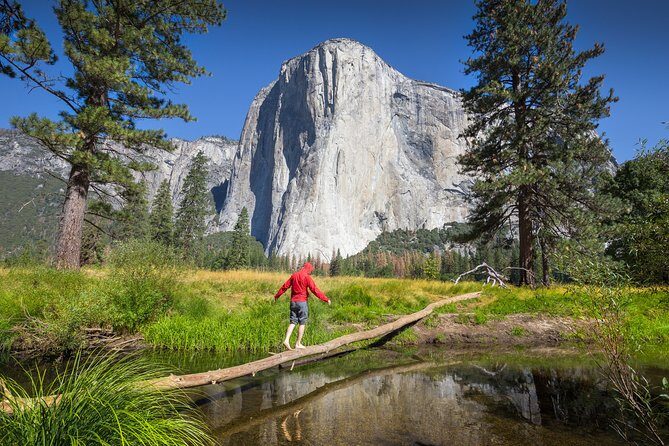
The core of the experience is Yosemite Valley, where you get about 3 hours with admission included. Yosemite Valley is a glacial valley, roughly 7.5 miles long and around 3,000–3,500 feet deep, surrounded by famous granite summits like Half Dome and El Capitan, with dense pine forest.
This is the stop where you should do two things:
1) Pick one “main view” you want to revisit (if you can, do it after you’ve looked around first).
2) Use the audio guides or your guide’s commentary to connect the names you’re seeing—because once you’re standing there, it’s easy to forget who’s who.
A strong Yosemite day usually works like this: you don’t try to “see everything.” You choose what hits you—waterfall drama, granite faces, misty views—and then let the valley rhythm carry you.
Tunnel View, Bridalveil Fall, and El Capitan: the quick-hit trio
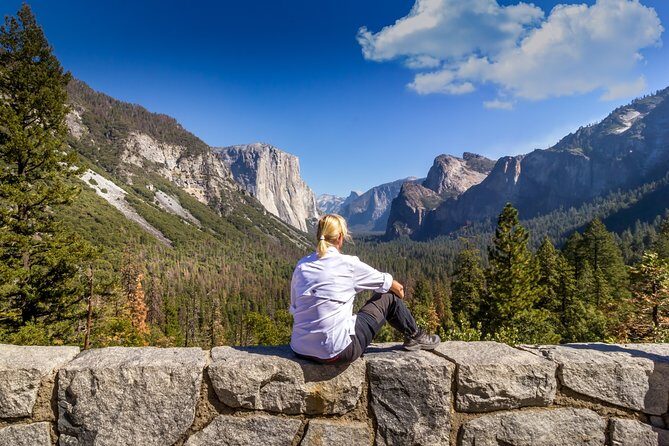
After Yosemite Valley, the route keeps momentum with iconic stops. The structure matters here: these are the places most people picture when they think of Yosemite, and you don’t want them eaten by long waits.
Tunnel View: the classic frame
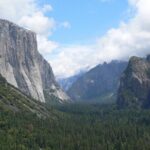
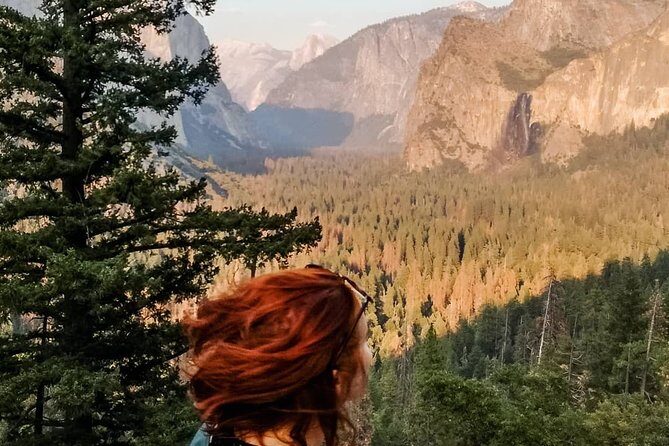
You get about 15 minutes at Tunnel View, a scenic viewpoint on State Route 41. People have documented Yosemite Valley views from here since the overlook opened in 1933.
This is one of those short stops that still feels like a “full moment” because the view is so recognizable. When you arrive, don’t rush to walk away. Stand still for a minute and let your brain map the valley.
Bridalveil Fall: the breeze factor
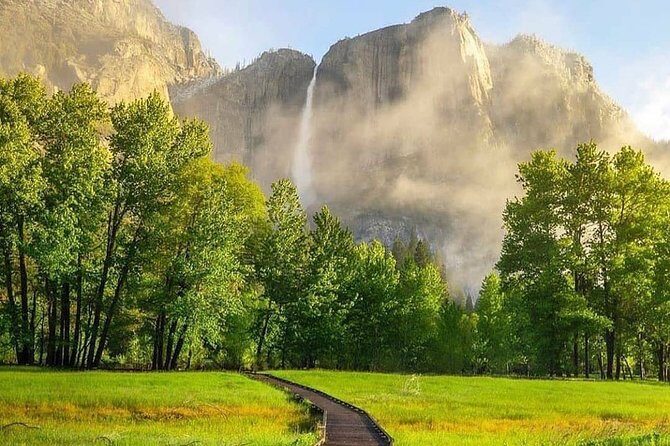
Then you’ll stop for Bridalveil Fall, one of Yosemite Valley’s most prominent waterfalls. The practical thing to know is that it can feel different depending on wind. If it’s gusty, you might notice spray and mist in the air, which changes how the waterfall looks in motion.
El Capitan: climbing’s giant poster
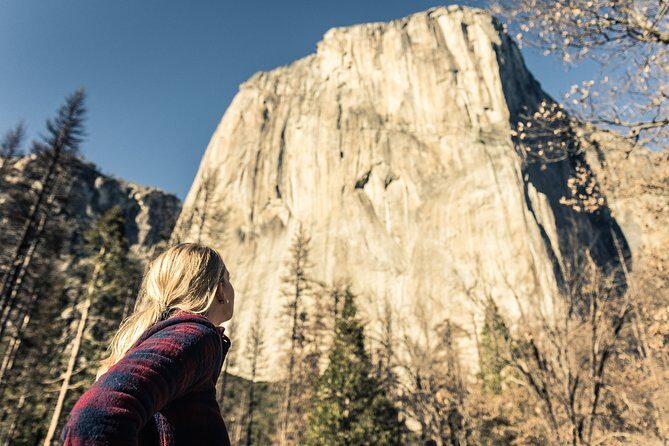
You also stop at El Capitan (El Cap), the vertical granite rock formation on the north side of Yosemite Valley near its western end. The granite monolith rises about 3,000 feet from base to summit along its tallest face, and it’s a major objective for rock climbers.
Even if climbing isn’t your thing, El Capitan is a “how is that even possible?” sight. From a viewpoint, you get a sense of scale that photos can’t fully deliver.
Half Dome and the Valley’s big names (plus a timing reality)
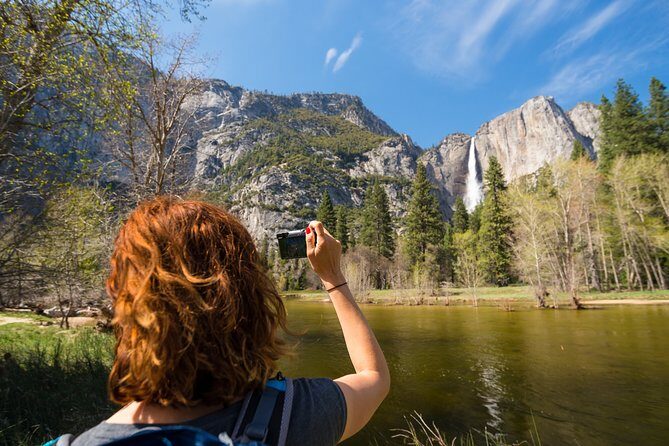
Next on the route is Half Dome at the eastern end of Yosemite Valley. It’s a granite dome known for its distinct shape. Like El Capitan, it’s one of those landmarks that instantly makes the valley feel like Yosemite.
You’ll also see how the tour balances time. Half Dome isn’t listed with a specific stop duration like Tunnel View or the Lower Yosemite Falls trail, so treat this as a “see it and move along” moment rather than a long hike plan unless the guide builds more time.
If you want photos, bring patience. You’ll be sharing space with other people in a limited viewing area, and Yosemite photo spots have a way of turning into waiting games.
Waterfalls and mist: Horsetail Fall and Lower Yosemite Falls Trail
This is where the tour leans into Yosemite’s water drama, with one big seasonal twist.
Horsetail Fall: only when the timing is right
Horsetail Fall is seasonal. It flows in winter and early spring, and there’s a special effect around the second week of February when the setting sun hits it at the right angle and illuminates the upper reaches.
The key point for your planning: you only get this if conditions and timing line up. Even then, it depends on the seasonal schedule of flow and the sun angle. If Horsetail Fall isn’t in peak season, don’t treat it as guaranteed.
Lower Yosemite Fall Trail: a short walk with real payoff
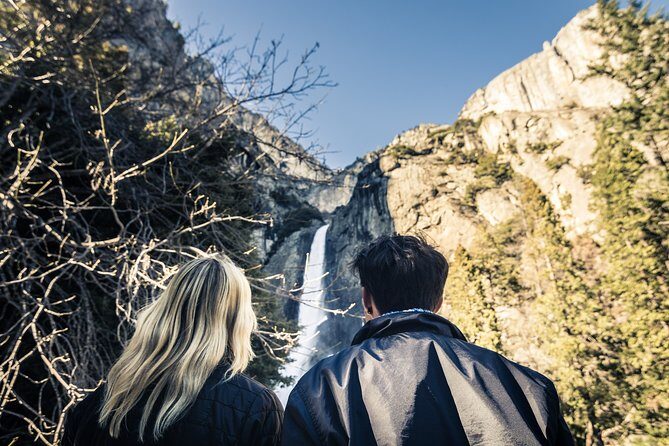
For a more dependable nature fix, you have Lower Yosemite Fall Trail time (about 15 minutes) at the base area. It’s a quarter-mile one way hike to a mist-blown view from the bottom of the 320-foot Lower Yosemite Falls.
This is a great option if you want your feet to touch the ground without spending hours hiking. It also works as a “reset” activity: you get movement, you get a close view, and then you can rejoin the group with fresher energy for the next stop.
If your schedule is tight, this is the kind of mini-trail I’d prioritize on any Yosemite day.
Merced River, Yosemite Valley Lodge, and the Visitor Center
The tour doesn’t only point at rocks. It gives you a couple of “life in the valley” stops too.
Merced River: the water system under your feet
You’ll stop at Merced River (central California), listed as 145 miles long. It’s fed by creeks including Tenaya, Yosemite, Bridalveil, and Pigeon Creeks in Yosemite Valley.
Even without a long river walk, it helps to learn what feeds the valley so the waterfalls make more sense. Water in Yosemite isn’t random; it’s a system.
Yosemite Valley Lodge: a family base
You’ll also pass by Yosemite Valley Lodge, described as a favorite choice for families and large groups, with close proximity to Yosemite Falls. For you, this is useful context: it’s one of the main built bases people use when they spend multiple nights in Yosemite.
Valley Visitor Center: maps, displays, and answers
The route includes a stop at Yosemite Valley Visitor Center, described as open year-round and packed with natural history displays, audiovisual programs, books, postcards, and maps. Staff members are available to answer questions.
If you arrive feeling “I see the sights, but I’m not sure what I’m looking at,” this is the place to fix that quickly. Even a short visit can help you pick your next route with confidence.
Audio guides in 8 languages: how to actually use them
These free unique geo-based audio guides are included, in 8 languages. Here’s how to get value from them without turning your day into a lecture you don’t want:
- Use them when you’re stopped at a major viewpoint (Tunnel View, Yosemite Valley highlights, big granite stops).
- Skip them while you’re walking between spots unless you have a quiet moment.
- Treat them like a “name + what you’re seeing” cheat sheet, not a movie you have to finish.
The payoff is that you’ll leave knowing what you saw, not just that it looked impressive.
Winter months: safer days and smarter substitutions
Yosemite in winter can be a whole different planet from San Francisco weather. The info you should take seriously: between November and March, when trails are not safe due to snow and ice, the tour substitutes the hike with additional time in Yosemite Valley.
Also, winter temperatures in Yosemite can vary drastically from San Francisco. Bring winter clothes, and especially shoes or boots with rubber soles and treads.
This matters because the Lower Yosemite Falls style of experience is partly about footing and safety. If you show up in sneakers with no traction, you’ll feel it fast.
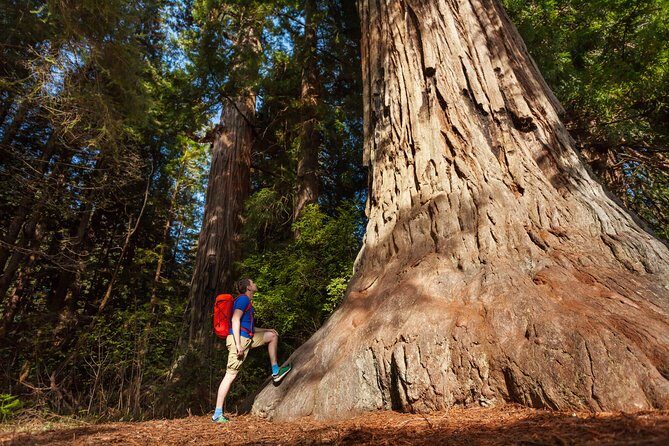
The tour also notes that Horsetail Fall is seasonal, and the “Giant Sequoias Grove” hike depends on trail conditions, especially October through May. That’s another reason to dress for changing conditions and expect that timing can shift.
Where this one-way transfer shines (and who it fits)
I’d book this if you want:
- A stress-free way to get from San Francisco to Yosemite Valley without renting a car
- A schedule that hits the best-known stops like Tunnel View and Bridalveil Fall
- A guided day that handles the big navigation problems for you
It’s especially good for first-timers who don’t want to spend their energy sorting park entry logistics months ahead. If you’re coming from outside the U.S., you’ll still likely find it simple, but you should read the fee notice carefully (more below).
I’d be cautious if:
- You hate early mornings. Pickup starts before 6 AM for many people.
- You want long hikes or lots of off-route time. This is a stop-and-see structure, not a free-roam adventure.
- You’re extremely sensitive to driving time. It’s still a bus day, and Yosemite is about far more than sitting still.
Common concerns: guide quality and safety details to watch
Most feedback in the provided info points to fun, engaging guides and a smooth ride. Names like Rob and Ross show up in positive feedback, and people describe interactive, friendly hosting and a comfortable bus.
But there are also clearly negative notes about professionalism and communication. One concern flagged a guide not using a headset and using the microphone by hand, and there was an accident-free-but-still-worrying moment described with an object sliding during a corner. Another note complained about the guide being less informed than expected, and that communication felt challenging.
My practical advice: go in expecting a bus tour with variations in hosting style. If something feels off—about safety, clarity, or the way stops are handled—speak up early. The best time to address it is at the first major stop, not after the day’s done.
Should you book the San Francisco to Yosemite one-way transfer?
If your goal is to reach Yosemite Valley with the least fuss and maximize classic highlights in a single structured day, this is a good value at $99—especially because U.S. park entry is included and you get guided commentary plus free audio guides.
I’d book it if you:
- Want hotel pickup and a clear plan for a one-way transfer
- Plan to spend time in Yosemite Valley once you’re dropped off
- Can handle an early start and quick viewpoint stops
I wouldn’t book it if you:
- Need lots of flexibility to choose your own stops
- Are hoping for a long hiking day on the itinerary
- Want meals included (they’re not)
Net: this is a practical “Yosemite on rails” option. When it runs smoothly, it’s a fast lane into one of the best places in California.
FAQ
How long is the San Francisco to Yosemite one-way transfer?
The duration is listed as approximately 5 to 6 hours.
Where are the pickup locations in San Francisco?
Pickup is offered from major San Francisco hotels and the start point is the Hilton San Francisco Union Square (333 O’Farrell St). Specific pickup times and addresses are provided, including the Mosser Hotel, major Hilton locations, Holiday Inn Golden Gateway, and others, with an additional stop listed in Livermore.
What’s included in the $99 price?
The price includes an expert guide and commentary, pickup at major San Francisco hotels, park entry fee for U.S. residents for the San Francisco to Yosemite option, and free geo-based audio guides in 8 languages. Mobile tickets are also offered.
Is Yosemite park entry included for non-U.S. residents?
Non-U.S. residents aged 16 and older are charged an additional $100 park entry fee per person after completing booking. The fee is collected by the operator via a payment link or on the bus at the start of the tour. America the Beautiful Non-Resident Pass holders do not pay this $100 fee, and the $250 pass covers up to 4 people at the entrance.
Are meals included?
No. The tour makes stops for breakfast, lunch, and dinner on the trip back, but meals are not included.
Do children need a car safety seat?
Yes. California law requires a car safety seat for all children under 8 and under 4′ 9″ (1.4 meters). If a child’s seat is not provided and the operator is not informed, the guest may not be allowed to board.
What happens in winter when trails are unsafe due to snow and ice?
Between November and March, when trails aren’t safe due to snow and ice, the tour substitutes the hike with additional time in Yosemite Valley. The guidance also recommends winter clothes, including shoes or boots with rubber soles and treads.
Can I cancel for a full refund?
Yes. You can cancel up to 24 hours in advance for a full refund. If you cancel less than 24 hours before the start time, the amount paid is not refunded.