REVIEW · SAN FRANCISCO
Asian-European Fusion Class in San Francisco (With 4-Course Meal)
Book on Viator →Operated by Cozymeal Cooking Classes · Bookable on Viator
Four courses, zero guesswork, all hands-on. This Asian-European fusion class in San Francisco turns cooking into a shared lesson, not a demo, and you’ll make everything on the spot, from bamboo basket dumplings to dessert.
What I like most is the small group size (up to 8), which keeps the chef’s attention right where it belongs, and the fact that you leave with a full 4-course meal you can actually recreate later. One thing to consider: it’s a BYOB setup, so plan to bring wine or beer, and the class start time feels strict—don’t show up early expecting to hang out.
In This Review
- Why This Class Feels Different From Standard Tours
- Key Highlights You’ll Notice Right Away
- San Francisco Kitchen Time at 90 Alvarado St
- Bamboo Basket Dumplings: Your Starter Course Gets You Cooking Fast
- What to pay attention to
- Philippine Chicken Adobo: A Savory Anchor for the Whole Menu
- The Chef’s Rotating Fusion Dish plus Your Rice Choices
- Why this part is worth your time
- Dessert: Seasonal Caramelized Fruit with Ice Cream and Citrus
- BYOB, Social Energy, and How to Enjoy Without Taking Over
- What You Learn That Actually Transfers to Home Cooking
- Price and Value: Does $145 Make Sense for 2.5 Hours?
- Who Should Book This Class (and Who Might Not Love It)
- Dietary Needs: How Flexible Is This Menu?
- Final Call: Should You Book It?
- FAQ
- Where does the class start in San Francisco?
- How long is the cooking class?
- How many people are in the class?
- What language is the class taught in?
- What’s included in the price?
- Is there an option to bring alcohol?
- Can the menu be adapted for dietary needs?
- How does cancellation work?
- Is there a minimum number of travelers?
Why This Class Feels Different From Standard Tours
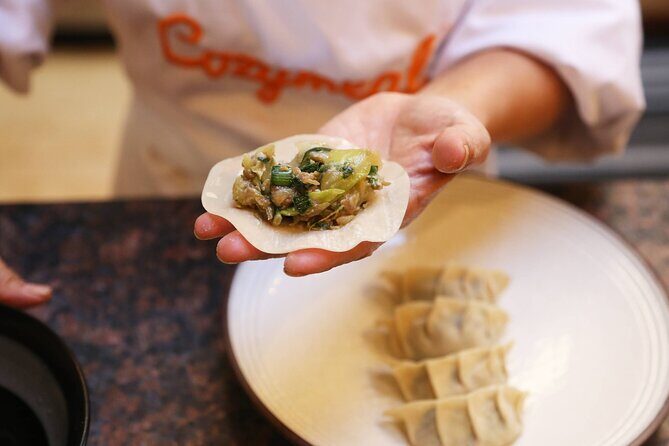
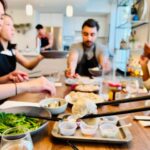
The vibe is relaxed and practical, with step-by-step guidance while you prep, cook, and plate. In one recent session, chef Dirk stood out for keeping families engaged and moving smoothly, with teaching that was clear and a bit funny.
If you’re the type who wants food sights, museums, and a walking route, this isn’t that kind of experience. It’s a focused cooking evening, designed to use your time on technique and taste, not transportation and stops.
Key Highlights You’ll Notice Right Away
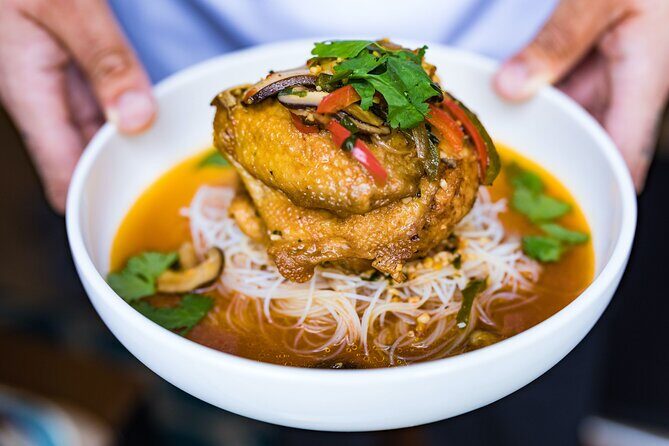
- Up to 8 people keeps the class feeling personal, with real chances to ask questions.
- A complete 4-course menu means you’re not just learning one dish.
- Asian staples with European-meets-international technique is the core theme, including dumplings and chicken adobo.
- BYOB is part of the plan, so you can match your drink to what you’re cooking.
- Rice choice matters here, with options like saffron risi e bisi, basmati, or garlic rice.
- Chef personality counts, and Dirk’s clear, funny style is a great example of what good instruction feels like.
You can also read our reviews of more tours and experiences in San Francisco

San Francisco Kitchen Time at 90 Alvarado St
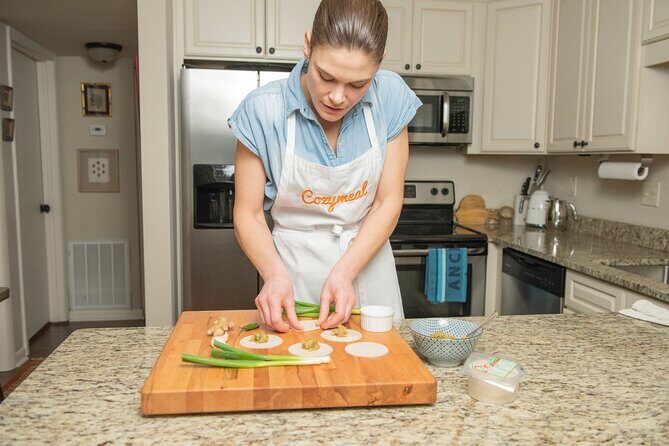
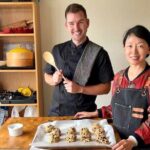
Your class starts at 90 Alvarado St, San Francisco, and it ends back there. Plan for an evening that stays put: this is about cooking together, not hopping across town.
The “where” is important because it signals the format. A smaller, home-kitchen style setting usually means you can see what’s happening at your station, not just watch from the side. And with only 8 guests max, you’re less likely to feel rushed or ignored.
I’d also treat timing as part of the experience. One helpful note from past guests: don’t arrive early expecting a buffer. If your slot starts on time, show up near your start window and get settled so you can jump right in.
Bamboo Basket Dumplings: Your Starter Course Gets You Cooking Fast
You’ll begin with a starter built around bamboo basket steamed dumplings. This is one of those dishes where technique matters, because steaming is different from pan-frying or baking, and dumpling timing affects texture fast.
Expect to learn how to assemble dumplings with seasoned filling, then get them steaming properly. The class doesn’t treat dumplings as a mystery food; it frames them as a repeatable skill you can practice later at home.
The best part is the dipping-sauce approach. You’ll have custom-made dipping sauces designed to bring out the dumplings’ flavors. Dipping sauces can feel like an afterthought in some classes, but here it’s part of the learning—so you know what to adjust next time when you want more tang, more salt, or more balance.
What to pay attention to
- Steam timing and how the dumpling skin behaves
- How the sauce changes the overall flavor in one bite
- How you plate so dumplings look good even before the first taste
Philippine Chicken Adobo: A Savory Anchor for the Whole Menu
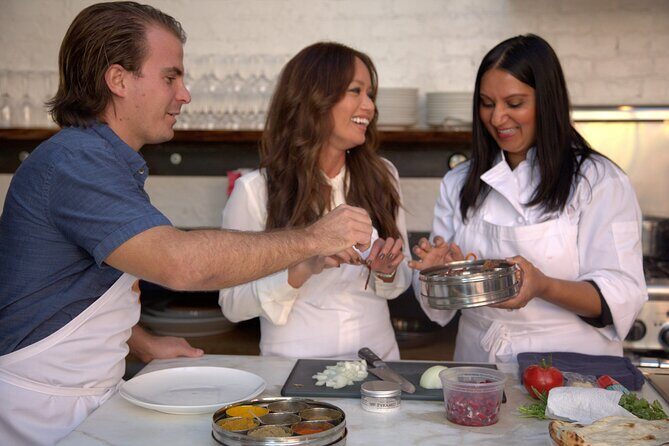
Next comes Philippine chicken adobo, a dish built on a simple idea: let soy, vinegar, garlic, and aromatics do the work. You’ll be cooking with bay leaves, garlic, soy sauce, and Datu Puti vinegar, which is a specific ingredient choice that helps explain the dish’s identity.
Adobo is a great mid-class lesson because it teaches you how to build flavor through simmering. Many people think of adobo as one thing, but once you see it cooking, you understand how the sauce thickens and how the balance of savory and tang lands on the plate.
This main course also keeps the menu grounded. You’ll have already started with delicate, steamed dumplings, and adobo brings depth and warmth. It’s the kind of contrast that makes the later fusion dish feel like a natural next step rather than a random change.






The Chef’s Rotating Fusion Dish plus Your Rice Choices
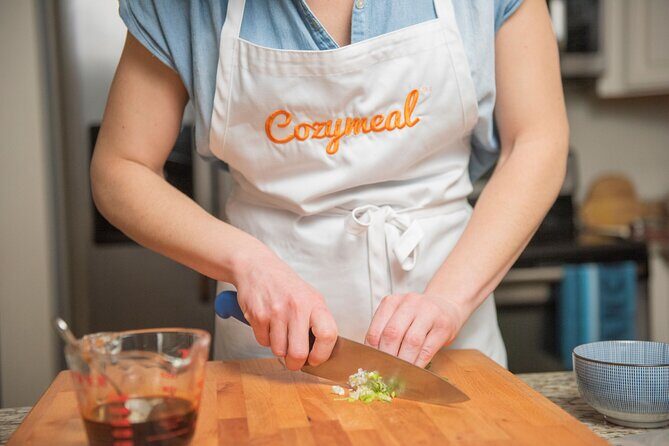
The third course is where the class leans into its Asian-European fusion mission. You’ll tackle a chef’s intercontinental fusion selection of the day, which rotates based on seasonality and fresh ingredients. In other words, you’re not just repeating a scripted menu from an old playbook.
Because the exact fusion dish can change, the learning focus matters more than memorizing one recipe. You’ll practice how to think like a fusion cook: pairing flavors, adjusting seasoning, and plating so the dish reads clearly even when ingredients come from different food worlds.
You’ll also choose your side from options like:
- White basmati
- Saffron risi e bisi
- Garlic rice
That rice section is more than carbs. It’s a lesson in choosing the right base for the flavors on your plate. Saffron risi e bisi connects to the Italian-leaning side of the fusion idea, while garlic rice and basmati offer classic support for bold main courses.
Why this part is worth your time
If you only learn one technique in a cooking class, you’ll still be limited later. Here, you get training in pairing a main with a side that changes how the meal tastes overall. That’s the kind of skill you can reuse for dinner at home.
Dessert: Seasonal Caramelized Fruit with Ice Cream and Citrus
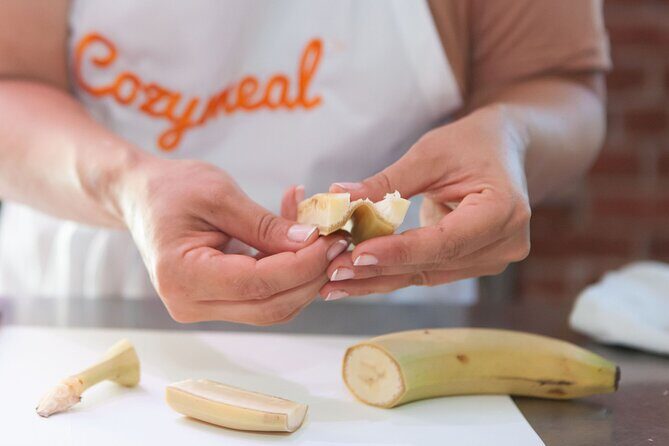
By dessert, the class has usually moved from learning mechanics to understanding balance. You’ll make seasonal caramelized fruits served with ice cream and citrus.
Caramelizing fruit teaches you patience and attention. You’re watching how sweetness develops, how the fruit softens, and how quickly things can shift from perfect to too far. Pair that with cold ice cream, and you get the contrast that makes dessert satisfying instead of just sweet.
Citrus addition keeps the dessert from feeling heavy. Even if you like sugary desserts, this kind of finish usually makes people feel refreshed rather than overfull. It’s a nice close to a class that has already hit savory, tangy, and aromatic flavors.
BYOB, Social Energy, and How to Enjoy Without Taking Over
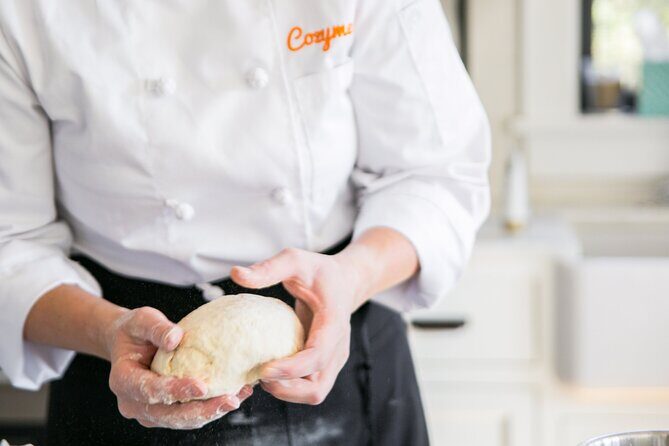
This is a BYOB event, so you’re welcome to bring wine or beer to enjoy during the class. That changes the tone in a good way if you’re the type who likes a relaxed evening, especially with other people working at the same kitchen stations.
Just keep it practical. Cooking is hands-on, so think easy drinking rather than overcommitting. You’ll be tasting as you go, and you want to stay coordinated enough to follow steps and help your station stay on track.
If you like chatting, this class can be a friendly social setting. The small group size helps. You won’t feel like you’re shouting across rows of chairs, and you’ll have more chances to bond while you chop, mix, steam, and plate.
What You Learn That Actually Transfers to Home Cooking
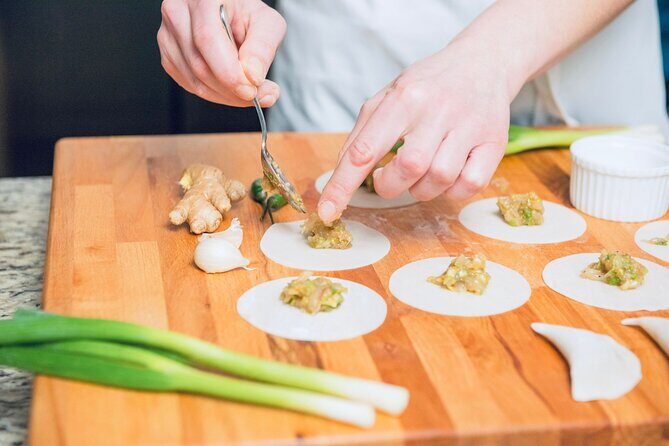
A good cooking class teaches more than recipes. This one is built around technique and plating, so the value isn’t just what you eat tonight—it’s what you can repeat later.
Here’s the practical skill set you’re likely to walk away with:
- How to build a flavor base for adobo with garlic, soy, and vinegar
- How steaming affects dumpling texture and timing
- How sauce can completely change one bite
- How to think through fusion by balancing flavors rather than forcing them
- How to pair rice with a specific kind of dish
Also, the chef guidance style matters. In past classes, chef Dirk stood out for being engaging and clear, even for families. That combination is gold because it means you can focus on what your hands are doing, not just on the final plated result.
Price and Value: Does $145 Make Sense for 2.5 Hours?
At $145 per person, you’re paying for a small-group, hands-on cooking lesson plus a full 4-course meal. In most cities, that combination can be pricey when you compare it to dinner alone or to a generic cooking demo.
The value improves because the group is capped at 8 guests. When instruction is personal, you waste less time waiting for help, and you get more actual cooking time at your station. For many people, that’s what separates a good class from a pricey one.
The other value factor is the menu variety. You’re making dumplings, a signature tangy main (adobo), a rotating fusion dish, rice, and dessert. That’s a full evening meal with multiple techniques, not a single-dish workshop.
One more thing: since it’s BYOB, you can control your beverage cost. If you’re planning to drink anyway, you’ll likely feel good about the overall spend.
Who Should Book This Class (and Who Might Not Love It)
This is a great fit if you want:
- A food-focused evening in San Francisco
- Hands-on instruction rather than passive watching
- Asian cooking that includes both comfort classics and fusion ideas
- A chance to learn plating and plating-style presentation
It’s also a nice option for couples. Sharing a kitchen task makes the experience feel more like a date that actually creates something, not just a meal you consume.
Families can fit well too, especially given the kind of engaging instruction described in past sessions. But it does require attention and participation, since it’s truly hands-on.
If you’re the kind of traveler who wants scenery stops and a route through neighborhoods, you may prefer a food tour instead. This class is stationary and skills-first.
Dietary Needs: How Flexible Is This Menu?
This experience is designed to accommodate a variety of dietary needs, and you can let the organizers know in advance so they can tailor the experience. That’s a big practical advantage because fusion menus can be tricky when dietary restrictions are strict.
Still, I recommend sending your needs early and clearly. Even with tailoring, you want enough time for the kitchen to adjust ingredients and portions without slowing the class down.
Service animals are allowed, which is also a helpful detail if you travel with one.
Final Call: Should You Book It?
If you want a fun, social cooking class where you actually make the food, this is a strong yes. The small-group size, the four-course format, and the mix of dumpling skills, adobo technique, and rotating fusion cooking make it feel like real value for a 2.5-hour evening.
I’d hesitate only if you dislike hands-on cooking, you’re not into bringing your own wine or beer, or you’re expecting a tour with multiple locations. This is about one place, one chef, and a full meal you create yourself.
If that sounds like your kind of night, book it, show up on time, and come hungry for technique as well as taste.
FAQ
Where does the class start in San Francisco?
The class starts at 90 Alvarado St, San Francisco, CA 94110, USA, and it ends back at the same meeting point.
How long is the cooking class?
It runs for about 2 hours 30 minutes.
How many people are in the class?
The experience is limited to a small group of up to 8 guests.
What language is the class taught in?
The class is offered in English.
What’s included in the price?
You get a four-course menu (dumplings, adobo, a chef’s fusion dish, and dessert), plus a hands-on venue experience and personal guidance in the small group.
Is there an option to bring alcohol?
Yes. This is a BYOB event, and you may bring wine or beer.
Can the menu be adapted for dietary needs?
Yes. The experience is designed to accommodate a variety of dietary needs, and you should let them know in advance so they can tailor the experience.
How does cancellation work?
You can cancel for a full refund if you cancel at least 24 hours before the experience starts. Free cancellation is available up to that point.
Is there a minimum number of travelers?
Yes. This experience requires a minimum number of travelers, and if it doesn’t meet that minimum, it will be canceled and you’ll be offered a different date or a full refund.