REVIEW · SAN FRANCISCO
Beginner Surfing in San Francisco at Pacifica Beach
Book on Viator →Operated by Adventure Out LLC · Bookable on Viator
First-time surfing doesn’t have to be scary. This beginner clinic in Pacifica Beach turns the ocean into a teachable system—land drills, safety coaching, and then time in the water on starter conditions. I like that the lesson is structured (not just a group thrown in) and that you get all the gear included.
Two big wins for me: the instructors are described as very safety conscious and patient, and the format makes it possible to actually progress fast—learning the basics, then practicing pop-ups and wave riding in shallow, beginner-friendly water. One thing to consider: you’ll still be doing real ocean time in a wetsuit, so if you hate being cold or you’re unsure about sea conditions, plan to treat the day as an active lesson, not a relaxed stroll.
In This Review
- Key highlights worth planning around
- Pacifica Beach makes a smart first surf choice from San Francisco
- Your 2.5-hour lesson: land drills, then whitewater wave time
- How the instructors build confidence (and keep it safe)
- Wave etiquette and ocean awareness: the part that makes surfing easier fast
- Gear included: wetsuit and surfboard, plus a plan for feeling comfortable
- What “beginner-friendly” means in practice at Pacifica
- Small group size: why max 8 matters for your first pop-up
- Morning vs mid-day lessons: how to pick the best time for your day
- Price and value: what $139 buys (and what to watch)
- Meeting point on CA-1: easy to find, easy to return from
- Who should book this beginner surfing clinic?
- Practical expectations: what success can look like on lesson one
- Should you book this beginner surfing lesson in Pacifica?
- FAQ
- How long is the beginner surfing lesson at Pacifica Beach?
- How much time is spent in the water?
- What is included in the price?
- What should I bring if I book this surf lesson?
- Where do we meet for the activity?
- How big are the groups?
- What ages can participate?
- Do I get to choose between different times of day?
- Is the lesson offered in English?
- What happens if weather is poor?
Key highlights worth planning around
- CPR/First-Aid and lifeguard certified instructors who keep the focus on safety and confidence
- Land lesson first (about 30 minutes) covering ocean awareness, wave breaks, etiquette, and core techniques
- 1:30–2 hours in the water during a ~2.5-hour total session, with plenty of setup time built in
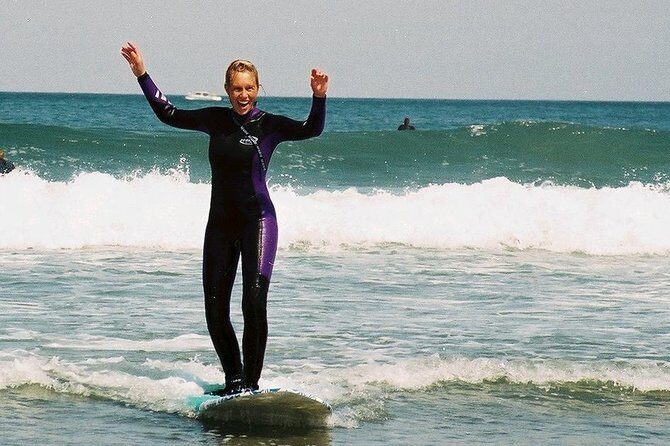
- Beginner wave strategy: start in shallow water riding the whitewater, then gradually go farther if you’re ready
- Small groups (max 8) so you get hands-on attention when you need it
- Morning or mid-day options so you can match the surf clinic to your day in San Francisco
Pacifica Beach makes a smart first surf choice from San Francisco
If you’re staying in San Francisco, you’ve basically got two options: either you gamble on “maybe I’ll figure it out” beach time, or you show up to a beginner-focused setup. Pacifica is a classic choice because it’s close enough for a day trip, but it still feels like its own ocean world—wind, swell, and all.
What I like about this clinic’s location and approach is that they treat your first session like training, not a stunt. You’re not expected to be fearless from minute one. Instead, you learn how waves behave and how to move with them, then you practice in conditions meant for new surfers.
You can also read our reviews of more tours and experiences in San Francisco.



Your 2.5-hour lesson: land drills, then whitewater wave time
This is a ~2 hour 30 minute class with a realistic pacing. There’s setup time at the start to get everyone suited up and onto the beach, so your day doesn’t feel rushed. The land portion takes about 30 minutes, then you go into the water.
Here’s the flow you can expect:
- Land lesson (about 30 minutes): ocean awareness, wave breaks, ocean conditions, and safety in and out of the water
- Wave etiquette and technique basics: paddling, push-up, and pop-up mechanics
- In-water practice: first riding whitewater in shallow areas, then moving farther out only when you’re comfortable
The promise you’ll want to check in your head is timing: you should get about 1:30 to 2 hours of water time in that 2.5-hour session. That balance matters. Too many “intro” surf experiences spend most of the time standing around, watching. Here, the lesson is built around repeated tries—especially the pop-up.
How the instructors build confidence (and keep it safe)
This clinic’s biggest strength is that it doesn’t treat learning to surf like a trial by ocean. The instructors are CPR/First-Aid and lifeguard certified, so safety is not just a talking point. You’ll go through rules for being in the water, plus guidance on what to do when conditions change.
They also set the tone with a calm, supportive environment. Even for absolute first-timers, the goal is a non-threatening experience—so you can focus on the fundamentals instead of trying to guess what the ocean wants from you.
One useful detail from the way the instruction is described: they teach you to read what’s happening—things like wave breaks and ocean conditions—so you’re not only copying movements. That’s how you stop feeling helpless and start feeling in control.
Wave etiquette and ocean awareness: the part that makes surfing easier fast
Before you ride anything, you learn the “rules of the ocean,” and it pays off immediately once you’re paddling. The clinic covers:
- Ocean awareness and wave breaks
- Ocean conditions (so you can understand what you’re seeing)
- Safety in and out of the water
- Wave etiquette
Etiquette might sound like boring paperwork, but it directly affects your comfort. If you understand where people are positioned and what you’re supposed to do when you’re catching or letting a wave pass, you feel less stressed—and you waste less time resetting.
And because you start in shallower water riding whitewater, you can practice without the fear of going too deep too soon.
Gear included: wetsuit and surfboard, plus a plan for feeling comfortable
You don’t have to shop for wetsuits or borrow a board. The price includes all rental gear at no charge, including the wetsuit and surfboard. That’s a big deal for first-timers because gear is often the hidden cost that makes the whole trip feel more complicated than it should.
The clinic also gives you a built-in reason not to overthink it. You’re using the equipment they provide, so you can focus on technique: paddling timing, getting to a position, push-up form, then the pop-up and balance.
After the session, your body will feel it—especially if you’re learning to pop up from the sand position and then repeat it in water conditions. I’d plan for a little “post-surf recovery” time so you don’t rush into the next stop.




What “beginner-friendly” means in practice at Pacifica
Beginner surfing can mean anything from easy practice waves to, unfortunately, jumping in and hoping you survive. Here, beginner-friendly means progression.
You’ll start where it’s manageable: shallow water with whitewater riding. That’s important because whitewater is more forgiving than the full face of a breaking wave. You can focus on timing and movement without needing perfect wave selection right away.
Then, if you’re comfortable, you work on venturing farther out. The key is that you’re not forced into deeper water on day one. The instruction is designed to get you to the point where you can move through the basics with control.
If you’re the type who likes clear steps, this format will feel fair. It’s basically “learn the rules, practice the moves, then add complexity.”
Small group size: why max 8 matters for your first pop-up
This experience runs with a maximum of 8 travelers. That isn’t just a number—it changes how coaching feels.
In a group that small, instructors can watch you closely and adjust what you’re doing. Many first-time surfers don’t need more information. They need one or two corrections at the moment you’re trying the pop-up or paddling into a wave.
Also, small groups reduce the common beginner problem: you get one turn, then watch for a long time while your momentum disappears. Here, the water time is long enough that you can keep practicing.
Morning vs mid-day lessons: how to pick the best time for your day
You can choose a morning or mid-day lesson. That flexibility helps if you’re planning a full San Francisco itinerary and don’t want your day to revolve around just one time slot.
In real life, your best choice depends on your energy and your schedule. Morning sessions can feel great if you want the clinic early and keep the rest of the day open. Mid-day can work if you want a slower start, or if you’re pairing the surf lesson with other coastal plans.
Either way, expect setup time first, then land lesson, then a long stretch of water practice. The clinic is built as one connected experience, not a quick “hit and go.”
Price and value: what $139 buys (and what to watch)
The price is $139 per person for the beginner clinic, and it includes all taxes, fees, and handling charges, plus a professional guide and the full rental gear. That matters because gear and instructor time are the two biggest variables in surf lessons.
What’s not included: parking fees. If you’re driving, factor that into your budget so you’re not surprised at the end. If you’re relying on transit, you’ll be glad the meeting area is near public transportation.
Another value point: the lesson is long enough that you’re not just getting a demo. You’re getting 1:30–2 hours on the water plus the coaching that makes those attempts useful.
Finally, it’s booked about 25 days in advance on average, so if you have a tight schedule, I’d treat it like something to lock in early rather than waiting for the last week.
Meeting point on CA-1: easy to find, easy to return from
You meet at 5000 CA-1, Pacifica, CA 94044. The activity ends back at the meeting point, which is convenient if you’re coordinating onward travel.
Because the start and end are the same, you don’t need to plan extra transportation for after you’re done. You’ll just wrap up where you began, with the rest of your day still intact.
Who should book this beginner surfing clinic?
This one is aimed squarely at beginners. The clinic includes everything you need to start, and the instruction is built around ocean awareness, safety, and learning technique step by step.
It also lists:
- Minimum age 12
- Most travelers can participate
- Small class size (max 8)
I think it’s ideal if you want a first surf experience that feels organized and encouraging, especially if you’re learning for the first time and you’d rather be guided through paddling, push-up, and pop-up than figure it out alone.
If you’re an experienced surfer, you might find it more instructional than challenging—but for first-timers and curious learners, it’s a smart way to get a real foundation.
Practical expectations: what success can look like on lesson one
A common beginner anxiety is that you’ll spend the entire class falling off the board. A better way to frame it is this: you’re practicing pop-up mechanics and balance with instructor support, and you start riding small whitewater waves as you get comfortable.
Many people get a real highlight early—like the first moment you manage to stand and ride for a short stretch. Even when you don’t stand every time, you’ll usually get enough reps that the progress feels tangible.
The biggest win is that you leave with a map in your head: what to watch for, how to position yourself, and how to move from paddling to push-up to pop-up in a way that makes sense.
Should you book this beginner surfing lesson in Pacifica?
Yes—if you want your first surf session to be guided, safe, and structured, this is a strong pick. The combination of certified instructors, a land-to-water lesson flow, small group size, and gear included makes it feel like good value for a hands-on learning day.
I’d hesitate only if you know you won’t handle ocean conditions or being in cold water for an extended period, even with a wetsuit. Surfing is active learning, not a passive viewing experience.
If you’re curious and you want to actually catch waves (not just buy a souvenir board), this clinic is one of the more straightforward ways to start.
FAQ
How long is the beginner surfing lesson at Pacifica Beach?
The lesson runs about 2 hours 30 minutes total.
How much time is spent in the water?
You can expect approximately 1:30–2 hours of water time during the 2.5-hour lesson, with some built-in setup time at the start and a land lesson.
What is included in the price?
The price includes a professional guide and all rental gear (wetsuit and surfboard), plus all taxes, fees, and handling charges.
What should I bring if I book this surf lesson?
The gear is provided, including the wetsuit and surfboard. You should plan for dressing changes before and after, and you may want to bring items that help you stay comfortable after being in the water.
Where do we meet for the activity?
The meeting point is 5000 CA-1, Pacifica, CA 94044.
How big are the groups?
This experience has a maximum group size of 8 travelers.
What ages can participate?
The minimum age is 12 years.
Do I get to choose between different times of day?
Yes. You can choose a morning or mid-day lesson.
Is the lesson offered in English?
Yes, the tour is offered in English.
What happens if weather is poor?
The experience requires good weather. If it’s canceled due to poor weather, you’ll be offered a different date or a full refund.