REVIEW · SAN FRANCISCO
California Academy of Sciences General Admission Ticket
Book on Viator →Operated by California Academy of Sciences · Bookable on Viator
One ticket, four ecosystems, and no wasted time. The California Academy of Sciences pulls together an aquarium, planetarium, rainforest, and natural history museum under one living roof in San Francisco’s Golden Gate Park. The instant-access setup also means you’re not stuck at a separate redemption kiosk before you even start exploring.
I especially love the animal encounters—like the African penguin colony and the lovable white alligator, Claude. I also like that so much of your visit is designed for real participation, from hands-on exhibits to daily public programs such as animal feedings and pop-up demonstrations.
The main drawback is timing. The place is big and can get crowded, and parts of the day (like the rainforest) run warm and humid, so if you’re trying to do everything in one go, you’ll want a simple plan.
In This Review
- Key highlights to prioritize before you go
- Instant-access entry in Golden Gate Park
- Price and value: what $49 buys you (and why it can feel worth it)
- The main museum: giant scale exhibits and California-focused science
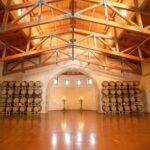
- Steinhart Aquarium: coral reefs, venom, and the Twilight Zone feel
- Morrison Planetarium: included showtimes you reserve on arrival
- Osher Rainforest: four stories of heat, humidity, and close encounters
- Where to put Golden Gate Park into your plan
- A simple game plan for 3 to 5 hours without feeling rushed
- Who this is best for (and who might want a different plan)
- Should you book the California Academy of Sciences general admission ticket?
- FAQ
- How long should I plan to spend at the California Academy of Sciences?
- Is the planetarium included with general admission?
- Do I need to wait in line to redeem a ticket?
- What are the hours of operation for the listed date range?
- Can I bring food, or is there a place to buy it?
- Is there a cancellation option?
Key highlights to prioritize before you go
- Instant-access entry using your mobile ticket, so you can go straight in
- African penguin feeding and Q&A with a biologist during your visit
- Steinhart Aquarium’s indoor coral reef plus the Venom exhibit
- Planetarium showtimes included in admission, reserved at the planetarium desk via QR code
- Osher Rainforest: a four-story glass dome with free-flying birds and butterflies
- Comfort matters: wear walking shoes and prepare for hot/humid rainforest conditions
Instant-access entry in Golden Gate Park
You’re starting in one of the best SF locations for a full day: the Academy sits inside Golden Gate Park. If you’re the type who hates waiting, the best part is the no-extra-step entry. Your ticket works as an instant pass, so you’re not trying to figure out a second line just to redeem a voucher.
This also makes the visit easier to fit into real life. You don’t have to commit to a very exact arrival time to get started. Get there, scan, walk in, and spend your energy on the animals and science instead of logistics.
I’d still show up with a little breathing room. The park area is easy to reach by public transportation, but once you’re inside the Academy, you’ll likely move faster than you expect. Good shoes make a bigger difference than you’d think.
You can also read our reviews of more tours and experiences in San Francisco


Price and value: what $49 buys you (and why it can feel worth it)
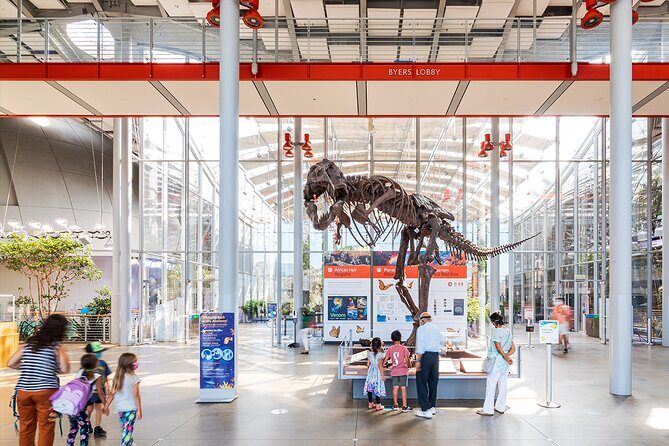
At $49 per person, this is a ticket where value comes from how much you’re getting under one roof. You’re not just paying for “a museum.” You’re paying for a full science circuit: natural history exhibits, the Steinhart Aquarium, the Morrison Planetarium show experience, and the Osher Rainforest.
Two things tip the value in your favor:
1) Planetarium access is part of admission, not an expensive add-on. You do reserve a specific showtime once you arrive, but the shows themselves are included.
2) The facility is built for multiple age levels. That matters because it reduces the odds that you’ll spend part of the day trying to keep kids entertained or adults bored.
That said, you should budget for extras. Food inside is available for purchase (at the Academy Café and Terrace Restaurant), and you’ll likely want snacks for an extended visit. One family noted the cost of parking and meals added up fast on a busy day. It doesn’t mean it’s not a great experience. It just means you shouldn’t plan on the final bill ending at $49.
The main museum: giant scale exhibits and California-focused science
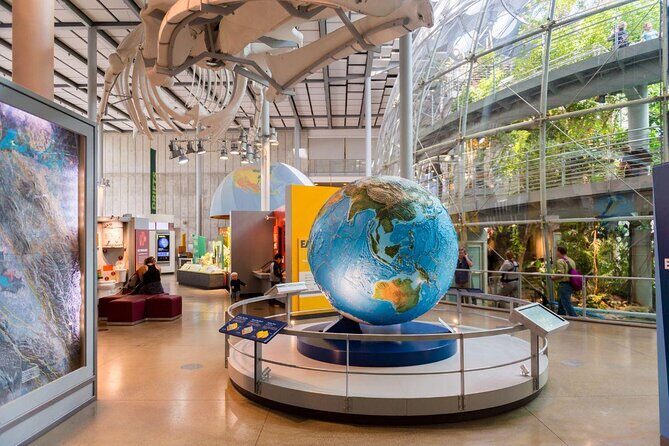
Your first big stop is the California Academy of Sciences museum spaces, where you walk beneath the scale of natural history—think large-format bones and geology exhibits that help you understand the planet as a physical place, not just a concept.
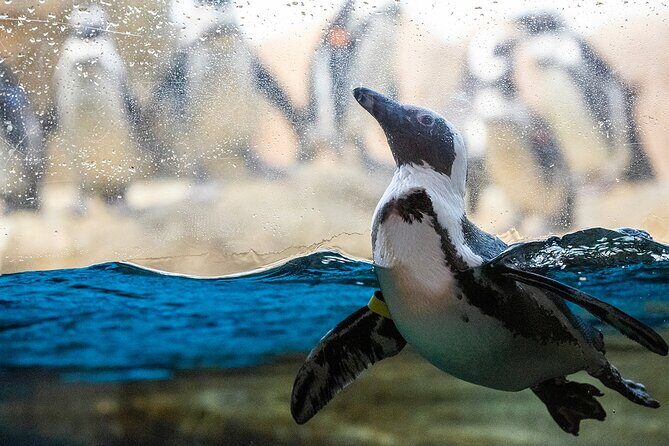
This is also where you get some of the most memorable “live” moments. The African penguin colony is a standout. A biologist feeds the penguins and answers questions, which turns it from a static viewing moment into a short science conversation.
Two exhibit-style highlights are worth planning for:
- Geology collection: you’re looking at hundreds of specimens from the Academy’s geology work. If you like learning how the ground you walk on was formed, this section gives you satisfying detail.
- California: State of Nature: this exhibit connects California’s biodiversity across four ecosystems. It’s designed to make you notice patterns—what lives where, and why.
There’s also a kid-friendly nature play area called Wander Woods, which is an outdoors-style exploration space meant to spark curiosity. If your group includes toddlers or elementary kids, it can help break up the “sit and read” moments with movement.
A practical consideration: with so many exhibit zones, you may feel pulled in different directions. If you want the penguins and at least one major exhibit block, your best friend is not speed—it’s picking priorities before the day gets away from you.
Steinhart Aquarium: coral reefs, venom, and the Twilight Zone feel
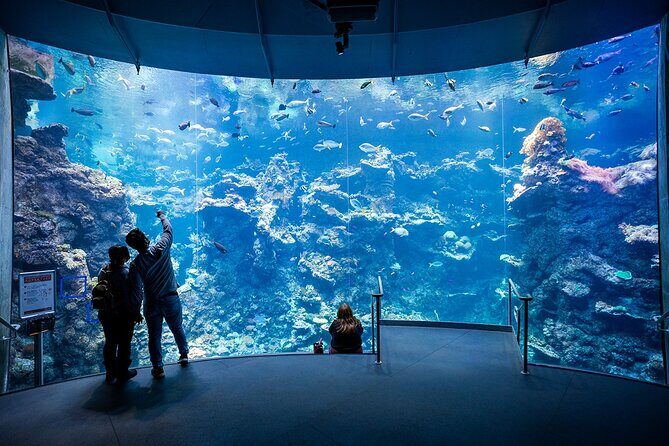
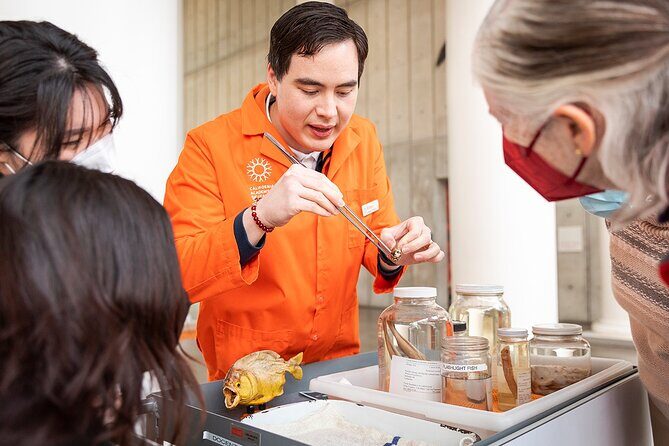
The Steinhart Aquarium portion is where the Academy flexes its live-animal strengths. You’re stepping into a world built around interaction and visual impact, with nearly 60,000 live animals representing more than 1,000 species.
If you’re short on time, aim for the signature experiences:
- The world’s deepest living indoor coral reef, which is the kind of exhibit that makes you stop just to look around.
- The Venom exhibit, which spotlights creatures with dangerous adaptations in a way that turns fear into understanding.
- The Twilight Zone, a pitch-black experience aimed at marine life that doesn’t get daylight the way we do.
One theme that runs through the aquarium experience is that it’s not only about the animals—it’s about how environment shapes behavior. Even if you don’t read every label, you’ll feel the logic of the design: light levels change, habitats change, and the animals match those conditions.
Timewise, you’re typically looking at about an hour here if you keep a steady pace. If you stop for photos, watch a presentation, and take in the Twilight Zone experience carefully, it may take longer. Either way, the aquarium is one of the best uses of your day because it’s fully “alive” in every sense.
Morrison Planetarium: included showtimes you reserve on arrival
The Morrison Planetarium is a 75-foot dome screen show experience that’s meant to make space feel close. The visuals are designed to take you from faraway galaxies to the workings of our own planet.
Here’s the key practical detail: planetarium show passes are included, but you still need to reserve a specific showtime once you arrive. You do that at the planetarium pass pick-up desk across from the planetarium entrance, and the process involves scanning a QR code posted in the lobby.
Shows may not be appropriate for children under 7, and children under 4 are not permitted. That age note matters for families. If you’re traveling with younger kids, you’ll need to plan your day so the planetarium doesn’t become a last-minute disappointment.
A small tip that makes the planetarium work better: decide which shows you’d be excited for before you head in. Then when it’s time to reserve, you’re not scrambling while your group is hungry or tired.






Osher Rainforest: four stories of heat, humidity, and close encounters
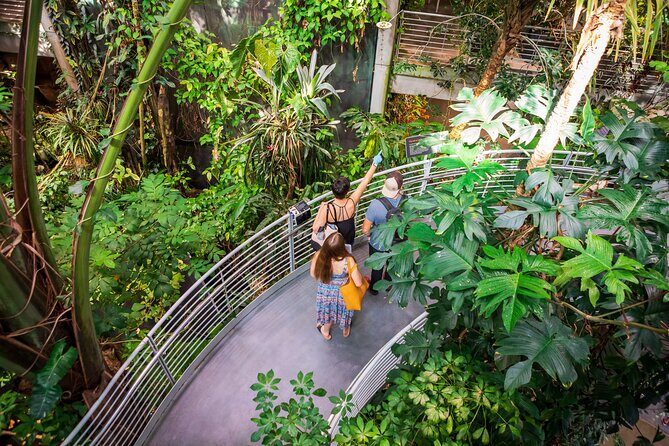
The Osher Rainforest is the Academy’s glass-dome experience, and it’s one of the most “feel it in your body” parts of the visit. You’re walking into a space designed to mimic rainforest conditions, with a four-story structure and more than 1,600 plants and animals.
This exhibit is built around movement and proximity. You’ll come face to face with animals as you make your way through stages, and you’re likely to see free-flying birds and butterflies.
Some highlights that stand out for visitors include:
- exotic reptiles
- golden-silk orb weaver spiders
- enormous Amazonian fish
The big drawback is physical comfort. Multiple people point out that the rainforest runs hot and humid, so it can feel like a mini climate change mid-day. If you get chilly easily, bring a light layer. If you get overheated, plan your rainforest time for when your group is ready to handle it.
This is also one of the easiest spots to lose track of time because the animals and plants invite repeat looks. Aim to enjoy it rather than “tour it,” especially with kids. The best rainforest visits feel less like checking boxes and more like noticing small things—tiny webs, different movement patterns, and the way the environment creates behavior.
Where to put Golden Gate Park into your plan
Since the Academy sits in Golden Gate Park, you don’t have to treat this as a museum-only outing. When you finish, you’re essentially already in a great SF environment for a breather.
This matters because the Academy itself can take up your whole attention span. Adding even a short walk outside helps reset energy. It can also be a smart way to avoid the last-hour stress of trying to squeeze in one more exhibit while everyone is tired.
If the weather is good, you’ll likely appreciate the open-air break. If it’s foggy, windy, or cool, it’s even more reason to bring layers—especially since you may have just been in a warm rainforest interior.
A simple game plan for 3 to 5 hours without feeling rushed
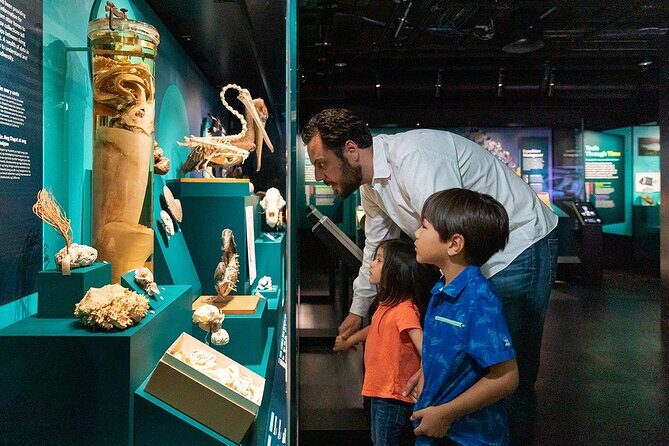
The Academy works best when you treat it like a route, not a marathon. Your ticket is good for a visit that typically runs 3 to 5 hours, and that’s a realistic window if you keep your pacing intentional.
Here’s a practical order that often works well:
- Start with the main museum areas and aim for the penguins when you’re fresh.
- Move into the aquarium next, since it’s designed for longer attention.
- Reserve your planetarium showtime as soon as you can once you’re on-site.
- Finish with the rainforest when you’re ready for warm, humid indoor conditions.
Also, build in a little flexibility. The Academy can get full, and a packed day can reduce how much you can linger. One family noted the museum felt too full to enjoy every attraction fully. That’s not an excuse to avoid it—it’s a reason to go in with priorities.
A final comfort note: the Academy involves a lot of walking. If you’re prone to sore feet, plan on shoes that can handle uneven indoor floors and long corridors.
Who this is best for (and who might want a different plan)
This is an easy yes if you’re traveling with kids, because the mix is built for different ages: penguins and live exhibits for young animal lovers, geology and California ecosystems for curious learners, and the planetarium for anyone who likes big visuals.
Adults usually enjoy it, too, especially if you like science that feels tangible. The aquarium and rainforest are the kind of experiences that don’t require a background in biology to appreciate. You can walk through and still come away feeling like you learned how environments work.
I’d think twice if you strongly prefer formal guided tours. This admission ticket is designed for self-paced exploring, not structured, scripted explanations all day long. If you want a tour guide narrating every room, you might want to pair admission with a separate guided option.
Should you book the California Academy of Sciences general admission ticket?
If you’re aiming for one SF experience that combines animals, hands-on science, and planetarium visuals without extra ticket hunting, I think this is a strong booking. The instant-access entry is genuinely helpful, and the fact that planetarium shows are included (with reservable showtimes) makes the ticket feel like a bundled value.
Book it if:
- you want one day that covers aquarium + rainforest + planetarium
- you have kids and want a place that can keep interest through multiple interests
- you’d rather explore at your own pace than follow a rigid schedule
Skip or adjust expectations if:
- your group is sensitive to heat/humidity and the rainforest conditions could be stressful
- you don’t like crowds and you’re trying to do everything at once
If you go in with priorities—penguins, aquarium, one planetarium show, and then rainforest—you’ll come out with a full, memorable science day.
FAQ
How long should I plan to spend at the California Academy of Sciences?
Most people plan around 3 to 5 hours. You’ll want enough time for the aquarium and at least one planetarium show, plus the rainforest and museum exhibits.
Is the planetarium included with general admission?
Yes. Planetarium show passes are included with admission, but you reserve a showtime after you arrive using the QR code and the planetarium pass pick-up desk.
Do I need to wait in line to redeem a ticket?
No. This is instant-access admission, so you can enter without redeeming your voucher at a separate kiosk.
What are the hours of operation for the listed date range?
For 01/20/2026 – 02/13/2026, it’s Monday–Saturday, 9:30 AM to 5:00 PM. For 02/14/2026 – 02/16/2026, it shows Monday, 9:30 AM to 5:00 PM.
Can I bring food, or is there a place to buy it?
Food and drinks are available for purchase at the Academy Café and Terrace Restaurant. The ticket does not include meals.
Is there a cancellation option?
Yes, you can cancel for a full refund up to 24 hours before the experience start time.