REVIEW · SAN FRANCISCO
Highway 1 Pacific Coast Highway Self-Guided Driving Tour Bundle
Book on Viator →Operated by Drive with Action · Bookable on Viator
Highway 1 feels endless, until you have a guide. This self-led smartphone audio tour turns the long drive into a string of story stops, from Pacifica down to the Santa Monica Pier. I especially like that the app uses offline GPS, so you are not stuck hunting signal just to keep your place.
Two things that really help: the audio runs hands-free based on location, and you can go at your own pace without booking timed entry. One drawback to consider is that the directions are not heavy on turn-by-turn driving detail, so you’ll want to keep your eyes on the screen (or your navigation app) so you do not drift off the route.
In This Review
- Quick hits: what makes this Highway 1 drive work
- Price and value: $29.99 for up to 4 people in your car
- Getting set up right: offline GPS and the “download on strong Wi‑Fi” rule
- Your pacing: 5–7 hours versus 10–11 hours
- Start in San Francisco, end at Santa Monica Pier
- Pacifica to Half Moon Bay: bay history, an ocean viewpoint, and WWII ghosts
- From Pigeon Point to Davenport: lighthouses, redwoods, seals, and pocket-beach solitude
- Santa Cruz to Monterey: wharf energy, weird attractions, and sardine stories
- Big Sur and the long cliff show: bridges, beaches, seals, and odd landmarks
- Central Coast small-town swing: Cayucos, Morro Bay, SLO Cal, and the dunes
- Santa Barbara, Ventura, and the final stretch into Los Angeles
- What I’d watch for: the few reasons this might not be your best match
- Who should book this Highway 1 audio tour
- Should you book it? My call
- FAQ
- How much does the Highway 1 self-guided audio tour cost?
- How long is the tour?
- Does it work offline?
- Do I need to download anything before starting?
- Where does the tour start and end?
- Is it a guided group tour with a person meeting us?
- Is admission included for all stops?
- Can I pause or go at my own pace?
- What if the tour won’t start or I have audio issues?
Quick hits: what makes this Highway 1 drive work
- One download, one-year validity: buy once and use it again during the next 12 months
- Offline GPS support: stories continue even without cellular or Wi‑Fi after you download
- Hands-free audio by location: fewer button presses, more time looking out the window
- Value priced per group: $29.99 per group (up to 4), not per person
- Fast stop style: most stops are short photo-and-go moments built for a long day
Price and value: $29.99 for up to 4 people in your car
At $29.99 per group (up to four), this tour is built for shared cost. If you’re driving with friends or family, that can beat paying per person for a bus tour or a live guide, especially on Highway 1 where you’re already paying for gas and parking. You also get a year of access, which matters if you plan to return to parts of the coast later.
I like that it’s not tied to a set departure time for a group of strangers. You start from the designated beginning point when you’re ready, then pause for snacks, stretch breaks, and parking whenever the coast demands it. This is a good fit if you want structure but not crowds.
You can also read our reviews of more guided tours in San Francisco

Getting set up right: offline GPS and the “download on strong Wi‑Fi” rule
The tour lives in the Action’s Tour Guide App. After booking, you get an email and a text with setup instructions and a password. The big practical rule is: you must download the tour while you have strong Wi‑Fi or cellular. After that, the app is designed to work offline.
If you want fewer headaches, do this:
- Download the tour before you head out onto the coastal stretches where signal can be inconsistent.
- Start the app on-site at the beginning point (no one meets you).
- If you plan to listen while driving, consider connecting your phone to your car stereo for clearer audio.
There’s also a small “systems thinking” note: if you try to open the tour in a way that confuses your phone, the tour may not start. Keep it simple—open the Action’s Tour Guide App directly, then launch the version that matches your starting direction.
Your pacing: 5–7 hours versus 10–11 hours
You’ll see two timing signals. The essentials-style route is described as covering about 555 miles in 5–7 hours, but the full driving window you should plan for is roughly 10 to 11 hours. That difference usually comes down to how often you actually park, hike a little, or linger for photos.
Here’s the way I’d pace it for a first trip:
- Treat most stops as quick proof-of-place moments (photo, short look, audio story).
- Save longer breaks for beaches or viewpoints where you can truly enjoy the scene without rushing.
- If it’s peak season, plan your timing around crowds and parking limits, even if you’re not paying for paid attractions.
Start in San Francisco, end at Santa Monica Pier
You begin at PG6H+8F San Francisco Lakeshore, San Francisco, CA. The tour ends at 108 Santa Monica Pier, Santa Monica, CA 90401.
That end-point matters more than people expect. Santa Monica is busy, and the finish is exactly where you want to be when you’re done driving—food, walking, and an easy wrap-up into Los Angeles.
Pacifica to Half Moon Bay: bay history, an ocean viewpoint, and WWII ghosts
This first leg is about settling into the coast’s mood fast—ocean views, small towns, and history you’ll never get from a highway sign.
Stop 1: Pacifica
As you drive through Pacifica, you’ll get context about San Francisco Bay history and the Spanish explorer Gaspar de Portolá, along with the unusual story of how the town got its name. Pacifica is a nice opening stop because it anchors you in place before you hit the dramatic cliff stretches.
Stop 2: Pedro Point
This is a rocky ocean point with phenomenal views. The catch: there used to be a road, but now it’s only accessible via footpath and only at low tide. If you’re visiting when tides are wrong, you may not be able to reach the point—so it’s a good one to treat as weather/timing dependent.
Stop 3: Devil’s Slide Trail (not included)
You’ll pass a World War II bunker built to watch for a potential Japanese invasion. Today it’s a hangout spot for local youth and graffiti artists. This stop has a “then-and-now” feeling that works well while you’re still warming up.
Stop 4: Gray Whale Cove State Beach (not included)
If you’re driving in December and January, this is where gray whales migrate south past the shore. The narration sets the expectation: you can sometimes see them with the naked eye, so it’s worth a calm, patient stop if conditions are right.
Stop 5: Montara
Montara is described as a rustic, charming town that traces its existence to an old-timey lighthouse, and you’ll see older buildings still standing. It’s a good “slow down” area before Half Moon Bay ramps up.
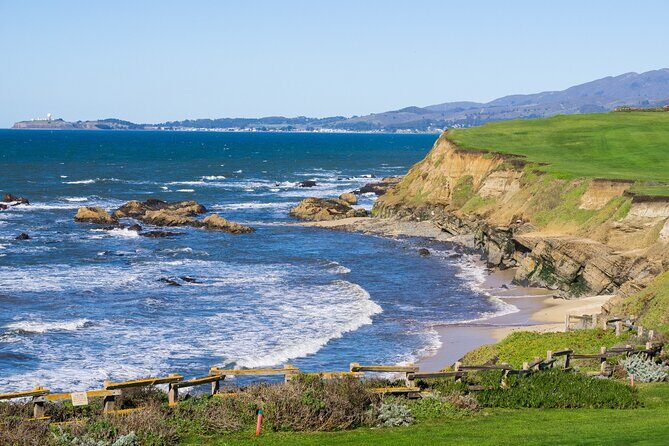
Stop 6: Half Moon Bay
This is a classic small seaside town with a crescent-shaped bay view—plus a darker twist in the story: at one time, the area was described as the most corrupt county in California due to mob activity. It’s interesting because it adds real texture beyond scenery.
Bean Hollow State Beach (unnumbered)
Named for its oddly shaped coast, it’s a humble beach with a nice scenery break. It’s also the kind of stop where you’ll probably just park, walk a bit, and enjoy the quiet rather than plan an all-day outing.
You can also read our reviews of more tours and experiences in San Francisco

From Pigeon Point to Davenport: lighthouses, redwoods, seals, and pocket-beach solitude
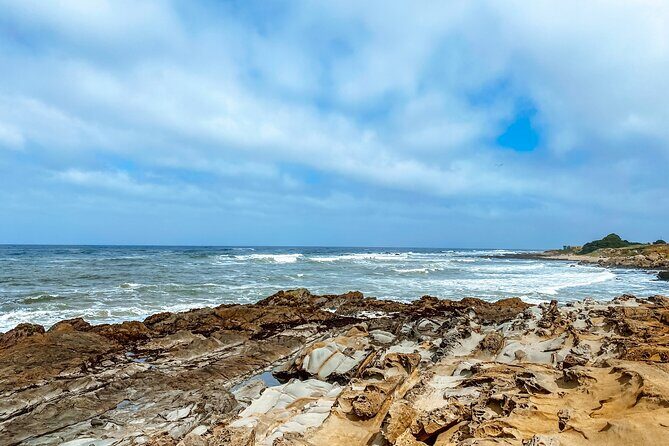
This stretch is one of the best “mix-and-match” sections because you get coastline drama, wildlife, and forest big-time.
Pigeon Point Lighthouse
At 115 feet, it’s the tallest lighthouse on the west coast and one of the oldest. If you like photos, this is a strong candidate, especially if the light is clear and golden.
Redwood groves you pass (including Big Basin Redwoods State Park)
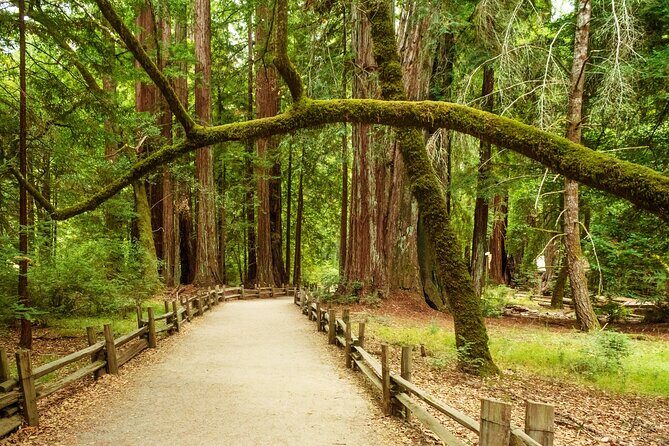
You won’t necessarily enter, but you’ll drive by lush, towering trees that are meant to be seen to get it. Big Basin Redwoods State Park is also called out for tall old growth trees and a chance of wildlife sightings if you’re traveling in the morning.
Elephant seal reserve (December to April best)
The tour explicitly points to elephant seals. The best viewing window you’re given is December through April, during breeding season. If you can time your trip for those months, this one goes from nice to special fast.
Stop 8: Davenport
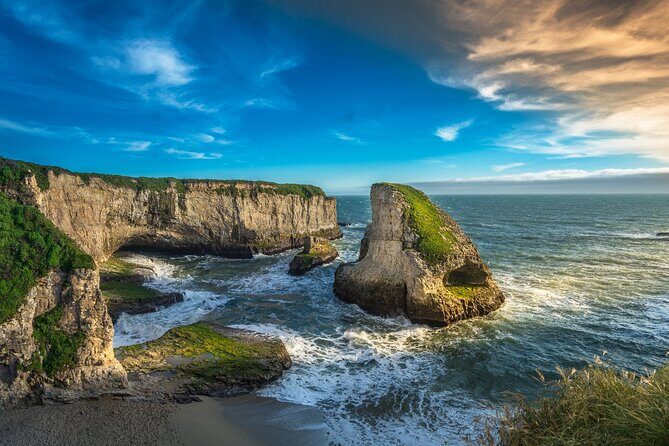
Davenport is tiny (just over 400 people), but it’s known for pristine beaches. A highlighted landmark is the Davenport Crack, where water carved a deep tunnel through a cliff, creating a split-like look.
The shark-fin rock cove (unnumbered)
Despite the name, it is not about sharks. It’s about a distinctive rock formation that looks like a huge fin. It’s another “look first” stop—short and satisfying.
Pocket beaches (unnumbered)
These beaches are small and secluded, and reaching them takes scrabbling. That means fewer people, but also more effort. If you hate uneven ground, stay closer to main viewpoints.
Santa Cruz to Monterey: wharf energy, weird attractions, and sardine stories
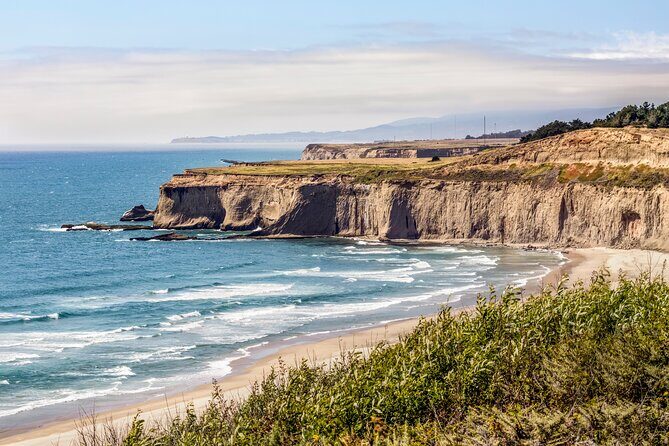
Now you get a shift from pure nature to California fun plus marine history.
Stop 9: Santa Cruz
Santa Cruz is described as founded in 1791, with picture-perfect architecture, good food, and quirky shops. The tone here is different from the quieter beach pullouts you’ve had earlier.
Santa Cruz Wharf
The wharf is the hotspot, full of seafood restaurants and fresh-catch focus, plus an amusement park with a fully functional wooden roller coaster. If you want a break that still feels coastal, this is it.
Mystery Spot (near Santa Cruz, opened in 1939)
This is the classic gravity-defying roadside attraction, with demonstrations that appear to defy gravity, involving a short steep walk and inside a wooden building.
Pet-friendly beach with bluffs (unnamed in the data)
You’re told about a large beach with ample parking and ocean views plus towering bluffs, and it’s pet friendly. Treat it as a practical stop when you want space to park without the “are we far from the car?” stress.
Sunset State Beach
This is called out as one of central California’s best sunset spots. The practical tip: go late afternoon and plan ahead since people flock there.
Elkhorn Slough Reserve
A wetland where salt water meets fresh water, with over 700 species of terrestrial and marine animals. Even if you cannot spot everything, the stop is about setting you up to look with more attention.
A bay story tied to sardines (unnumbered)
You’ll get narration about a once-plentiful sardine population and what changed. This is where the tour leans into cause-and-effect, not just scenic postcard moments.
Stop 10: Monterey
Monterey’s roots include sardine packing, and today Cannery Row is a strip of converted factories turned into gift shops, seafood restaurants, and bars. You also get the Monterey Bay Aquarium callout as a major stop for thousands of marine animals and interactive exhibits (entry not included).
Big Sur and the long cliff show: bridges, beaches, seals, and odd landmarks
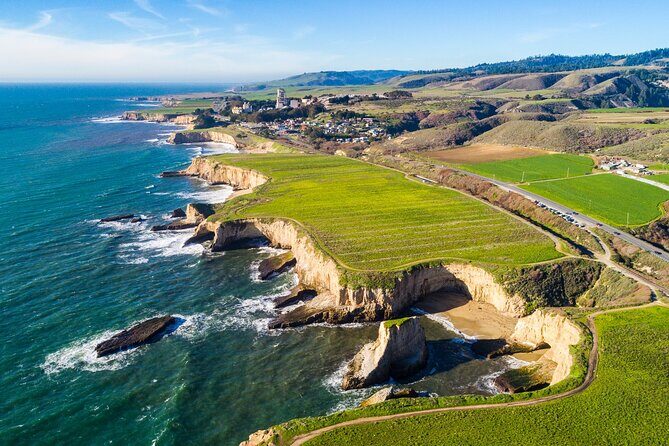
Big Sur is the headline stretch, and the audio guide treats it like one: dramatic bluffs, rugged hiking trails, and a long list of photo-rich pullouts.
Stop 11: Big Sur
Expect the classic feel—cliffs rising hundreds of feet above crashing waves, lush greenery, and rocky trails. Because it’s remote, plan on fewer quick escapes. Park, breathe, and accept that the drive is part of the experience.
17-Mile Drive detour (via Pebble Beach and Pacific Grove)
This is presented as a scenic detour with ocean views and lavish estates. If you’re short on time, you can treat it as optional; if you like dramatic viewpoints and don’t mind traffic, it’s worth tasting.
Stop 12: Carmel-by-the-Sea
Carmel is described as picture-perfect, known for fairytale cottages, eccentric residents, and a huge number of art galleries. There’s also a white sand beach beside a cypress grove, popular for dog walking and sunset viewing.
Marine reserve for animal variety + scuba (unnamed in the data)
You’ll pass by a reserve described as offering a great scuba diving option and a variety of marine and terrestrial animals. Since the data doesn’t name it, use the audio cues as your guide and treat it as a “watch for the narration” moment.
Stop 13: Garrapata State Park (not included)
It’s known for Big Sur hiking trails, some leading to the coast. The drawback here is simple: if you’re not wearing solid footwear, stick to viewpoints. If you are, the payoff is ocean views plus the chance to see valleys of lilies and redwood groves.
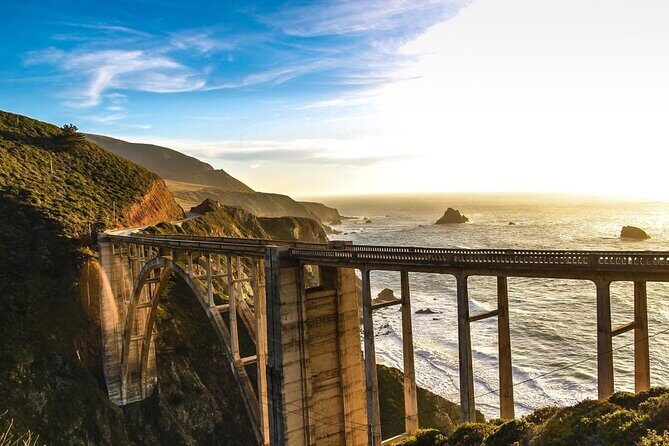
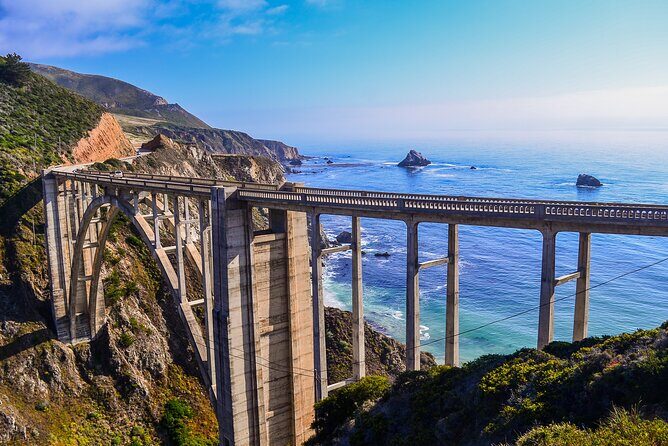
Stop 14: Bixby Creek Bridge
This is one of California’s most photographed bridges. The audio keeps the focus on the graceful arch and the ocean-and-bluff contrast. Expect another quick stop that feels worth it every time.
Point Sur Lighthouse (via a pass-by viewpoint)
The story here is about a lighthouse that once was a nightmare for ships traveling at night, and now it’s placed on the National Register of Historic Places. It’s a “big history with a small roadside viewpoint” kind of stop.
An untouched coastline stretch (unnamed in the data)
You’ll learn that the landowners forbade development along the stretch, creating an untouched wilderness feel. It’s one of those details that explains why Big Sur still looks so raw.
A brand-new bridge replacing one cracked after a 2017 landslide (unnamed in the data)
The guide flags engineering that’s literally responding to the coast’s danger. It’s a useful reminder: Big Sur changes, and the road has to keep up.
Pfeiffer Beach (purple sand)
This detour needs a narrow road turn-off, but it’s specifically noted for purple sand caused by manganese garnet washed down from nearby bluffs. If you care about unusual geology, this one earns attention.
Seal Beach Overlook
You’ll likely spot California’s favorite marine mammals on the rocks. The narration also notes a very good chance of seeing multiple seals.
Partington Cove (not included)
This sheltered cove is described as secluded and quiet. It’s also rumored to have been a moonshiners dropoff point during Prohibition—exactly the kind of spooky story that works with the foggy coast mood.
An 80-foot waterfall once cascading into the Pacific (not included)
Mudslides changed the landscape, but you’ll still see an impressive sight. The practical caution: trails can be slick and conditions change. Bring a watchful eye.
Big Creek Bridge
At 589 feet, it’s another architecture marvel with turnouts at each end so you can pull over and photograph. This is one of those “you don’t need to hike to get payoff” stops.
Limekiln State Park (unnamed in the data)
Named for the lime production industry, it has four historic 19th-century lime kilns. It’s a nice contrast to all the ocean stops—more human industry, less scenery only.
Pitkins Curve Bridge
This is a protective shed plus a bridge designed to safeguard the highway from rockslides. The story behind the structure is noted as even more interesting than the unusual shape.
Jade cove (unnamed in the data)
You’ll hear about a prospecting rush for jade. Most of the big gems were scooped up, but visitors could find small pieces. Treat it as a “keep your eyes open” stop rather than a guarantee.
Old-growth redwood grove (unnamed in the data)
The tallest trees can reach up to 350 feet. Again, you won’t need to do anything complex. You just look up.
Ragged Point
Bluffs up to 400 feet above the ocean, minimal development, and lots of vistas. This is where the tour leans into the pure view factor.
A popular rustic inn (unnamed in the data)
You’ll pass a well-known inn in the wilderness of Big Sur. Even if you’re not staying, it’s described as a great place to grab a quick bite.
A “chopped top” lighthouse (unnamed in the data)
You’ll get the backstory as you cruise by. It’s another quick icon stop that adds character to otherwise repetitive highway miles.
Elephant Seal Vista Point
This is described as one of the best places to see elephant seals, with a fully accessible walkway. Since you’re told seals are often seen lounging in crowds on the rocks, you’ll want a slow walk and patient looking.
Moonstone Beach Drive
This detour runs along the shores of Moonstone Beach with a boardwalk for stretching your legs. Low effort, high payoff for a break.
Nitt Witt Ridge
An eccentric house built by reclusive artist Arthur Beal, made almost entirely from trash. It’s odd in the best way: it looks like it should not work, but it does.
Harmony (only about 18 people)
This tiny stop is a fun counterpoint to all the coast chaos—just a quick moment to feel how small this place gets.
Central Coast small-town swing: Cayucos, Morro Bay, SLO Cal, and the dunes
After Big Sur, the coast loosens up into smaller towns and quick scenic stops.
Cayucos
An old-time Wild West vibe: saloons, antique shops, and an unincorporated-town feel. It’s more “wander” than “race through.”
Morro Bay
Known for Morro Rock, a volcanic plug rising 600 feet out of the water, plus a nesting spot for peregrine falcons. Even if you only drive by, it’s a strong visual landmark.
San Luis Obispo (SLO Cal)
Described as lush, flower-filled, and easygoing. The key practical note is that it’s positioned as a must-see stop, and it likely breaks up the driving fatigue.
Bubblegum Alley
A quirky stop where both walls are covered in bubble gum left by visitors over the years. The guide also invites you to add your own stick if you have one.
A former mining area turned hiking and mountain biking trails (unnamed in the data)
The area had chromium and mercury mines in the 20th century, and now it offers over 8 miles of hiking and mountain biking trails. It’s a good example of how the coast isn’t just nature—it’s also change over time.
Avila Beach
You’ll hear a dark history about an oil company obliterating the town and then rebuilding it. That context changes how you view the shoreline.
Dinosaur Caves Park
You’re told it has neither dinosaurs nor caves, but it’s still lovely for a picnic. The name’s explanation is part of the narration once you arrive.
Pismo Beach
A beachside community with history tied to European missionaries’ early landing. You also get a season-based nature stop: monarch butterflies shelter in eucalyptus trees between October and February.
Guadalupe
A small quiet break when you need relief from the road.
Tall west-coast dunes
The dunes are described as among the tallest on the west coast, reaching up to 500 feet. Standing on top gives a panorama view over ocean and surroundings.
Lompoc flowers and murals
Lompoc grows tens of thousands of flowers and has 40 murals honoring flower history and scenes from the town’s past and present.
Lompoc Wine Ghetto
A collection of wineries and tasting rooms described as world-class. If you like planning a stop around tastings, this is one to watch for—but again, tastings and entry are not included.
Optional detour: Jalama Beach
Presented as quieter and crowd-averse friendly compared to other coast spots. This is a good call if you hate peak-hour parking pressure.
Refugio State Beach
Described as the quintessential California beach: white sand, palm trees, plenty of sunlight, and shockingly blue water. Great if you want classic SoCal vibes rather than just cliffs.
Second monarch/butterfly grove stop
Another eucalyptus butterfly scene is called out, with a caution that eucalyptus trees have been struggling. It’s still framed as a must-see if you’re visiting between November and February.
Santa Barbara, Ventura, and the final stretch into Los Angeles
This last chunk is where the coast turns into a “postcard day” with beaches and easy town time.
Santa Barbara
One of the prettiest towns on the route in the guide’s telling. It’s framed as a former Spanish mission town now known for artists, top-tier restaurants, and idyllic beaches.
Thousand Steps Beach
A misleading name: you’ll find 218 steps down to the beach. That’s a big practical factor—if your legs are done, you might skip this.
Carpinteria State Beach
A favorite for swimming and camping, plus harbor seals. The practical takeaway is to keep eyes open while you’re relaxing.
Rincon Beach
Presented as a top surfing destination, hosting the Rincon Classic with big-name surfers named in the story.
Faria Beach (and Las Pitas Point)
Another surfing-focused stop. The guide notes limited sand space, making it less ideal for average beachgoers but appealing to local surfers for privacy.
Ventura (San Buenaventura)
A SoCal city with shoreline, character, and restaurants/boutiques along the seaside boardwalk. The audio also mentions big-name celebrity visits (Johnny Cash and John Lennon) as part of the town lore.
Point Mugu Rock
Ancient volcanic rock that posed major problems during early highway building, now a good place to pull over and view the coastline.
Sycamore Cove Beach
Beloved by campers and includes picnic tables and grills for public use. Good if you want a simple seaside picnic setup.
El Matador State Beach
Rock formations make it a photographer favorite, with sunset framed as the best time to visit.
Point Dume and Zuma Beach
Point Dume is linked to a famous film moment, while Zuma Beach is described as a large county beach with long wide sands and excellent surf. This is classic Los Angeles coastal energy.
Malibu
The tour calls it the epitome of a SoCal beach town with laid-back vibes and strong surfing opportunities, plus a list of famous homeowners. The story adds context, but the real draw is the final ocean run.
Santa Monica Pier
Your ending note is about the beach plus the Santa Monica Pier as a perfect finish beside LA’s glitz and glam. It’s a practical way to close a long drive.
What I’d watch for: the few reasons this might not be your best match
This tour can be a great way to turn a long day into something you remember for the stories, not just the photos. But there are a couple of cautions.
Navigation depends on attention. If you stop looking at your phone or you drift away from the route plan, it can be easier to get off sync. You’ll enjoy it more if you treat the screen as part of your driving kit.
Audio timing can be sensitive. Some people reported abrupt cuts or truncated beginnings. That’s not something you can fully control, but you can reduce issues by starting clean, using stable audio settings, and avoiding rapid phone switching mid-drive.
Not every stop is fully included. Several stops are marked as not including admission tickets. That means you should expect that you may need to handle any entry fees yourself if you want to go deeper than the road-side pass.
Who should book this Highway 1 audio tour
You’ll probably love it if you:
- Want structure for Highway 1 but prefer solo pace over a guided group schedule
- Drive with 1–3 other people and want value pricing per car
- Care about history and human details as much as the ocean views
- Can commit to a good download setup on strong Wi‑Fi before you rely on offline GPS
You might skip it (or keep expectations lower) if you:
- Want heavy turn-by-turn directions like a full sat-nav replacement
- Plan a very stop-and-go day with lots of hiking entrances where fees matter
- Need the tour to work from inside Google Maps rather than the Action’s Tour Guide App
Should you book it? My call
If you’re doing Highway 1 for the first time and you want to make sure you catch the key moments without paying for a live guide, this is a strong value buy. The offline GPS and hands-free location audio are the core wins, and the stories make the long drive feel less like stress and more like a guided road trip.
I’d book it if you can follow the setup rule (download on strong Wi‑Fi) and you’re comfortable using your phone screen plus your driving focus. If you know you’ll ignore the app, this might frustrate you fast. For the right driver, it turns “just driving” into a memorable route.
FAQ
How much does the Highway 1 self-guided audio tour cost?
It’s $29.99 per group, up to 4 people.
How long is the tour?
The duration is listed as approximately 10 to 11 hours.
Does it work offline?
Yes. Offline maps and offline GPS functionality are part of the design after you download the tour with strong Wi‑Fi or cellular.
Do I need to download anything before starting?
Yes. After booking, you download the Action’s Tour Guide App and then download the tour content while you have strong Wi‑Fi/cellular.
Where does the tour start and end?
It starts at PG6H+8F San Francisco Lakeshore, San Francisco, CA, and ends at 108 Santa Monica Pier, Santa Monica, CA 90401.
Is it a guided group tour with a person meeting us?
No. This is self-guided, and no one meets you at the start point.
Is admission included for all stops?
Not always. Some stops are marked as Admission Ticket Not Included, so attraction passes or entry tickets are not included.
Can I pause or go at my own pace?
Yes. The audio is designed to play on its own and you can pause for breaks, photos, and snacks.
What if the tour won’t start or I have audio issues?
If you face audio issues, the info says to contact support. You should also ensure you launch the tour in the Action’s Tour Guide App and start at the designated starting point.