REVIEW · SAN FRANCISCO
Learn to Catch and Cook Crab under Golden Gate Bridge SF
Book on Viator →Operated by DURASNARE - Fishing and Crabbing Guide · Bookable on Viator
Crab fishing under the Golden Gate is loud fun. This 3.5-hour pier trip mixes hands-on crabbing with real skill-building, plus you’ll eat what you catch—right there near the water in San Francisco. I love how the guide keeps it friendly and focused, and I also love that you’re not just watching; you’re actively casting and setting crab gear the whole time. The one thing to think about is the “moderate physical fitness” part—working from a pier takes balance and some active time, so plan for that.
My favorite part is the teaching style. Guide Lawrence (the owner) runs the class with a calm, ready-for-anything vibe, and the group stays small enough to get help fast. The other big win is the finish: your crab ends up cooked on-site, so the day feels complete. If you’re expecting a private tour, the max group size of 8 travelers may feel a bit crowded, but it usually also means you get more hands-on attention.
In This Review
- Key Highlights You’ll Care About
- A Pier Lesson Under the Golden Gate Bridge
- What You Learn: Dungeness and Rock Crabs, Not Guesswork
- The Gear and the Guide Factor: Why Durasnare Snares Matter
- On-Site Cooking: Turning Your Catch Into Dinner
- Your 3.5-Hour Game Plan at Torpedo Wharf
- Price and Value: Why $150 Can Make Sense Here
- Who This Works Best For (and Who Might Hesitate)
- What to Expect Day-of: Small Group Energy and Real Coaching
- Booking Tips That Actually Help
- Should You Book This Crabbing Class Under the Golden Gate?
- FAQ
- Where does the tour start?
- How long is the experience?
- What is the price per person?
- Do I need a fishing license to go crabbing?
- What will I catch and cook?
- Is experience required?
- How big is the group?
- What should I know about cancellations?
Key Highlights You’ll Care About
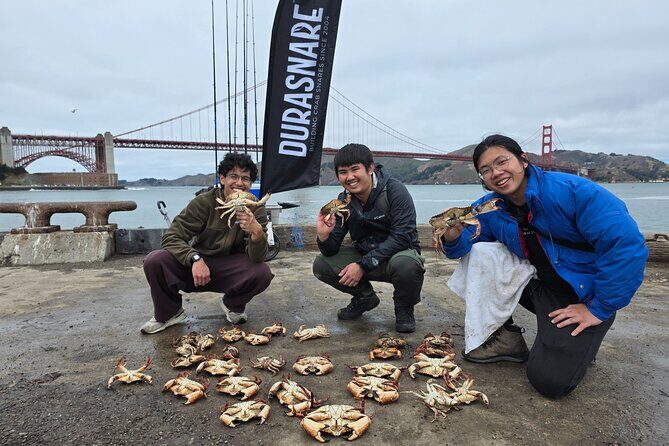
- Crabbing lesson that turns into dinner: catch, then cook on-site.
- No fishing license needed: you can focus on learning instead of permits.
- Gear included and beginner-proof: rod and Durasnare crab snares are provided.
- A small group (max 8): easier to get coaching while you practice.
- Lawrence’s teaching approach: supportive, prepared, and practical from start to finish.
- Golden Gate views while you work: SF scenery while you learn the routine.
A Pier Lesson Under the Golden Gate Bridge
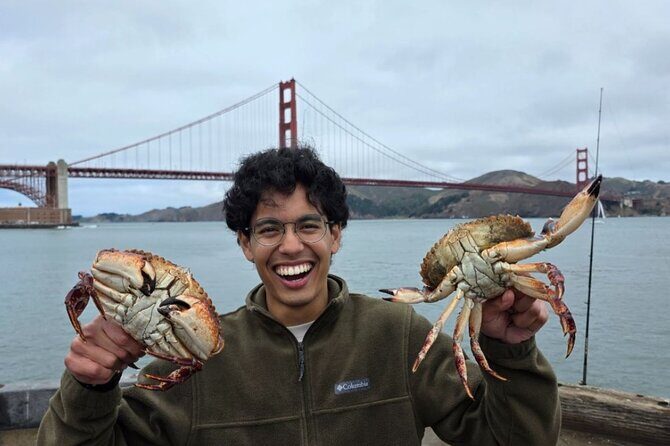
There’s something special about learning a real coastal skill with the Golden Gate Bridge overhead. You’re not tucked into an indoor class. You’re on a working pier, feeling the rhythm of tide, wind, and real gear. And that matters, because crabbing isn’t just a novelty activity—it’s a process. The better your casting and placement, the better your chances of pulling up crab.
This experience is built for people who want to do something fun in San Francisco that also teaches them something. You’ll start with the basics, then move into actually catching Dungeness and rock crabs using a fishing rod and Durasnare crab snares. No prior experience is needed, and equipment is provided, which lowers the barrier a lot.
I also like that it’s not just “try once and hope.” The guide helps you progress. In the feedback I’ve seen, people talk about going from early trial-and-error into more confident technique by the end of the trip. That’s a big deal if you’re the type who wants to feel like you learned a real skill, not just had a one-time outing.
One more point: the location and timing make it feel like a genuine SF memory. The background of the Golden Gate isn’t just scenery—it adds energy to the whole experience, especially when you’re actively working the line and gear.
You can also read our reviews of more tours and experiences in San Francisco.


What You Learn: Dungeness and Rock Crabs, Not Guesswork
Crabbing has a learning curve, even if you’ve never held a fishing rod. That’s why the instruction is central here. You’ll learn how to catch Dungeness and rock crabs from the pier. The guide’s job is to translate the process into steps you can actually use while you’re standing there.
Here’s what this kind of lesson usually means in practice (and what you should expect during the 3.5 hours): you’ll be shown how to handle the rod, how to work with the Durasnare snares, and how to pay attention so your setup isn’t sloppy. Then you practice. The best part of a guided format is that someone can correct your angle, timing, and handling while you’re doing it—not after you’ve already decided you’re doing it wrong.
Also, the “no experience needed” claim isn’t just marketing. When a guide provides gear and coaches you step by step, the activity becomes more like a class than a scavenger hunt. The goal is for you to walk away knowing what to do next time, even if you never plan to become an expert.
From the strongest reviews, the coaching style seems to be a big driver of satisfaction. People mention Lawrence being prepared, helpful, and genuinely excited to teach. They also mention seeing progress in casting and technique from the beginning to the end. That’s exactly what you want when you’re paying for an experience like this: instruction that leads somewhere.
The Gear and the Guide Factor: Why Durasnare Snares Matter
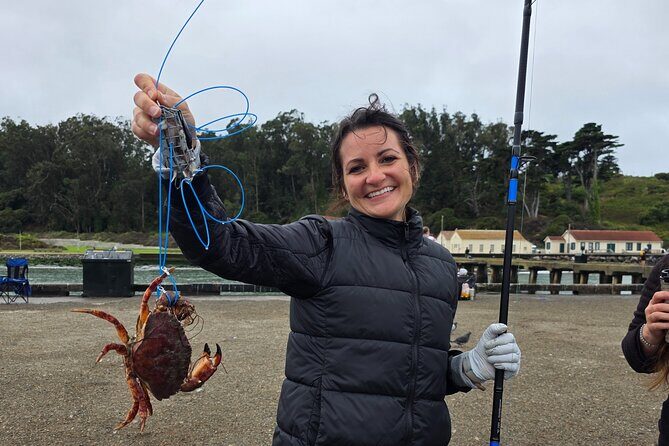
The experience uses top-rated Durasnare crab snares and includes your equipment. That choice matters for two reasons.
First, snaring crab is different from just tossing bait and hoping. The design of the snare affects how you set it up and how you handle it during the process. If you’ve ever tried to copy a method from a diagram, you know it’s easy to miss small handling details. Having a guide with the right gear helps reduce that frustration.
Second, using provided gear keeps the experience accessible. You don’t need to buy anything ahead of time. You also don’t need to show up with the right tools, which is a common snag for fishing-style activities.
Then there’s the guide. Multiple reviews highlight Lawrence’s role clearly. People describe him as knowledgeable in the sense of knowing the work and explaining it well, and also as fun to be around. The best guiding feels like a mix of safety, clarity, and encouragement. If you’re bringing kids, this matters even more, because the activity has to stay engaging while still teaching technique.
So yes, the gear helps—but the real value is how the gear is used. When the guide is ready with equipment and coaching, you’re more likely to leave with both stories and skills.
On-Site Cooking: Turning Your Catch Into Dinner
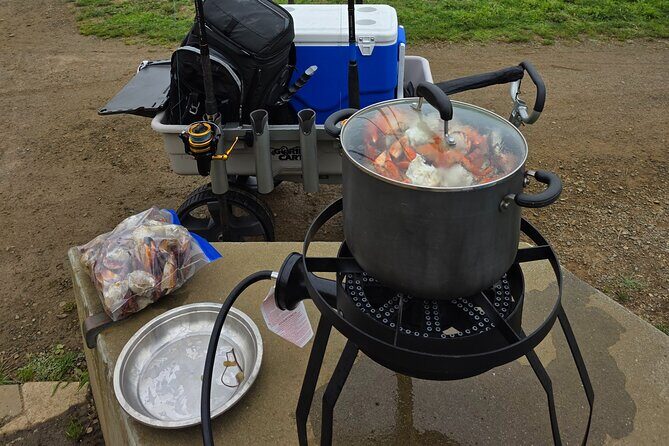
Catching is only half the point here. The other half is the payoff: you’ll cook your crab right on-site. That means you don’t just feel like you performed an outdoor activity; you get a meal from it, which is rare in many tours.
This is also where the value of the experience really clicks for many people. If you’ve ever paid for a class where you don’t actually get to eat what you made, the experience can feel incomplete. Here, you catch the crab and then it becomes dinner. That turns a 3.5-hour trip into a full experience, not just entertainment.
It also helps that the seafood is as fresh as you can reasonably expect. You’re not waiting days for something to ship or sit in a cooler. You’re cooking it on-site, which adds to the whole “from pier to plate” feeling.
Now, a practical note: you are eating what you catch, so come with the right mindset. If you’re curious about the taste and you’re open to the idea that you’ll be involved in the entire process, you’ll likely enjoy this much more. If you’re squeamish, it might be harder—but the educational angle is part of the point.
Your 3.5-Hour Game Plan at Torpedo Wharf
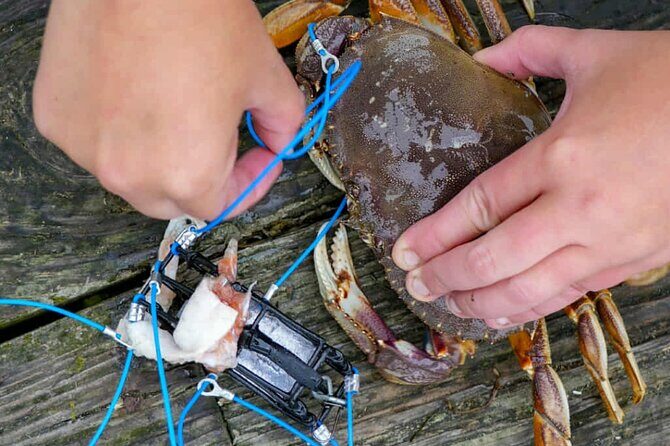
Your trip starts at Torpedo Wharf Long Ave, San Francisco, CA 94129 and ends back at the meeting point. The activity takes about 3 hours 30 minutes (approx.), and the group is capped at 8 travelers, which keeps it interactive.
Even though the schedule is short, it’s structured for learning momentum:
- You begin by getting set up at the pier.
- You learn how to use the fishing rod and Durasnare snares to catch crab.
- You work the gear as the guide coaches your technique.
- Then you cook your crab on-site so you can eat what you caught.
Stop highlight: Golden Gate Bridge. You’ll be working near it, which makes the whole session feel more memorable. It’s not just a random pier spot; the view adds energy while you’re practicing.
In the reviews, people mention big wins like catching several crabs and even a huge one. That’s not something you can guarantee on every trip, but it aligns with the idea that you’ll get enough coaching and time to actually succeed, not just try for a few minutes and call it a day.
One more thing to watch: pier time means wind, water spray, and changing conditions. Wear layers you can handle if the marine air hits. Comfortable shoes also matter because pier surfaces can be uneven.



Price and Value: Why $150 Can Make Sense Here
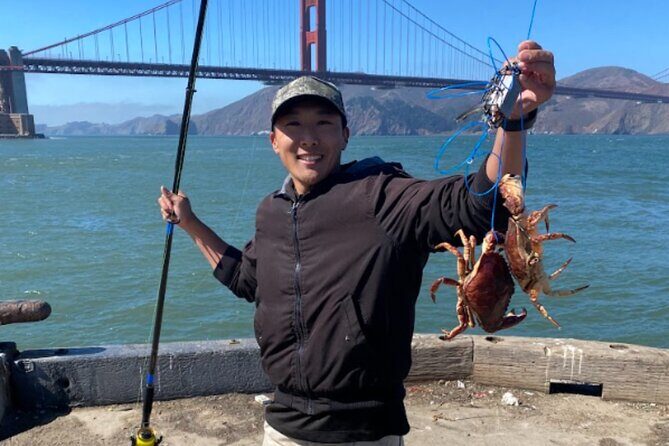
At $150 per person for about 3.5 hours, this isn’t a bargain-basement activity. But it can still feel like good value because several cost-heavy pieces are included.
You get:
- Guided coaching (so you aren’t guessing your way through crabbing)
- Equipment (rod and Durasnare snares)
- An on-site cooking experience so you actually eat your catch
- An activity that’s both fun and educational
In other words, you’re not paying just for access to a fishing spot. You’re paying for instruction plus the meal outcome. If you compare it to a meal that includes local experience plus a guided class, the number starts to feel more reasonable.
There’s also the small-group cap. If the group stayed large, your coaching would likely slow down and the experience would feel more like spectatorship. With a maximum of 8 travelers, you’re more likely to get quick corrections when your casting or gear handling needs adjustment.
Finally, the schedule fills. On average, it’s booked about 12 days in advance, so if you want a specific date, you should plan ahead rather than assuming you can walk up.
Who This Works Best For (and Who Might Hesitate)
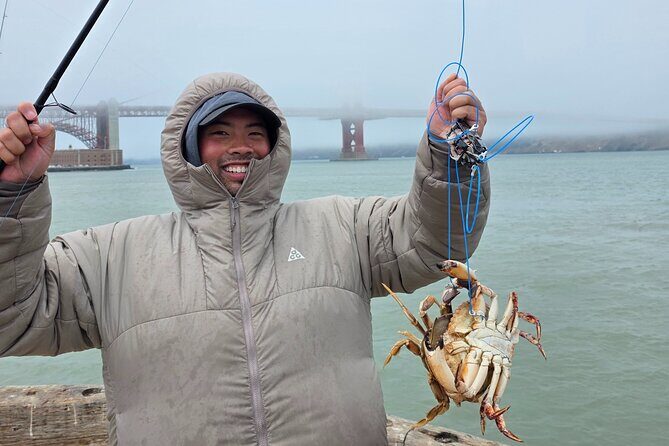
This experience fits a wide range of people. If you’re bringing a family, it tends to land well because the outcome is tangible: catch crab, then cook and eat it. One review mentions a son who was fascinated, and that’s exactly the kind of engagement that usually makes these outings worth it for kids.
It also suits beginners. You don’t need prior crabbing experience, and gear is provided. If you’re an experienced angler, you might enjoy it too, especially for the coaching and the technique progression people mention.
You might hesitate if:
- You don’t want to be physically active on a pier (the trip calls for moderate fitness)
- You dislike being involved in an activity that ends with eating what you catch
- You need a private or very quiet experience (it’s a small group, but it’s still a group)
If you’re the type who likes practical skills and real outcomes, though, this has the right shape.
What to Expect Day-of: Small Group Energy and Real Coaching
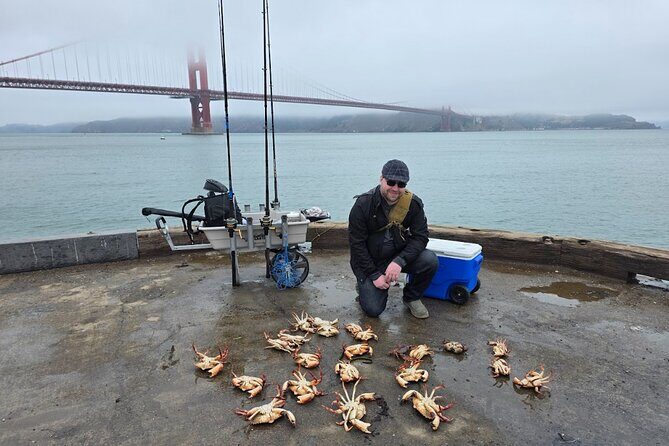
A tour like this works because the guide can manage a few people at once. With up to 8 travelers, you’re not lost in a crowd. You can ask questions, get corrections, and keep practicing.
The strongest praise centers on Lawrence’s setup and teaching style. People mention him being prepared, super helpful, and fun to spend time with. They also mention that the class felt educational without turning dry. That balance is important: crabbing isn’t complicated on paper, but you need coaching to do it well. The best part is when the class stays upbeat while you learn the physical steps.
Another common theme is progression. People talk about improvements in casting and technique as the trip moves forward. That’s what you want: feedback during the process, not just a recap at the end.
Also, you’re not stuck waiting around. This is a hands-on format, and you’ll be doing work from the pier. So if you like active experiences more than museum-style activities, you’ll probably love this.
Booking Tips That Actually Help
If you’re serious about doing this, treat it like a popular activity, not a last-minute idea. It’s commonly booked around 12 days in advance on average, and that usually means prime dates can disappear.
Also, plan your day so you’re not rushing. A 3.5-hour guided trip plus the pier walking time can add up. If you’re pairing it with other Golden Gate area plans, I’d leave a little breathing room before and after so you can arrive, gear up, and settle in without stress.
And pack for the waterfront. Even when the day looks calm, pier conditions can get chilly. Layers and grippy shoes will make the experience feel more comfortable immediately.
Should You Book This Crabbing Class Under the Golden Gate?
I’d recommend booking if you want a hands-on San Francisco activity that ends with something delicious and locally connected. The biggest reasons to say yes are the small group coaching, the chance to learn how to catch Dungeness and rock crabs, and the fact that you cook and eat your catch on-site. Plus, the reviews consistently point to Lawrence as a strong guide—prepared, supportive, and genuinely engaged.
I’d skip it if you’re not into pier activities, prefer something indoors, or you’d be uncomfortable with the idea of catching and then eating what you catch. And if you want a totally private experience, this won’t be that—though the group size is small enough to still feel personal.
If you match the vibe—curious, active, and open to learning—you’ll likely leave with both a meal and a skill you can repeat later.
FAQ
Where does the tour start?
The tour starts at Torpedo Wharf Long Ave, San Francisco, CA 94129, USA.
How long is the experience?
It lasts about 3 hours 30 minutes.
What is the price per person?
The price is $150.00 per person.
Do I need a fishing license to go crabbing?
No fishing license is needed.
What will I catch and cook?
You’ll learn to catch Dungeness and Rock Crabs and then cook your crab on-site.
Is experience required?
No experience is necessary. Equipment is provided, and you’ll be guided throughout.
How big is the group?
The maximum group size is 8 travelers.
What should I know about cancellations?
Free cancellation is available. You can cancel up to 24 hours in advance for a full refund.