REVIEW · SAN FRANCISCO
San Francisco: 2 Day Hop-On Hop-Off 20-Stop Deluxe Bus Tour
Book on GetYourGuide →Operated by San Francisco Deluxe Sightseeing Tours · Bookable on GetYourGuide
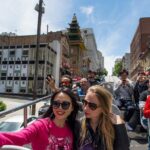
San Francisco can be chaotic fast, but this bus keeps it simple. I like the no-fixed-start setup, so you can board at many points along the route, and I also like the live guide commentary that helps you understand what you’re seeing. One thing to consider: boarding can involve street-level stops and limited step access, which can be uncomfortable if you use a walker or need extra help getting on.
Over two days, you get multiple shots at the neighborhoods and viewpoints you actually care about, rather than rushing through everything in a single day. The bus runs often (about every 30 to 45 minutes), and you can build a day around your pace—downtown first, then water and landmarks, then parks and neighborhoods. You’ll also have Wi‑Fi onboard plus an audio app (AudioMe Tours) in a long list of languages—just bring headphones.
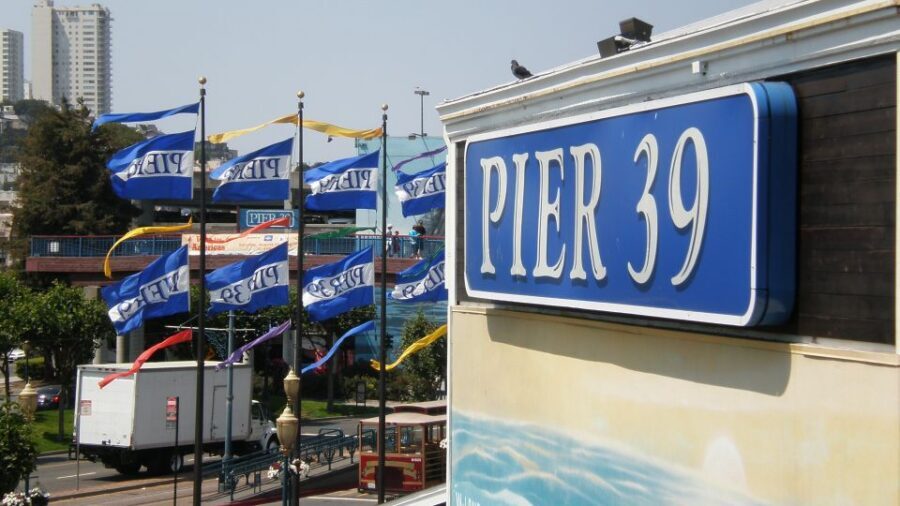
This is a good way to get your bearings quickly, then hop off for the parts you want to slow down for. Do note: the bus does not stop right beside Pier 39—plan a short walk from the Pier 35 area.
In This Review
- Key things to know before you ride
- The 20-stop loop: getting value from a 2-day hop-on pass
- Union Square to Civic Center: downtown gives you orientation fast
- Waterfront and neighborhood texture: Pier 35 to Fort Mason
- Icon views without the ticket lines: Palace of Fine Arts and the Golden Gate corridor
- Golden Gate Park: long rides, big payoff stops
- Haight-Ashbury to Alamo Square: photo stops meet street life
- Bus ride comfort and audio: what to do about windscreens, Wi‑Fi, and headphones
- Timing and routing: planning your days without getting stuck
- Price and value: is $65 fair for two days?
- Who this bus tour suits best
- Should you book San Francisco’s 2-day deluxe hop-on hop-off?
- FAQ
- How many stops are included on the tour?
- Can I start the tour from any stop on the route?
- Where do I exchange my voucher?
- What are the operating hours and last departure?
- Does the tour include live guide commentary and an audio guide?
- Which languages are available for the audio guide app?
- Do I need headphones?
- Is Wi‑Fi available onboard?
- Does the bus stop right next to Pier 39?
- Are meals included?
Key things to know before you ride
- Hop on at many points: no need to start only at Union Square.
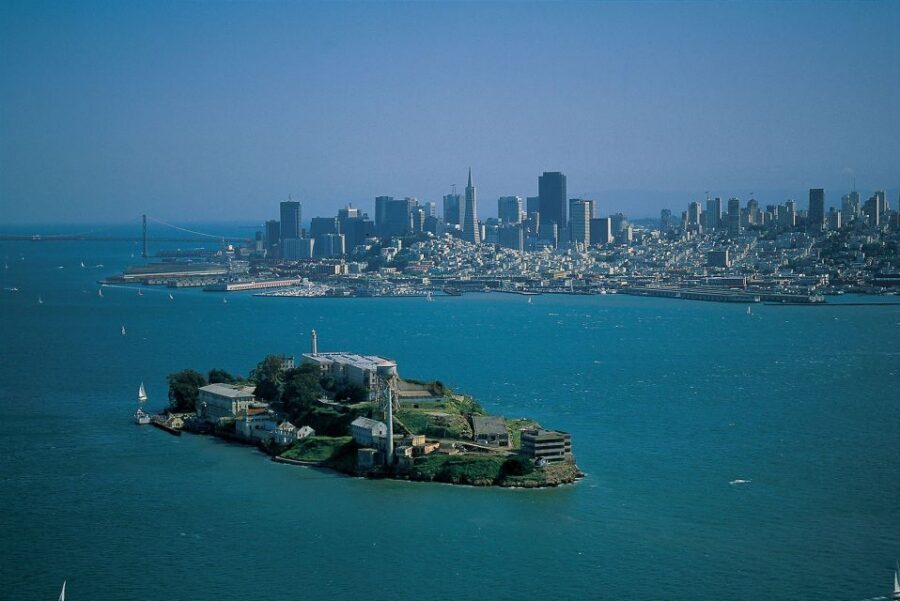
- 20 sightseeing stops across the city: from Chinatown and North Beach to Golden Gate Park and the Bay Bridge view area.
- Frequent bus service: roughly every 30 to 45 minutes between stops.
- Live guide on the bus: narration as you ride, plus a multi-language audio app.
- Pier 39 needs a short walk: hop off at Pier 35 and walk about 100 metres.
- Bring headphones: the audio guide app is included, but you supply headphones.
The 20-stop loop: getting value from a 2-day hop-on pass
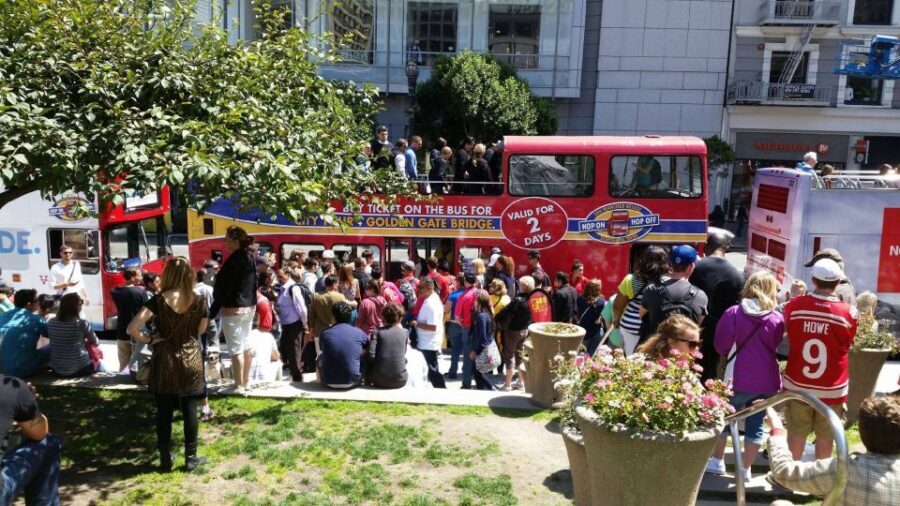
For $65, what you’re really buying is flexibility. Two days lets you spread your “must-sees” over cooler morning light, less crowded afternoons, and one extra try when timing doesn’t work out. The route is built around the big visitor magnets—Union Square, Fisherman’s Wharf, Golden Gate Park, Golden Gate Bridge viewpoints, and more—so you don’t waste time trying to stitch together bus lines or taxis.
The second value piece is explanation. You’re not just looking at buildings; you’re getting live commentary as the scenery changes. If you catch a high-energy guide, the whole thing clicks. I’ve seen people rave about guides like Willie (especially for energy and pacing) and Kirk (for keeping the ride enjoyable). If your timing lands you with someone less polished, you still have the audio app to lean on.
What you should plan around is how hop-on hop-off works in real life: you’re trading speed for choice. If you’re the kind of person who likes to stop only once and move on, you’ll probably feel the route is a little slow. If you like options, this bus fits.
You can also read our reviews of more tours and experiences in San Francisco

Union Square to Civic Center: downtown gives you orientation fast
This is the section that helps you understand San Francisco as a patchwork of neighborhoods, not one long straight line.
Stop 1: Union Square
Union Square is the classic starting point for a reason: it’s central, easy to find, and it’s loaded with hotels and shops. If you want your first impressions to be “all at once,” this is your easiest board-and-go spot at 280 Geary Street in front of Macy’s. The vibe here also makes it simple to meet your group and regroup between stops.
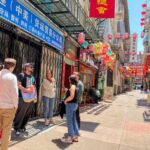
Stop 2: Chinatown
Chinatown is where you quickly learn San Francisco has layers. From the bus, you get the shape of the streets and the density of storefronts. If you hop off, you’ll likely want time to wander rather than just do a quick glance from the curb.
Stop 3: Financial District
The Financial District stop is useful because it signals you’re moving from “visitor core” into the city’s work-and-corner-office energy. Even if you don’t plan to go inside anything, you’ll feel the architecture shift right away.
Stop 4: North Beach
North Beach is one of those neighborhoods where the bus view is helpful, but walking is the main event. If you like lively streets and lots of small blocks to explore, hop off here and give yourself at least a short loop on foot.
Stop 5: Ferry Plaza
Ferry Plaza is a practical get-off because it connects you to the water-adjacent side of the city. It’s also a good “reset point” when you’ve done a downtown hop and want a change of scenery without committing to a long walk.
Stop 6: Pier 35 (for Pier 39)
This is the waterfront transition. The important detail: buses do not stop right next to Pier 39. For Pier 39, you hop off at stop 6 (Pier 35) and walk about 100 metres. It’s not far, but plan it—don’t assume you’ll step off and be at Pier 39’s main entrance instantly.
Stop 13: Civic Center
Civic Center is your reminder that San Francisco is also civic-and-institutional. If you like big public spaces and landmark buildings, this is one of your best no-stress get-offs. You can also use it as a pivot point before heading into parks and museum territory.
Stop 14: Hilton Street
Hilton Street is another named stop along the transfer area. It can be handy if you’re staying or sightseeing near that stretch, because it’s easier to plan than trying to estimate walking distance from a stop that’s “close enough.” The downside is that it’s not a marquee sight by its name alone, so you may want to check whether it lines up with your plan for that day.
Waterfront and neighborhood texture: Pier 35 to Fort Mason
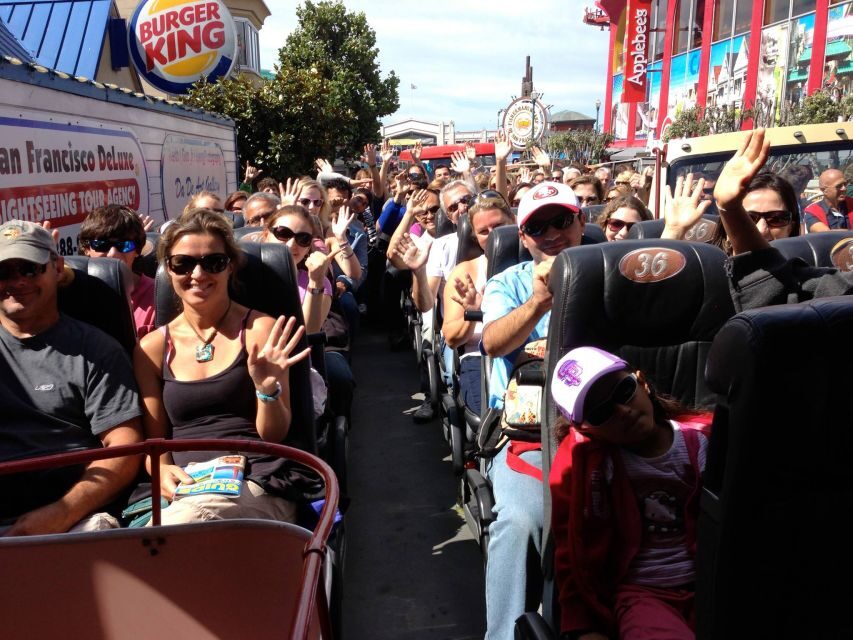
Once you’re on this stretch, the city feels more “alive” because you’re near the water and the blocks start mixing tourist energy with local rhythm.
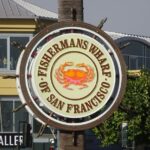
Stop 7: Fisherman’s Wharf
If Fisherman’s Wharf is on your list, this is your straightforward access point. Even if you’re not buying souvenirs, it’s a good place to get a feel for the waterfront scene and then decide how much walking you want to do.
Stop 8: Ghirardelli On-The-Go
This stop is clearly meant for the Ghirardelli Square area. The bus won’t replace a stroll, but it makes it easy to plan a short break: hop off, do a quick look around, then get back on when you’re ready.
Stop 9: Fort Mason
Fort Mason gives you a different flavor than the Wharf. Think more open space and viewpoint potential, with less of that tightly packed shopping street feeling. If you want a breather between heavier tourist zones, this is a smart hop-off.
Icon views without the ticket lines: Palace of Fine Arts and the Golden Gate corridor
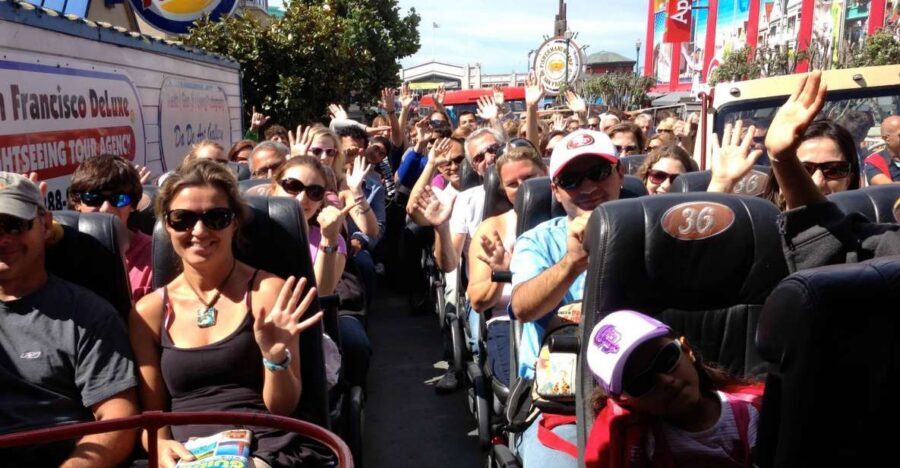
This is where the bus earns its keep. You get major-photo moments with minimal planning, and you can decide on the fly how much time to spend.
Stop 10: Palace of Fine Arts
The Palace of Fine Arts is one of the best “quick wow” stops on the whole route. From the bus, you get immediate context; on foot, it’s a calmer scene where you can take your time and look around. If you’re traveling with kids or you’re short on energy one day, this is also an easy hop-on-and-stay-for-a-while option.
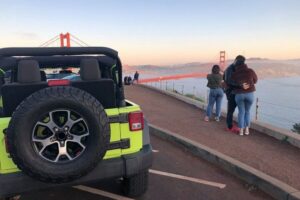
Stop 11: Golden Gate Bridge Vista Point
This is your big bridge look. The name says it all: you’re going for views first, photos second, and walking if you feel like it. If fog or wind shows up (it happens often around the bridge), you’ll appreciate that you can still get a view even if you don’t want to wander.
Stop 12: Lombard Street
Lombard Street is the famous switchback street you’ll want to see up close. The bus stop works well because it gives you a controlled way to visit without trying to time parking or complicated directions. The downside is that this is the kind of spot where crowds can build—so if you’re sensitive to foot traffic, plan a short visit and leave before it peaks.
Golden Gate Park: long rides, big payoff stops
Golden Gate Park is one of those areas where the bus view helps you understand scale, but the best parts are the stops where you can actually get out.
Stop 15: Golden Gate Park
This stop is your entry into the park system. Even if you’re not doing a full park day, the bus makes it simple to pick a chunk that matches your interests. If you only have one park visit across two days, this is where you start.
Stop 16: Japanese Tea Garden
The Japanese Tea Garden is the park highlight built into the route. If gardens and calm spaces are your thing, this is one of your best uses of a hop-off ticket—because you can spend real time without worrying about transportation once you’re there.
Stop 19: Ferry Building
The Ferry Building is great when you want water views plus a lively meeting point. Hop off here if you’re craving a more “city hub” feel than a park scene. It also pairs well with a morning or late afternoon, when light makes the waterfront feel extra dramatic.
Stop 20: Concourse Dr at Acad of Sciences
This stop puts you near the California Academy of Sciences area (the bus stop name gives you the target). If you want museum time or you like hands-on science themes, this is the stop that supports it.



Haight-Ashbury to Alamo Square: photo stops meet street life
This section is for people who like neighborhoods with identity.
Stop 17: Haight-Ashbury
Haight-Ashbury is the stop for counterculture vibes and historic street energy. Even if your visit is just a quick hop to see the streetscape, it helps you understand why this neighborhood keeps showing up on every San Francisco list.
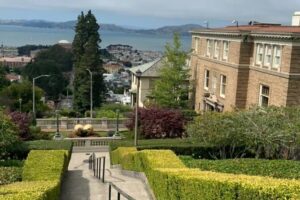
Stop 18: Alamo Square
Alamo Square is often about open views and classic “postcard” moments. The bus gets you close enough to decide whether you want to linger. If your group splits up—someone wants photos, someone wants a coffee break—this stop makes it easier to manage that because you can regroup at the bus when you’re ready.
Bus ride comfort and audio: what to do about windscreens, Wi‑Fi, and headphones
A couple details affect comfort more than you’d expect.
First, headphones matter. The audio guide app (AudioMe Tours) is included, and the language list is broad: English, German, Spanish, French, Japanese, Korean, Italian, Hindi, Russian, Chinese, Portuguese, Punjabi, and Vietnamese. You’ll need your own headphones to use it, so pack them.
Second, top-deck sightlines can vary. One guide’s group has noted that the windscreen on the open top section could be cleaner, and that’s a totally fair concern—smudges and grime reduce clarity when you’re trying to photograph bridge views or the skyline. If you can, pick a seat where you can get a clean angle, and wipe your own phone camera lens before you start shooting.
Third, Wi‑Fi is onboard. It’s not a substitute for downloading maps, but it’s helpful for quick plan checks while you’re riding.
Finally, live-guide quality can swing. Guides like Willie have been singled out for strong energy, while others (or certain moments early in the day) may include humor that doesn’t land for everyone. If you want zero awkwardness, keep the audio app handy so you can switch modes.
Timing and routing: planning your days without getting stuck
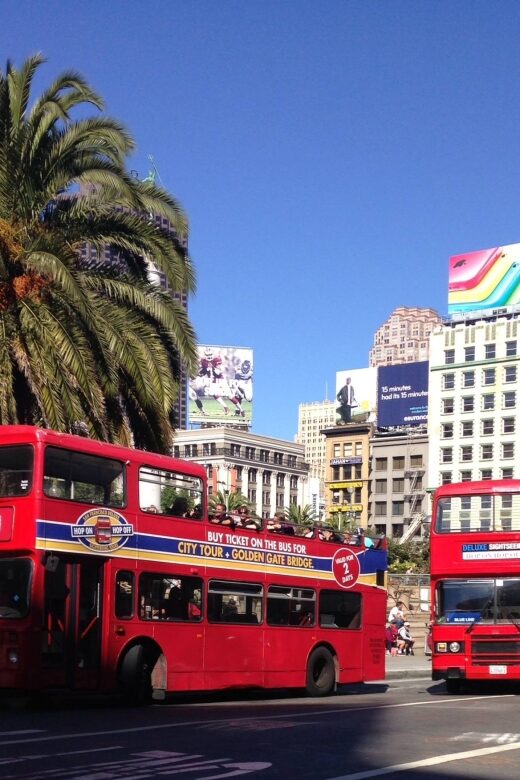
The deluxe loop runs from around 10:00 am to late afternoon, with the last tour leaving at 4:00 pm. Buses typically run every 30 to 45 minutes between stops. You can hop on when it suits you, then ride until you’re ready to explore on foot, then rejoin the next bus when it comes through.
A smart two-day rhythm is to avoid doing “everything downtown” both days. Day 1 works best for downtown orientation and one or two neighborhood strolls (Union Square → Chinatown → North Beach → Ferry Plaza). Day 2 is for landmarks and parks (Palace of Fine Arts → Golden Gate Bridge Vista Point → Golden Gate Park/Japanese Tea Garden). Save Haight-Ashbury and Alamo Square for whichever day you want more street vibe.
Also, have a backup plan for Pier 39. Since the bus stops at Pier 35, you’ll want comfortable shoes and the mental math for a short walk. It’s easy, but it’s the kind of thing that causes last-minute stress if you assume the wrong stop.
Price and value: is $65 fair for two days?
At $65 per person for two days, this is priced like a practical sightseeing tool, not a premium private tour. The value comes from three things: 20 stops, live narration, and the fact that you can start at multiple points. You’re paying for convenience and direction more than you’re paying for admissions.
If your plan includes Golden Gate Park and at least one major waterfront/bridge day, you’ll likely feel the cost makes sense because those areas can be time-consuming to coordinate on your own. If you already know you’ll only want to see one small section of the city and you’re comfortable navigating transit or taxis, a hop-on pass might feel less worth it.
Who this bus tour suits best
This is a great fit if you want:
- an easy way to get bearings across San Francisco
- flexibility to stop for photos, walking breaks, and quick museum or neighborhood visits
- live guidance plus the option to switch to an audio app
It may be less ideal if:
- you need very easy step-free boarding and the bus entry isn’t a good match for your mobility needs
- you dislike waiting between stops and prefer only one or two fixed attractions
Should you book San Francisco’s 2-day deluxe hop-on hop-off?
Book it if you want a low-stress framework for two days and you’re happy to spend time deciding where to hop off. The live guide, multi-language audio option, and 20-stop coverage across downtown, waterfront, bridge viewpoints, parks, and neighborhoods make it a solid way to see a lot without turning your trip into logistics homework.
Skip or reconsider if you’re mainly focused on one tight list of places and you prefer a more direct point-to-point plan. In that case, the waiting and rejoining could feel like wasted time.
FAQ
How many stops are included on the tour?
The deluxe route includes 20 sightseeing stops across San Francisco.
Can I start the tour from any stop on the route?
Yes. There is no fixed start point, and you can hop on at many stops on the route.
Where do I exchange my voucher?
You exchange your voucher at stop #1 at Union Square at 280 Geary Street in front of Macy’s, or you can join at the booking office at 2735 Taylor Street.
What are the operating hours and last departure?
The tour runs from 10:00 am to 4:00 pm for the deluxe schedule, with the last tour starting at 4:00 pm, and buses operating through the day with service between stops. The overall operating window is also listed as 10:00 am to 5:30 pm.
Does the tour include live guide commentary and an audio guide?
Yes. You’ll have live guide commentary on the bus, plus an audio guide app included (AudioMe Tours).
Which languages are available for the audio guide app?
The audio guide app includes English, German, Spanish, French, Japanese, Korean, Italian, Hindi, Russian, Chinese, Portuguese, Punjabi, and Vietnamese.
Do I need headphones?
Yes. You need your own headphones to use the audio guide app.
Is Wi‑Fi available onboard?
Yes, Wi‑Fi is included on the bus.
Does the bus stop right next to Pier 39?
No. For Pier 39, you should hop off at stop 6 (Pier 35) and walk about 100 metres.
Are meals included?
No. Meals and accommodation are not included.