REVIEW · SAN FRANCISCO
San Francisco Full-Day Tour by Cable Car & Foot
Book on Viator →Operated by Real San Francisco Tours · Bookable on Viator
SF’s cable cars turn hills into views. This full-day small-group tour strings together major neighborhoods with a mix of public transit and on-foot sightseeing, built around photo stops like Lombard Street and the Painted Ladies.
I love how you trade some of the steep slog for cable car rides, so the day feels like exploring, not punishment. I also like the wide neighborhood coverage in one go, with guided context that helps each area make sense as you move from the Embarcadero to Nob Hill, then across town to the Castro, Haight-Ashbury, North Beach, and Chinatown.
The main consideration is the pace and the walking. You should plan for about 4–5 miles over the day, with hills and steps, so it’s not a good fit if your stamina or mobility is limited.
In This Review
- Key takeaways before you go
- Cable cars and footwork: how this 8-hour loop feels
- Starting at the Embarcadero and Ferry Building orientation
- Nob Hill by cable car: millionaires’ mansions and real SF steepness
- Cable Car Museum and City Hall: machinery and civic power
- Hayes Valley street art and coffee-shop wandering
- Mission Dolores Park: a view break with downtown in frame
- The Castro and Haight-Ashbury: LGBTQ legacy meets 1960s rebellion
- Lunch break in Haight-Ashbury: plan your fuel, not your schedule
- Painted Ladies and Lombard Street: the iconic SF photo combo
- North Beach and Chinatown: Little Italy stroll to fortune-cookie finale
- Price and value: what you’re paying for beyond the sightseeing
- Who should book this cable car and foot day
- Should you book this tour?
- FAQ
- How long is the tour and what time does it start?
- Where do I meet, and where does the tour end?
- What is included in the ticket price?
- Is lunch included?
- How much walking should I plan for?
- Does the tour include City Hall and the Cable Car Museum?
- Is this tour suitable for children or people with mobility issues?
- Can I cancel for a full refund?
Key takeaways before you go

- Small group size (max 15) keeps stops manageable when streets get busy.
- Transit included: cable car rides plus other metro travel help you cover more ground than a pure walking tour.
- Photo-first moments: the tour is timed for famous sights like Lombard Street and the Painted Ladies.
- Lunch mid-tour in Haight-Ashbury gives you a real break (at your own expense).
- End in Chinatown means you can roll straight into dinner without backtracking.
Cable cars and footwork: how this 8-hour loop feels
This is a full-day SF highlights run with a very practical rhythm: ride transit to save time and energy, then walk to absorb the street-level vibe. The promise here isn’t that every moment is comfortable—it’s that the day is well-structured so you still get the city’s best-known sights without spending hours guessing where to go next.
You start at Market St & Drumm St and finish in Chinatown. That matters because you’re not bouncing around in circles all day. Once you learn the geography—downtown waterfront, Nob Hill, then west and south into classic neighborhoods—you’ll feel more confident exploring on your own after the tour.
And yes, you’ll climb. You’ll also get to use the city’s signature transport when it makes sense. The trade-off is real: great viewpoints and historic streets, in exchange for a solid amount of walking and some hills.
You can also read our reviews of more tours and experiences in San Francisco
Starting at the Embarcadero and Ferry Building orientation
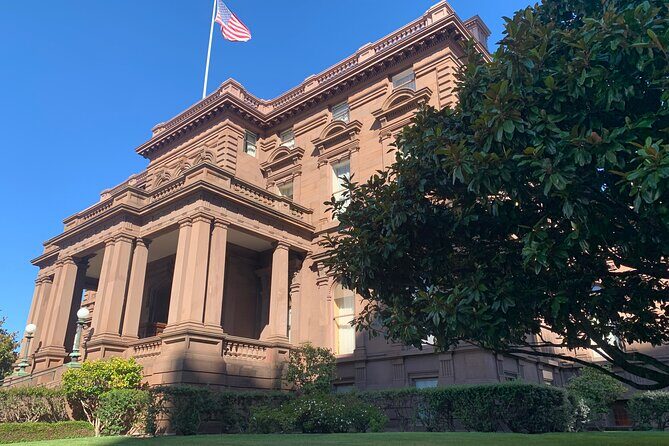
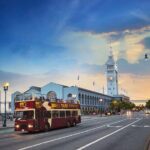
Your day kicks off down by the water at the Embarcadero, with a guided orientation around the Ferry Building and downtown San Francisco. This is a smart warm-up stop because it gives you a mental map before the tour starts zig-zagging across neighborhoods.
The Ferry Building area is also one of those places that helps you understand the city’s shape: waterfront first, then steep neighborhoods rising inland. When you later get to Nob Hill and downtown civic spaces, the geography feels less random.
If you like taking photos early, this is a good moment to set your baseline shots—then you can compare views later from higher ground.
Nob Hill by cable car: millionaires’ mansions and real SF steepness
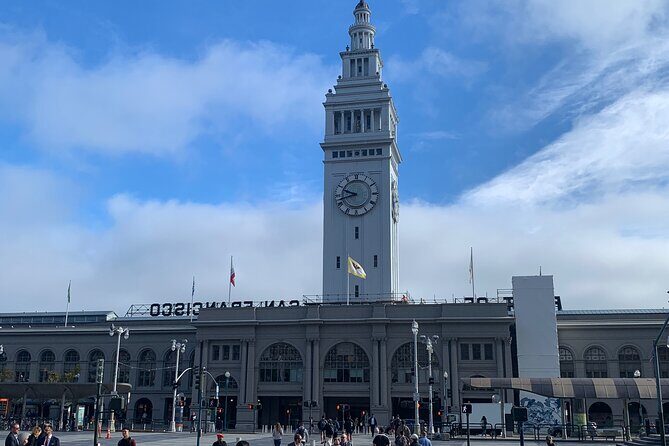
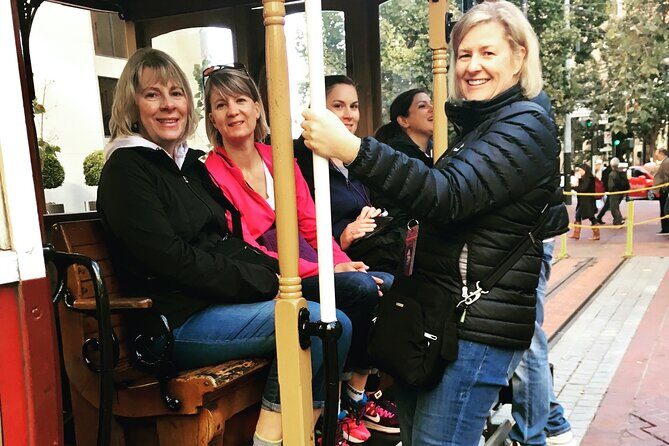
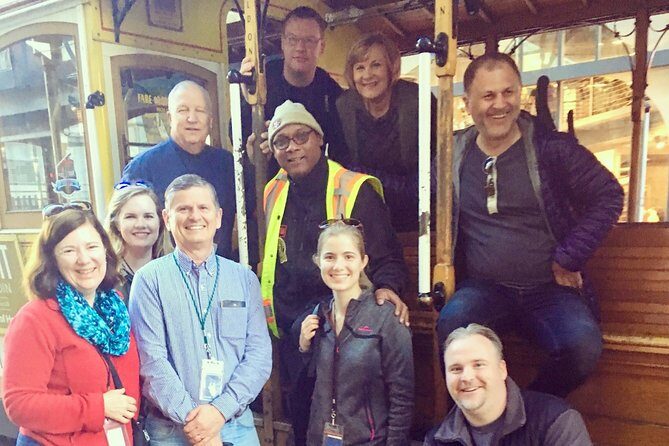
Nob Hill is the tour’s first big “wow” altitude. You take the cable car up to see grand homes tied to San Francisco’s early wealth. The best part of doing Nob Hill by cable car is that you don’t just observe the slope—you experience it.
This stop is also timed to give you a short window to look around and get your bearings. You’ll see how the neighborhood sits above the city grid, and it helps later when the tour moves toward other iconic viewpoints.
One small practical note: cable car steps and standing space can be a little tricky. If you’re someone who struggles with stairs, you’ll want to factor that into your expectations for the day.
Cable Car Museum and City Hall: machinery and civic power
After Nob Hill, you swing by the Cable Car Museum. Even if you only spend a short time here, it’s an easy way to understand how the cable car system works beyond the romance of it. The museum is tied to the system’s machinery, and the timing works best on weekends based on how the site operates.
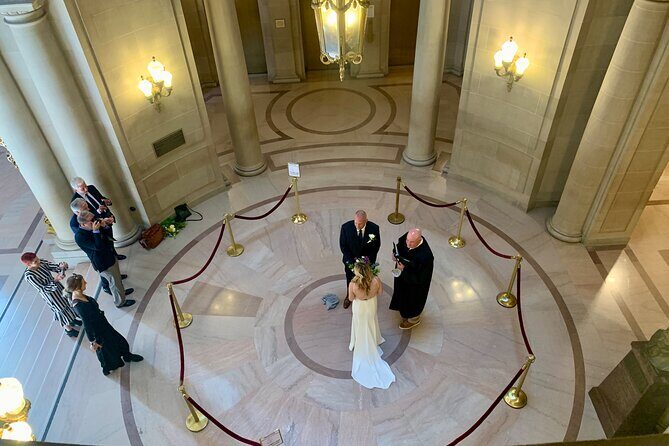
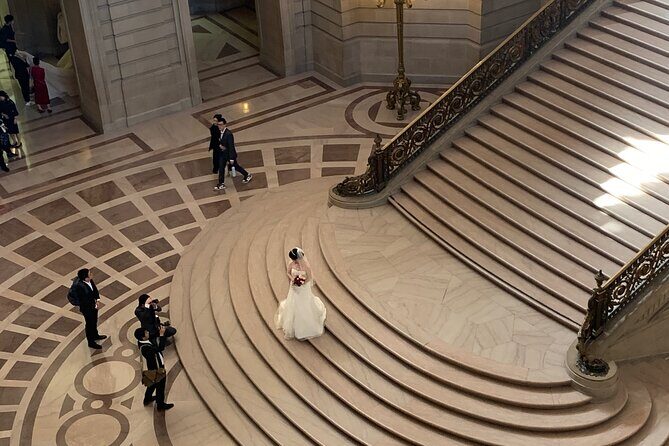
Then comes San Francisco City Hall. If your tour day falls on a weekday, the tour includes going inside to learn about the key events that took place there. That inside access changes the feel of the stop: you’re not just outside looking at a landmark; you’re seeing how the building frames civic life.
I like this pair of stops because it connects two sides of SF: the old transportation engine that keeps the city moving, and the civic building that shaped how decisions were made.
Hayes Valley street art and coffee-shop wandering
Next you head into Hayes Valley, near the Civic Center. This is where the tour shifts from landmarks to personality. You’ll see street art, plus the small coffee-shop vibe that makes Hayes Valley feel like SF’s creative in-between zone.
This stop works well if you enjoy quick, low-pressure wandering. It’s short enough that you won’t feel trapped in one spot, but long enough to notice details: murals, storefronts, and the way the neighborhood breathes between the bigger “attraction” areas.
If you’re picky about photos, this is one of the easier places to grab them because there’s visual texture everywhere—signs, walls, and street corners.
Mission Dolores Park: a view break with downtown in frame
Mission Dolores Park is a classic SF choice for a reason: it’s pretty, it’s open, and you can look back toward downtown. The tour uses this stop for both scenery and downtime.
You get a chance to reset your legs and your brain. You’ll also see how SF parks function as social hubs, not just patches of green. When you’re later comparing neighborhoods like the Castro and Haight-Ashbury, this park stop helps you feel the city’s pattern: hills, views, community spaces.
This isn’t a long rest—just a well-timed breath in the middle of a physically active day.
The Castro and Haight-Ashbury: LGBTQ legacy meets 1960s rebellion
The Castro is one of the tour’s most meaningful segments. You learn about the neighborhood’s importance in the LGBTQ movement, with San Francisco treated as a global symbol. Even if you’ve only read about it before, being in the neighborhood turns the story into something you can point to: the streets, the context, and the lived culture.
Then you move to Haight-Ashbury, where the anti-Vietnam War and hippie movements took root in the 1960s. This stop keeps the day from feeling like only “pretty postcard SF.” It adds a layer of political and cultural history, tied to how the neighborhood still carries that aesthetic today.
This is also where the day’s lunch break happens (more on that next), so your energy level matters here.
Lunch break in Haight-Ashbury: plan your fuel, not your schedule
You get a 45-minute to 1-hour lunch break in Haight-Ashbury, and lunch is at your own expense. That’s enough time to grab something quick and still have a little room to wander without rushing.
I recommend you treat lunch like logistics: pick a place near where you’re planning to eat, so you don’t waste time hunting. The tour keeps moving, and SF hills don’t forgive slow decision-making.
Diet needs can be accommodated for lunch, but you’ll still want to choose food that fits your pace and energy level. If you know you’re going to want a sit-down meal, be ready to order quickly.
Painted Ladies and Lombard Street: the iconic SF photo combo
After lunch, you hit two of SF’s best-known visual icons.
First: the Painted Ladies. These Victorian houses are a must because the neighborhood view from here is pure SF theater. You also get a strong sense of how the city’s beauty often comes with steep streets and tight blocks.
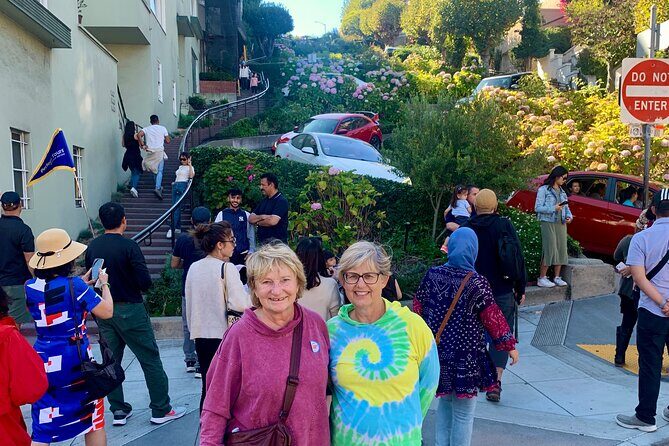
Then: Lombard Street. This is the classic curved, steep “camera magnet,” and the tour includes walking down the steep, curved part of the street for photos. The best value here is timing and guidance—this isn’t just about looking. It’s about knowing where to stand and how to frame the angle so the street curve looks dramatic, not confusing.
If you like Instagram photos, you’ll have plenty of chances. If you don’t, Lombard is still worth it because it shows why SF’s streets are so memorable.
North Beach and Chinatown: Little Italy stroll to fortune-cookie finale
North Beach comes next, and the tour treats it like a different flavor of old SF. You walk through this historic neighborhood known as San Francisco’s Little Italy, picking up the feeling of an immigrant-rooted city with its own rhythm.
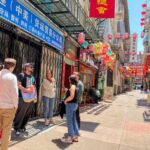
Finally, the tour ends in Chinatown. You finish with a visit to a back street fortune cookie maker. It’s a fun ending because it’s interactive in the way only a food-focused tradition can be. And since you end there, you’re in position for dinner right after—without having to plan a whole return trip.
Because the finish is in Chinatown, this tour is also a good first day choice. You get the “SF highlights” view and then you end somewhere you can comfortably keep exploring.
Price and value: what you’re paying for beyond the sightseeing
At $140 per person for an ~8-hour day, you’re not just buying access to famous sights. You’re paying for a guided route, a transit plan, and time-saving transportation between steep neighborhoods.
Here’s what’s built into the ticket:
- A tour guide
- Mobile ticketing
- All metro travel included (listed value is USD 20)
- Two cable car rides, plus one journey on the historic streetcar when possible
- A donation of $1 per guest to Climate Cents
What’s not included:
- Lunch and snacks
- Gratuities (recommended if you enjoyed the tour)
In plain terms, the value is strongest if you want to cover a lot of SF in one day without piecing together bus lines or cable car boarding times. It’s also strongest if you’re the type who likes understanding context—why each neighborhood developed the way it did—while you’re walking through it.
If you’re already comfortable navigating on your own and you don’t care about organized stops, you might feel the price more than someone who wants a full-day plan handed to them.
Who should book this cable car and foot day
This is a good match if you:
- Want a first-time SF orientation that hits major neighborhoods
- Enjoy walking but still want transit help for hills
- Like photo stops, especially Lombard Street and the Painted Ladies
- Want an SF day with a mix of culture and street-level history
It’s less ideal if you:
- Have mobility limitations or stamina issues (the tour involves hills, steps, and about 4–5 miles total)
- Need a child-friendly, low-walking pace. It’s not recommended for children under 12.
Also, if you’re traveling on a day with transportation disruptions, cable cars and streetcars can be affected by events or technical issues. That’s not the tour company’s fault, but it’s real enough that you should keep a flexible mindset.
Should you book this tour?
If you want one day that covers a lot of San Francisco—waterfront, Nob Hill, the Castro, Haight-Ashbury, iconic Victorian views, Lombard Street, and a Chinatown finish—this is a solid choice. The small group size (max 15) and the mix of cable car and metro travel are the big reasons it works, especially when the alternative is trying to manage SF hills and transit alone.
I’d only skip it if walking all day sounds like a bad trade. Otherwise, bring comfortable shoes, expect some climbs, and get ready for that classic SF combo: steep streets plus big views.
FAQ
How long is the tour and what time does it start?
The tour runs for about 8 hours and starts at 10:00 am.
Where do I meet, and where does the tour end?
You meet at Market St & Drumm St in San Francisco. You end in Chinatown, about a 10-minute walk from the meeting point, and your guide can recommend dinner options nearby.
What is included in the ticket price?
The ticket includes a tour guide, mobile ticketing, metro travel included (listed value USD 20), two cable car rides, and one historic streetcar journey if possible.
Is lunch included?
Lunch is not included. You do get a 45-minute to 1-hour lunch break in Haight-Ashbury at your own expense.
How much walking should I plan for?
You should plan for about 4–5 miles of walking over the day, including climbing several hills and some steps.
Does the tour include City Hall and the Cable Car Museum?
City Hall entry is included on weekdays. The Cable Car Museum stop is included, and it’s described as being connected to the system’s machinery on weekends.
Is this tour suitable for children or people with mobility issues?
The tour is not recommended for children under 12. It is also not suitable for people with mobility issues because it’s a walking tour with hills and steps.
Can I cancel for a full refund?
Yes. You can cancel up to 24 hours in advance for a full refund. If you cancel less than 24 hours before the start time, the amount paid is not refunded.