REVIEW · SAN FRANCISCO
San Francisco Urban Hike: Castro and Twin Peaks
Book on Viator →Operated by Urban Hiker SF · Bookable on Viator
San Francisco rewards your legs. This Castro to Twin Peaks hike mixes hidden-trail walking with iconic overlooks, plus a stop at the famously silly Seward Street Slides. You start at the Castro Theatre area and keep working your way up through parks, neighborhoods, and stair-heavy SF terrain with a guide who helps you read the city as you go.
What I like most is the blend of payoff and play: Twin Peaks delivers that top-of-the-city feeling, and the route also includes genuinely fun breaks like sliding down curved concrete on cardboard. I also like the local touch. In past groups, guides such as Kevin, Dawn, Val, Alex, Alexandra, and Max have brought the kind of SF context that makes you notice details you’d usually walk right past.
One consideration: this is not a casual stroll. You’re looking at a moderate, hilly walk with steep sections and lots of stairs, and the tour isn’t recommended for kids 12 and younger.
In This Review
- Key highlights you should plan around
- Castro to Twin Peaks: a guided hike that feels like both sightseeing and exercise
- Where the tour begins: Castro Theatre is a clean, central anchor
- Kite Hill Open Space: a hilltop pause that feels like a small local secret
- Seward Street Slides: the city’s old-school play break
- Sutro Tower area: eucalyptus forest walking and the switch to real trail mode
- Twin Peaks summit: the big views and the reason you booked this hike
- Tank Hill and Pemberton Place: finish strong with sea, bridge, and stairs
- Guide quality and group size: why it makes a difference on this route
- What to wear and bring so the 5-mile climb feels manageable
- Value check: what’s included (and how it makes the time worthwhile)
- Who should book this Castro and Twin Peaks urban hike
- Should you book it or choose something easier?
- FAQ
- FAQ
- How long is the Castro and Twin Peaks urban hike?
- Where do I meet, and where does the tour end?
- How far do we walk?
- Is this hike suitable for children?
- What should I wear and bring?
- Does the tour run in bad weather?
- What’s included in the tour?
- Is hotel pickup available?
- What language is the tour offered in?
- How many people are on the tour?
Key highlights you should plan around
- Castro Theatre start and finish makes it easy to keep the rest of your afternoon flexible.
- Seward Street Slides are part nostalgia, part workout warm-up.
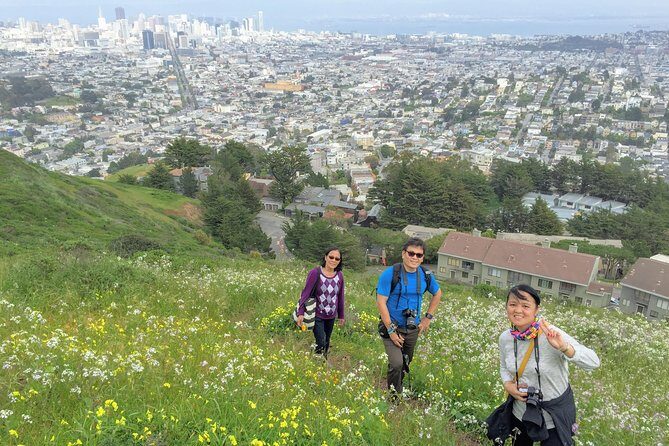
- Kite Hill Open Space is a viewpoint stop you might miss without someone steering you there.
- Twin Peaks summit time for waterfront and East Bay Hills views.
- Tank Hill plus 211-step Pemberton Place turns the day into an up-and-down SF highlight reel.
Castro to Twin Peaks: a guided hike that feels like both sightseeing and exercise
This tour is a smart way to see San Francisco’s best angles without spending your entire day in ride-shares or waiting in lines. You’ll walk 5 miles (about 8 km) over roughly 3 hours, and the route is built around a mix of viewpoints, neighborhood paths, and little curveballs that make SF feel more like a living city than a postcard.
The overall vibe is: keep moving, stop often enough to reset, and learn what you’re looking at while you earn it. You get “from above” views at Twin Peaks and Tank Hill, but you also get the in-between stuff—hillside parks, a eucalyptus forest walk behind Sutro Tower, and a less-official trail that residents have worn into place over time.
If you like your travel days to include real movement, not just photos, this one fits. If you hate hills or you’re recovering from knee or ankle issues, you may want to choose something flatter. Even if you’re a confident walker, the combination of stairs and steep streets is what defines the experience.
You can also read our reviews of more hiking tours in San Francisco
Where the tour begins: Castro Theatre is a clean, central anchor
You meet at 429 Castro St, at the Castro Theatre area, and the tour ends back there. That matters more than it sounds. Castro is full of coffee and casual dinner options afterward, and you won’t be stuck figuring out a new pickup point or dragging your sore legs across town.
The theatre itself is a classic San Francisco landmark. You get a short stop to learn its background, which gives you a sense of how Castro became what it is. You’re not getting a long museum lesson. It’s just enough context to make the neighborhood feel intentional as you head out.
Practical tip: wear shoes you trust on steep sidewalk grades. This is a guided hike, but you still do the walking on your own feet, and SF hills do not negotiate.
Kite Hill Open Space: a hilltop pause that feels like a small local secret
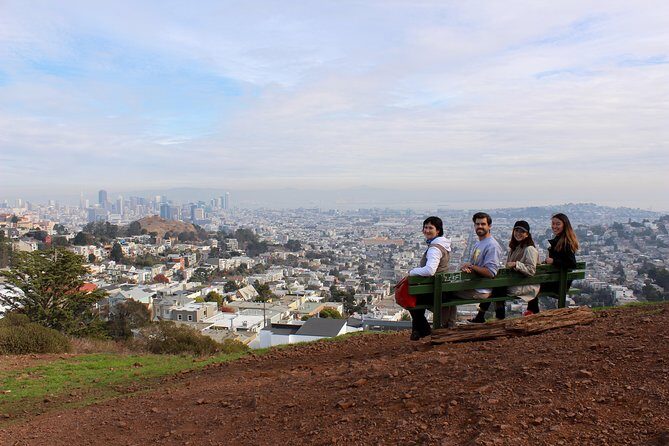
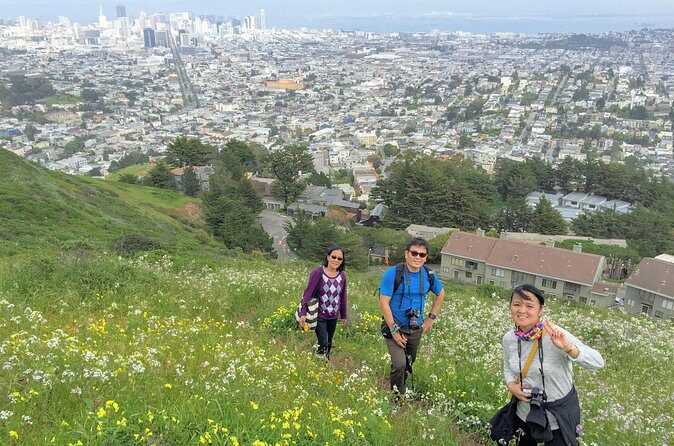
Early on, you’ll head up to Kite Hill Open Space. This is one of those places that’s easy to see from parts of the city and hard to locate when you’re doing it alone. You stop for views of downtown and Twin Peaks, and you get time for photos and a breather.
What makes Kite Hill worth the effort is the contrast. You’re not going from street to street to overlook to next overlook. You’re climbing into a green pocket where you can actually look around and orient yourself. For your brain, that helps a lot. You start recognizing the geometry of the city—how the neighborhoods stack up and how Twin Peaks fits into the larger SF skyline.
Drawback to consider: this is one of the early climbs. If you start the tour too casually (sketchy shoes, no water, or underestimating how quickly you’ll elevate), the rest of the hike can feel longer than it needs to. The good news is that there are stops built in.
Seward Street Slides: the city’s old-school play break
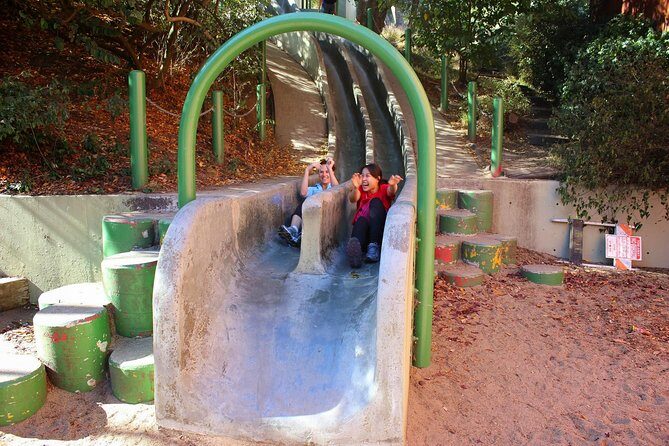
Then you move to Seward Street Slides, a concrete slide area in a park where people have been having fun for years. You’ll have time here to actually slide—this isn’t just a photo stop.
The best part is the mix of ages and moods. Even if you’re traveling solo or as a couple, it’s hard not to grin when you see how eager people get. The “method” is simple: grab a piece of cardboard and let the curved cement do the work. It’s the kind of throwback play that makes you remember what playground design looked like before modern safety standards reshaped everything.
Possible consideration: this portion adds an extra bit of physical and playful chaos to an already hilly day. If you’re not into silly fun, you may find it more time than you expected. If you are into it, it’s one of those stops that turns a hike into a story you’ll tell later.
Sutro Tower area: eucalyptus forest walking and the switch to real trail mode
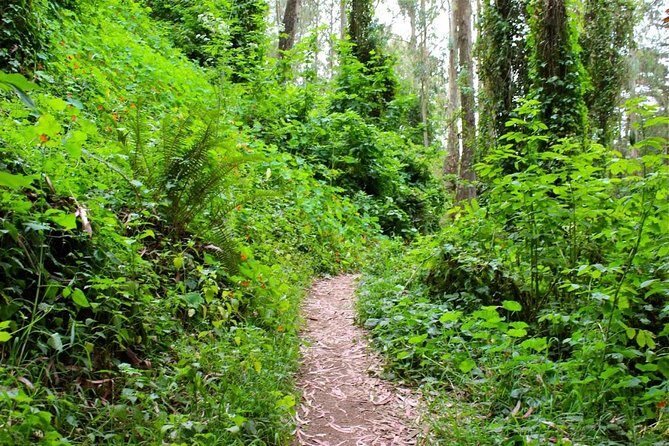
Next comes one of the most memorable changes of scene. You’ll walk through a eucalyptus forest behind Sutro Tower, one of SF’s unmistakable landmarks. Instead of just climbing between viewpoints, you get a calmer stretch where the soundscape changes and you’re walking under tall trees.
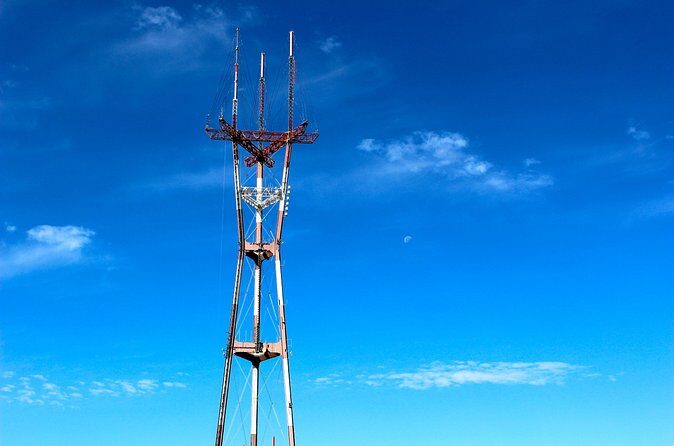
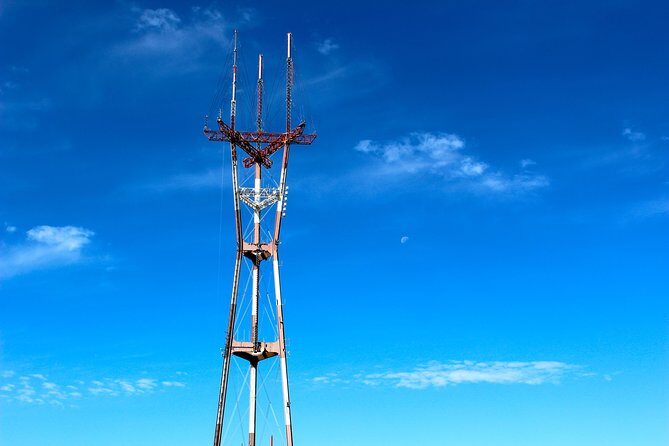
Sutro Tower itself is a useful reference point as you move. You stand at the base of an almost-900-foot tower, and you learn the fact that the top of the tower is the highest point in San Francisco. That’s a fun detail, but more importantly, it gives your brain a “why this spot matters” anchor while you’re in the area.
You then follow your guide to an unmarked hiking trail—less of an official pathway and more of a route residents have used over time. This is where the tour starts to feel like a genuine local route. It’s not just a paved city stroll anymore; you’re walking a path shaped by real foot traffic.
What you’ll want here: stay present. When trails are less formal, it helps to watch your footing and listen for the guide’s instructions. This section is part of what makes the hike feel authentic.


Twin Peaks summit: the big views and the reason you booked this hike
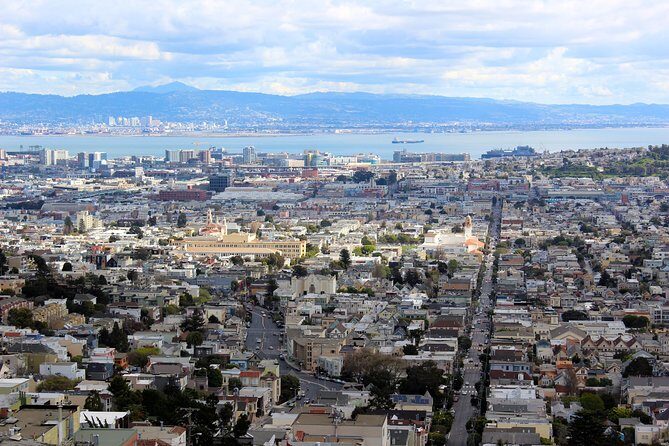
Twin Peaks is the payoff moment. You reach the summit and get about 20 minutes at the overlook for panoramic views. You’re looking out toward the San Francisco waterfront and the East Bay Hills, and you can take your time with photos because the stop is long enough to settle in and actually see.
This is one of those SF experiences where the climb is the context for the view. You don’t just arrive and look—you earn the perspective by walking up through multiple neighborhoods and green pockets. By the time you’re at the top, the city looks layered and logical in a way it doesn’t from street level.
From what you’re likely to see at Twin Peaks, you can also start to understand where other SF icons fit into the bigger picture. The skyline isn’t random. It’s stacked, shaped by hills and distance, and the views help you connect the dots.
One more note: the summit area is part of what makes this tour “moderate but not easy.” You’ll be climbing and then standing still in exposed vantage conditions. Dress in layers, and bring water so you can handle the shift between active hiking and resting at the overlook.
Tank Hill and Pemberton Place: finish strong with sea, bridge, and stairs
After Twin Peaks, you head to Tank Hill, another neighborhood park with views over the ocean, bay, the Golden Gate Bridge, and downtown San Francisco. This hilltop is about 650 feet, and it gives you a strong northern-side perspective of the city plus views toward Golden Gate Park.
If you’re trying to get a full SF picture in one outing, this stop fills a gap. Twin Peaks is about the waterfront-and-hills view. Tank Hill adds the bridge and the wider northern scene. It’s a good way to make the hike feel like more than one viewpoint.
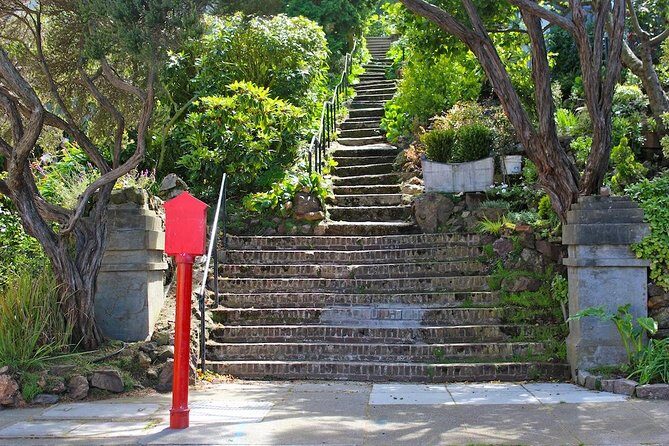
Then comes the descent. You’ll go down the Pemberton Place Stairway, with 211 steps winding through beautiful neighborhood houses and private gardens. That “winding home” feel is what turns the staircase into something more than a chore. You’re moving through residential SF where the architecture and garden glimpses give you a different kind of sightseeing.
Practical consideration: stairs go both ways. Even if you’re feeling good at the summit, your legs will notice the descent. Take your time, keep your pace steady, and use the breaks you’re given.
Guide quality and group size: why it makes a difference on this route
This is a small-group hike, capped at 15 travelers, and that size matters on a route with hills, stops, and an unmarked trail segment. You get enough movement freedom for the day to feel like a real hike, but not so many people that you lose the guide’s attention.
Guides on this tour often bring a strong local voice—names you may run into include Kevin, Dawn, Val, Alex, Alexandra, and Max from different departures. Even beyond personality, the value is in the way they connect sights to context. Instead of memorizing facts, you’re learning to look at SF as you walk through it.
You also get professional guidance throughout, and the itinerary is designed around timing: about 10 minutes at several key stops, plus longer view time at Twin Peaks, and finishing back at Castro Theatre within about 3 hours total.
If you like structure but hate rigid bus tours, this feels like a good middle ground.
What to wear and bring so the 5-mile climb feels manageable
This hike is 5 miles (8 km) and described as moderate, so you should prepare like you’re doing an active walking day in a city that actively tries to make you climb. The tour recommends comfortable shoes or hiking boots and dressing in layers.
Bring drinking water. That’s not a “nice to have” here. You’re climbing hills, stopping for views, and then doing more climbing and stair descent later. Water helps you stay comfortable and enjoy the overlooks instead of focusing on fatigue.
Also keep your afternoon flexibility in mind. The tour ends back at Castro Theatre, so you can plan a meal or coffee soon after. Starting at 1:30 pm makes it an easy fit for a day where you still want a full dinner and maybe one more SF stop afterward.
Value check: what’s included (and how it makes the time worthwhile)
While there isn’t hotel pickup, the trade-off is that the tour gives you exactly what you need for an efficient, worthwhile SF outing: a professional guide, small-group routing, and access to multiple landmark-and-neighborhood moments in one loop.
You also get free entry associated with key early stops (including the Castro Theatre area) and free admission tied to several of the viewpoint and landmark segments. Tank Hill admission is included as well. That means you’re not paying extra at each stop just to see what you came for.
Value, for me, comes down to the “earned access” feeling. You’re not just seeing Twin Peaks and calling it a day. You’re also getting the eucalyptus forest behind Sutro Tower, a resident-trail segment to the summit, and the fun break at Seward Street Slides. In a city as big as San Francisco, that kind of concentrated route is hard to duplicate on your own without wasting time.
Who should book this Castro and Twin Peaks urban hike
This tour fits best if you:
- Want SF views plus neighborhood walking, not a vehicle-based sightseeing day.
- Like small pauses for photos and context rather than constant marching.
- Are comfortable with hills and stairs and can keep a moderate pace for about 3 hours.
It may not fit if:
- You want mostly flat walking.
- You’re bringing very young kids. The tour isn’t recommended for children 12 and younger.
- You dislike stair-heavy descents, since Pemberton Place includes 211 steps.
It’s offered in English, and service animals are allowed. If you prefer public transport, the meeting point is near public transportation as well.
Should you book it or choose something easier?
I’d book this if your ideal SF day includes two things: big viewpoints (Twin Peaks and Tank Hill) and the feeling that you’re walking through real neighborhoods. The route is built around both payoff and surprise, and the small group size helps the whole thing feel guided without feeling like a slow group shuffle.
I’d hesitate if you’re not ready for steep SF walking, because the combination of hills, stairways, and an unmarked trail segment is a real workout. If you’re in decent shape and you pack water and good shoes, you’ll likely come away feeling like you saw the city from more angles than you expected.
FAQ
FAQ
How long is the Castro and Twin Peaks urban hike?
It runs for about 3 hours.
Where do I meet, and where does the tour end?
You start at 429 Castro St, San Francisco, CA 94114, and the tour ends back at the same meeting point.
How far do we walk?
The hike is about 5 miles (8 km).
Is this hike suitable for children?
No. Due to the distance and intensity, it is not recommended for children 12 years and younger.
What should I wear and bring?
Wear comfortable shoes or hiking boots and dress in layers. Bringing water is recommended.
Does the tour run in bad weather?
The tour runs rain or shine. If it’s raining and you prefer not to attend, you may reschedule or request a refund.
What’s included in the tour?
A professional guide is included, and Tank Hill admission is included. Other stops are listed with admission ticket free.
Is hotel pickup available?
No hotel pickup and drop-off is included.
What language is the tour offered in?
The tour is offered in English.
How many people are on the tour?
The group size is capped at a maximum of 15 travelers.