
REVIEW · SAN FRANCISCO
SKIP THE LINE: Exploratorium Daytime Admission
Book on Viator →Operated by The Exploratorium · Bookable on Viator
Science play beats ticket lines. This skip-the-line daytime admission helps you get into one of San Francisco’s best hands-on science museums faster, and I love the self-paced setup across six galleries. I also like the built-in variety, from brain and perception to bubbles, tinkering, and outdoor bay views. The main catch is that it can feel very crowded, especially with lots of kids moving fast.
If you’re aiming for the Embarcadero area, this is a practical pick: the museum sits at Pier 15 between the Ferry Building and Fisherman’s Wharf/Pier 39, near public transportation. The ticket is mobile, the experience runs about 3 to 5 hours, and it’s capped at a small group size (max 15), even though you explore on your own.
In This Review
- Key things that make this ticket worth it
- Pier 15 location: easy walks with waterfront payoff
- What your skip-the-line ticket really does (and what it doesn’t)
- The museum flow: self-guided galleries built for hands-on learning
- Gallery 3: lights, mirrors, and bubbles
- Gallery 1: the brain and how we perceive reality
- Tinkering Studio and mechanical play you can’t fake
- Gallery 4: DNA, cells, and the life-scale view
- Outdoor science: Bay Observatory views and forces shaping the area
- How to plan your route when you only have 3–5 hours
- Crowds and kid energy: how to keep the day fun
- Price and value: $39.95 for serious all-ages play
- Who should book this daytime Exploratorium entry
- Should you book this skip-the-line Exploratorium ticket?
- FAQ
- FAQ
- How long is the Exploratorium daytime admission?
- Is this a guided tour?
- What does skip-the-line mean for this ticket?
- Where is the Exploratorium located?
- What’s included in the ticket price?
- What is not included?
- Is there a mobile ticket?
- Are lockers available?
- Is the museum map available in multiple languages?
- Can I get a refund if my plans change?
Key things that make this ticket worth it
- Real time-saver at the entrance: you bypass the ticketing counter and go straight to the entry point.
- Six galleries plus an open-air area: enough variety to keep kids and adults interested.
- Hands-on, not just look-and-read: lights, mirrors, bubbles, tinkering, and sensory activities.
- Smart “maker” science stops: Gallery 1 (brain and perception), Gallery 3 (optics), Gallery 4 (DNA to ecosystems).
- Outdoor break with serious views: the Bay Observatory adds Bay Bridge and waterfront scenery.
- Plan flexibility: it’s all-day general admission, so you can stay longer than the suggested 3 to 5 hours.
Pier 15 location: easy walks with waterfront payoff
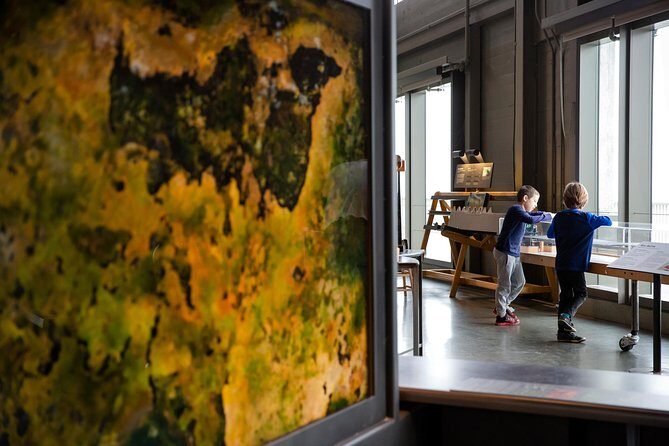
One reason I like this Exploratorium ticket is simple: the museum is right where you already want to be. It’s on the Embarcadero at Pier 15, tucked between the Ferry Building and the Fisherman’s Wharf/Pier 39 stretch. That matters because you can pair your visit with a walk along the waterfront before or after, instead of losing half your day to transit.
Once you arrive, you’ll find the museum setup built for quick entry. There are coin-operated lockers just past the Ticketing and Info desk, which is handy if you’re carrying a tote bag, extra layers, or wet stuff from foggy Bay weather. And since it’s near public transportation, you’re not stuck hunting for parking.
You can also read our reviews of more tours and experiences in San Francisco



What your skip-the-line ticket really does (and what it doesn’t)

This is where expectations matter. The “skip the line” part is about getting through the ticketing step faster. With this daytime admission, you’re set up to bypass the ticketing counter and go directly to the museum’s entry point. It does not mean you get special access to exclusive exhibits that require separate tickets.
A couple practical notes from real-world glitches to keep you calm:
- Sometimes advance barcodes can vary in format, and a few people report needing to stop briefly for ticket scanning/printing issues. If that happens, it’s usually a short fix rather than a full stop.
- If you arrive when there’s little or no line, the time saved may feel less noticeable. Still, it’s the same admission, and it’s meant to cut the friction when lines build up.
Also, check what’s included versus not included:
- Included: day admission with skip-the-line entry.
- Not included: Tactile Dome experience (separate tickets).
- Not included: After Dark Thursday Evening admission (18+ only).
The museum flow: self-guided galleries built for hands-on learning
You’re not following a strict script. This is an all-day general admission museum, and you explore at your own pace through hundreds of interactive exhibits across six galleries plus an open-air gallery. That matters because people move differently through science. Kids want to touch first and ask questions second. Adults sometimes want to understand first. Here, both styles work.
Think of it like stations you can hop between:
- Some areas reward repeated play.
- Other areas are great for slower observing.
- Demos and exhibit stations can create natural breaks where you pause, watch others try it, and then join in.
And yes, it’s big. If you’re trying to cover everything in one go, you’ll want more than a quick stop. The suggested 3 to 5 hours is enough to hit the main zones, but it won’t feel like you “finished” the museum.
Gallery 3: lights, mirrors, and bubbles
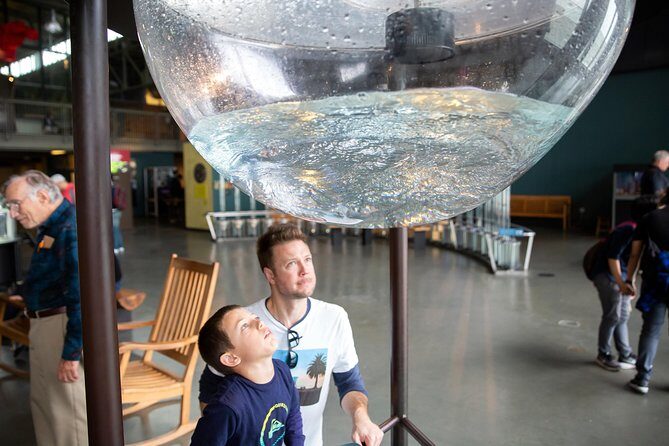
Gallery 3 is the type of exhibit space that turns curiosity into motion. You’ll find hands-on play with lights, mirrors, and bubbles. This is often where families get the most instant smiles because the cause-and-effect is easy to see. You change something, you watch the result, you try again.
For adults, this gallery is a reminder that science can be visual and playful, not only textbook. For kids, it’s less about reading labels and more about experimenting. If you like your museum day to include a few sure-win moments, start here early (before the crowd forces everyone to scramble).
Gallery 1: the brain and how we perceive reality
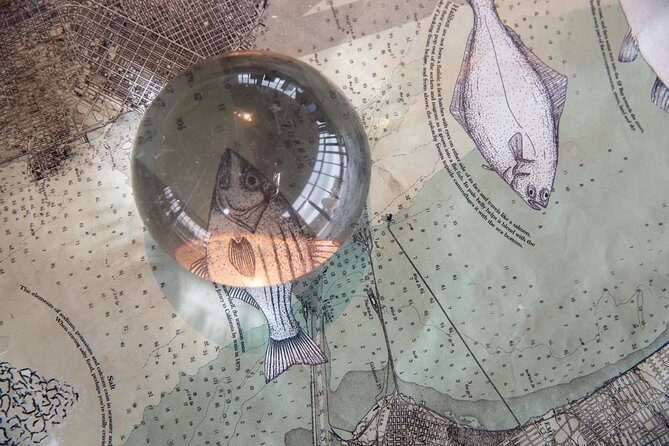
Gallery 1 focuses on the inner workings of the brain and human perception. It’s a smart switch from the more physics-based stuff because it makes you question what you think you’re seeing. Even if you’re not a neuroscience person, you’ll probably recognize the feeling: your eyes interpret, your brain edits, and your perception can be fooled.
This gallery is also good for mixed-age groups. Teens and adults can spend longer testing ideas, while younger kids can still have fun with interactive prompts. It’s one of those areas where you can start with wonder and end with a better explanation of how perception works.






Tinkering Studio and mechanical play you can’t fake

Next up, the Tinkering Studio is where mechanical contraptions come alive. You get hands-on chances to play with cause and effect through build-style experiences. This part is a big reason the Exploratorium works as more than a kid-only museum. It’s mechanical thinking in real time.
If you have someone in your group who likes engineering, tools, or figuring things out by trial and error, this is your anchor stop. It’s also a useful reset if you’ve been inside a lot. Tinkering invites patience, and it gives your group something to focus on together.
Gallery 4: DNA, cells, and the life-scale view

Gallery 4 takes the microscope-level story outward. You explore life from DNA and cells to organisms and ecosystems. The key here is that it’s not only biology trivia. It’s a way to connect the tiny to the big picture.
For kids, it’s often easier than you’d expect because the exhibits are interactive and designed for hands-on learning. For adults, it can feel like a gentle brain workout that doesn’t demand prior knowledge. You leave with a clearer idea of how biological systems relate, even if you don’t know the vocabulary yet.
Outdoor science: Bay Observatory views and forces shaping the area

Don’t rush the outdoor portion. The museum includes an outdoor space where you learn about natural and human forces that shape the unique San Francisco Bay Area, and you get sweeping views of the Bay and the Bay Bridge from the Bay Observatory.
This is valuable in two ways:
- It’s a mental break from indoor crowd density.
- It ties the science to where you actually are, right now, with the waterfront and bridge in your line of sight.
If you’re visiting on a clearer day, the views make the whole experience feel more grounded. If it’s foggy, it still works because the focus becomes how nature changes the Bay experience.
How to plan your route when you only have 3–5 hours
The biggest mistake people make at hands-on museums is trying to do everything. You’ll end up tired and cranky, and the best exhibits will blur together.
Here’s a practical way to use your time:
- I’d start with the left side, then move through to the right and toward the exit. This helps reduce extra walking.
- Give yourself enough time per section. A good rule from real visit pacing is 30 to 45 minutes per section if you’re actually trying activities, not only looking.
Also, build in sit-down moments. Benches matter here. One visitor noted frequent benches were a lifesaver for older adults to rest while observing others at play.
And if you’re hungry, you’re not trapped inside. Food can be expensive, but you can step out for a meal and come back using a hand stamp.
Crowds and kid energy: how to keep the day fun
It’s popular for a reason, so yes, it can get extremely crowded. You’ll see lots of kids, and with that comes some pushing and chaotic movement. That’s not the museum’s fault, but it is your reality.
I suggest you set expectations before you enter:
- Plan for lines at certain popular stations.
- Tell kids you’ll follow the flow and that pushing isn’t how they get to play.
- Use the quieter areas and the outdoor gallery as pressure valves.
If you’re traveling with someone sensitive to noise, aim for rotating priorities. Hit one busy gallery, then spend time in a less packed area or the outdoor Bay Observatory for a breather. The museum is hands-on, so you can always switch gears.
Price and value: $39.95 for serious all-ages play
At $39.95 per person, this is not a throwaway add-on. But it can be good value because you’re paying for a day of interactive admission, not a short guided tour.
Here’s how I’d judge it for your budget:
- The skip-the-line part is worth the most when you arrive during heavier entry times. If the ticketing queue is long, saving that time is real money in the form of energy.
- You get access across multiple galleries, with hundreds of exhibits and outdoor science areas.
- The museum is family-friendly, and it works for adults too. You’re not paying just for kids to burn energy while adults wait.
What can reduce value a bit:
- Tactile Dome is not included and requires separate tickets, so don’t assume you’ll do everything.
- Food inside can be pricey. If you budget for meals, it feels smoother.
- Expect crowds, which means the “best experience” depends on your flexibility and patience.
One nice bonus: children 3 and under get free admission, which helps family math.
Who should book this daytime Exploratorium entry
This works especially well if you’re any of the following:
- Traveling with kids who need hands-on learning, not passive exhibits.
- A couple who likes science and doesn’t mind getting a little silly.
- Teenagers who want something that feels less like a school worksheet.
- Grandparents or multi-generation groups who want plenty of interactive options and seating spots.
If you’re visiting on a weather day, it’s also a strong choice since the museum is largely indoor with interactive stations, plus outdoor views when conditions are workable.
If you’re only in town briefly and want maximum payoff per hour, the skip-the-line entry plus a targeted route is a smart plan.
Should you book this skip-the-line Exploratorium ticket?
If you’re planning a daytime Exploratorium visit, I’d book it when you want to reduce friction at the entrance and make room for more experimenting inside. It’s a good fit for families, mixed-age groups, and science-curious adults who learn best by doing.
I’d be slightly cautious if:
- You’re hoping for included access to the Tactile Dome (you’ll need separate tickets).
- You’re visiting expecting a quiet, calm museum day (it can be crowded).
- You only want a quick one-hour stop. This place is best when you give it time.
FAQ
FAQ
How long is the Exploratorium daytime admission?
It’s approximately 3 to 5 hours.
Is this a guided tour?
No. It’s self-guided, and you explore at your own pace.
What does skip-the-line mean for this ticket?
It allows you to bypass the ticketing counter and proceed directly to the museum’s entry point.
Where is the Exploratorium located?
Pier 15 on the Embarcadero, between the Ferry Building and Fisherman’s Wharf/Pier 39.
What’s included in the ticket price?
Skip-the-line daytime admission to the Exploratorium is included.
What is not included?
Tactile Dome experience is not included, and After Dark Thursday evening admission (18+ only) is not included.
Is there a mobile ticket?
Yes, you receive a mobile ticket.
Are lockers available?
Yes. Coin-operated lockers are located just past the Ticketing and Info desk.
Is the museum map available in multiple languages?
Yes. Complimentary museum maps are available in English, Spanish, French, Italian, Traditional Chinese, Simplified Chinese, German, Portuguese, Arabic, Japanese, Korean, and Filipino.
Can I get a refund if my plans change?
You can cancel up to 24 hours in advance for a full refund. Within 24 hours, there’s no refund.