REVIEW · SAN FRANCISCO
Mix & Save: San Francisco Grand City Tour + Escape from the Rock Cruise
Book on Viator →Operated by Gray Line San Francisco · Bookable on Viator
Fog, bridges, and prison views in one day. You’ll get a narrated city loop with photo stops plus a bay cruise that circles Alcatraz twice from every angle. I like the way the route strings together big-name sights (Golden Gate Bridge, Twin Peaks) with neighborhood texture (Chinatown, North Beach, Haight-Ashbury). One thing to consider: parts of the day are drive-bys, and the boat can be standing room first-come, so plan for a less comfy ride than a quiet sightseeing cruise.
This is a mix-and-save style combo from Gray Line San Francisco: a 5.5-hour coach tour, then a separate operator’s boat adventure from Pier 41/Pier 39 for Escape from the Rock. You end back near the waterfront, so it’s a good fit if you’re okay navigating on your own after the cruise.
In This Review
- Key Things to Know Before You Go
- The $109 Value: Bus Narration Plus an Alcatraz-Loop Cruise
- Where This Tour Starts: Pier 41 and the Two-Company Reality
- Union Square to Golden Gate Bridge: Big Views and Quick History Stops
- Palace of Fine Arts: A Fake-Ruin You Can Actually See
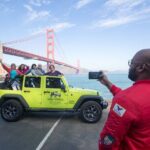
- Golden Gate Bridge Photo Stop: Details That Make Photos Easier
- Presidio and Land’s End: Military Grounds and the Sutro Baths Ruins
- Lands End and Ocean Beach Lookout: Pacific Views and Old Remains
- Golden Gate Park, Haight Street, and Twin Peaks: The City’s Contrasts
- Golden Gate Park: Windmills, Bison, and Scale
- Haight Street: Hippie Origins, Music Names, and Street Energy
- Twin Peaks: A High Vantage With Fog as the Price
- Castro to Chinatown: Neighborhood Stories That Actually Help You Understand SF
- The Castro District: Community History in Plain Terms
- Market Street and the Civic Spine of the City
- Financial District: Sky Lines and Barbary Coast Remnants
- Chinatown and North Beach: Views From the Bus, Not a Full Wander
- Mission District Photo Stop and Fisherman’s Wharf Landing at Pier 39
- Escape from the Rock at Pier 39/Pier 41: How the Alcatraz Loop Works
- Seating, Boarding, and the Real-Life Comfort Check
- Weather and Photo Planning: Fog, Wind, and the Best Moments
- Who This Tour Is Best For (and Who Should Rethink)
- Should You Book This Grand City Bus + Escape from the Rock Combo?
- FAQ
- FAQ
- How long is the tour?
- Where does the tour start and end?
- What’s included in the price?
- Does the boat tour land on Alcatraz Island?
- How many times does the boat circle Alcatraz?
- Are there hotel pick-ups included?
- What language is the tour offered in?
- What are the main photo stops during the bus portion?
- What about gratuities?
- Do I need to choose a departure time for the cruise?
- How large is the group?
Key Things to Know Before You Go
- Photo stops are real: Palace of Fine Arts, Golden Gate Bridge, Twin Peaks, Land’s End (Sutro Baths ruins area), plus a Mission District photo stop.
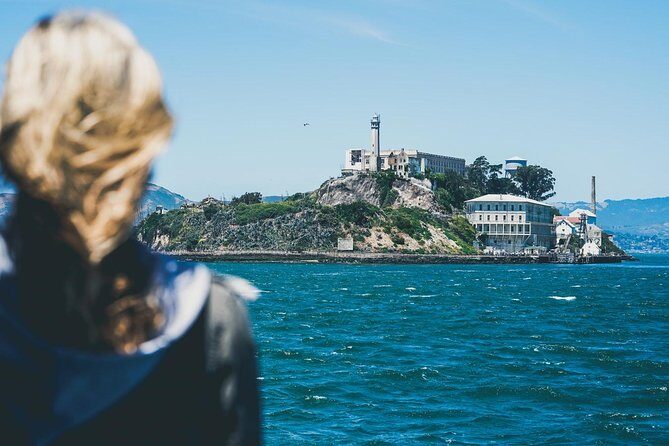
- Alcatraz stays outside: the cruise does not land on the island and does not include the prison interior.
- You’ll see the island from all directions: the boat circles Alcatraz twice.
- Some neighborhoods are drive-bys: Chinatown and Fisherman’s Wharf are views from the bus, not long walking time.
- Expect weather to play tricks: Twin Peaks can be foggy and your view depends on the day.
- Boat seating may be tight: boarding can be first come first served.
The $109 Value: Bus Narration Plus an Alcatraz-Loop Cruise
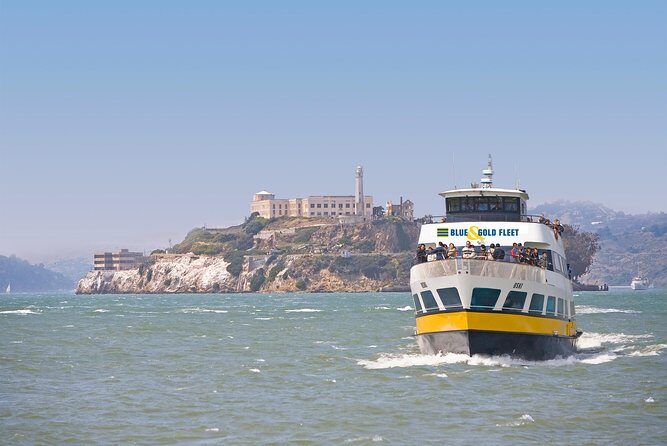
At $109 per person for about 5 hours 30 minutes, the value is in the pairing. You’re not just doing a drive through famous streets—you’re also getting a bay cruise experience that changes the perspective of San Francisco (and Alcatraz) fast. That combo matters because the city looks different from street level than it does from water.
The bus portion focuses on getting your bearings quickly: Union Square down to the water area, plus viewpoints like Twin Peaks. Then the cruise adds the dramatic piece—Alcatraz looming off your side of the boat while you circle it twice. If you only have a half day and you want the visuals without planning two separate activities, this format usually feels efficient.
The main “value tax” is time and flexibility. The boat has seasonal departure times, and the day ends at Pier 41/Pier 39, not at your hotel. So you’ll want a plan for how you’ll get back after the cruise.
You can also read our reviews of more boat tours in San Francisco
Where This Tour Starts: Pier 41 and the Two-Company Reality
The tour begins at the San Francisco Pier 41 Ferry Terminal. The bus portion ends near Pier 39, and your driver will point you toward the Escape from the Rock cruise landing.
A key practical detail: the boat experience is operated separately. That doesn’t hurt the day, but it does mean you should treat it like a separate ticketed activity with its own boarding rules and timing. Have your phone ready for any last-minute instructions, and keep your schedule flexible in case the boat departure window is busy.
Also note the day ends where the cruise launches. There’s no built-in “back to your hotel” transportation described here, so build in time for public transit or rideshare.
Union Square to Golden Gate Bridge: Big Views and Quick History Stops
The day starts in the heart of Union Square and heads toward the Golden Gate Bridge. This is the opening “wow” stretch, and the narration helps you understand what you’re seeing instead of just watching landmarks pass by.
Along the way you’ll pass spots tied to the 1906 earthquake and fire story, including Van Ness Avenue, described as a US Army firebreak route. Even if you’re not a trivia person, it’s useful context—San Francisco’s geography and rebuilding choices make more sense once you know how fire behavior shaped the city.
Palace of Fine Arts: A Fake-Ruin You Can Actually See
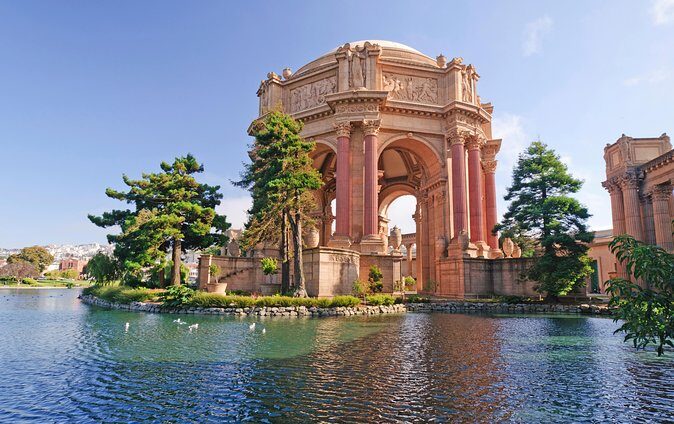
One of the best stops is the Palace of Fine Arts Theatre area. It’s tied to the 1915 Panama Pacific International Exposition, with a Greek-Roman-inspired design. The tour notes that Phoebe Apperson Hearst stepped in to save the rotunda and colonnade when the fair was dismantled.
Why this stop works: you get a calm, photogenic break that isn’t just another skyline frame. You also get a bit of built-in storytelling—temporary fair structure turned into a surviving landmark.
Tip: even if the stop is short, take a moment to look for the lagoon setting around the rotunda. The area can be lively with wildlife, and it gives the photos texture beyond architecture.
Golden Gate Bridge Photo Stop: Details That Make Photos Easier
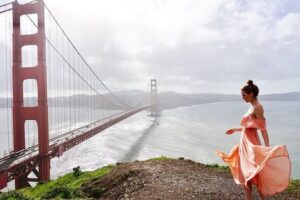
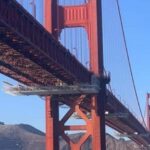
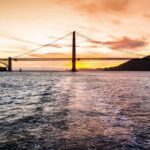
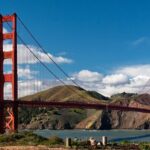
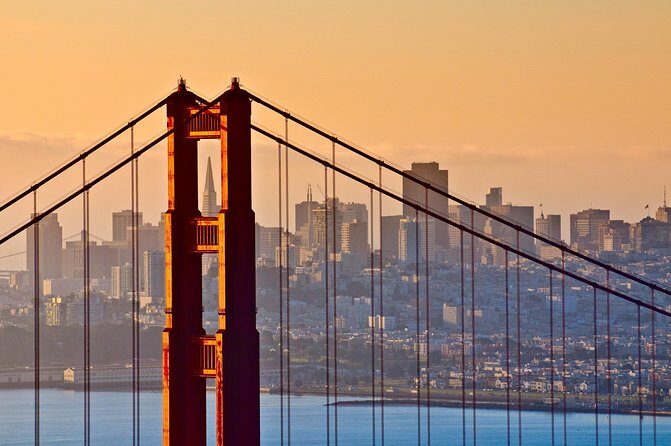
The Golden Gate Bridge stop is one of the clearest photo moments of the whole day. The tour points out key facts: construction began in 1933, finished in 1937, and the bridge runs about 1.7 miles with a top height of 746 feet above the bay.
Why I like this kind of stop: it’s short but focused. When you know what you’re looking at—the suspension bridge concept, the era of construction, the scale—you can frame your pictures better instead of just clicking fast.
Best practice: bring layers. Even with a clear forecast, bridge areas can get windy.
You can also read our reviews of more city tours in San Francisco
Presidio and Land’s End: Military Grounds and the Sutro Baths Ruins
After the bridge, the bus heads into the Presidio, a large park on a former military post. The tour mentions Baker Beach, historic buildings, and nearby attractions like the Walt Disney Family Museum and Lucasfilm, plus that there’s a Yoda Fountain in the area. That helps you connect the past and present in one pass.
Then comes Land’s End, where the tour shifts to ocean drama.
Lands End and Ocean Beach Lookout: Pacific Views and Old Remains
At Land’s End, you’re set up for ocean panoramas. On one side, you can spot the Cliff House restaurant area in the distance; on the other, the Lands End parks and trails.
You’ll also hear about the Sutro Baths. The tour describes how Adolph Sutro built the mansion and the Sutro Bath House, opened in 1896, survived the 1906 catastrophe, then later burned after a fire in 1907. Today you see ruins where those structures once were.
Why this stop is more than scenic: the “ruins with a reason” effect. You’re not just looking at rocks and walls—you’re seeing a site with a clear origin story, tied to San Francisco’s coastal entertainment and ambition.
If you’re a photo person, use this moment to step back and shoot wide before you shoot close-ups. Coastal ruins photograph best when you include both the ocean horizon and the human-made shapes.
Golden Gate Park, Haight Street, and Twin Peaks: The City’s Contrasts
This is where the route becomes a tour of contrasts.
Golden Gate Park: Windmills, Bison, and Scale
You drive into the west side of Golden Gate Park and get quick hits on iconic landmarks like a windmill designed for pumping water. The tour also mentions the Bison Paddock, where bison live within the park.
Then you get the scale stats: opened in 1870, about 1,017 acres and roughly 3 miles long. It’s described as larger than Central Park by comparison, and it’s noted as the third most visited park in the US.
Even if you don’t plan to walk the park, the drive-by makes it easier to picture why people fall in love with it. You’re not just passing a park—you’re passing a whole world of animals, water features, and historic landscaping.
Haight Street: Hippie Origins, Music Names, and Street Energy
Next is Haight Street, described as the origin of hippie counterculture. The guide weaves in famous names tied to the era, including Jimi Hendrix, Janis Joplin, Jerry Garcia, and Jefferson Airplane.
This is one of those neighborhood explanations that helps you “read” the street rather than just see storefronts. Even if you’re not chasing 1960s nostalgia, it’s useful context for how San Francisco identity formed.
Twin Peaks: A High Vantage With Fog as the Price
Twin Peaks is a short stop but potentially the most dramatic views of the day. You’ll get time for photos from one of the city’s highest vantages, and the stop includes the presence of Sutro Tower (a 977-foot TV and radio tower).
Here’s the consideration: San Francisco weather is unpredictable. Fog can block views from the top. So if you’re aiming for crisp skyline photos, try to be patient and work around the weather.
Bring the reality mindset: even a hazy Twin Peaks still gives you the sense of height and the layout of neighborhoods.
Castro to Chinatown: Neighborhood Stories That Actually Help You Understand SF
After Twin Peaks, the tour moves into areas that feel more like living communities than list-of-attractions stops.
The Castro District: Community History in Plain Terms
The Castro is presented as synonymous with the gay community and it includes a short historical explanation tied to World War II discharges and why many gay servicemen stayed in San Francisco. The tour also mentions the first gay bar in the Castro called Missouri Mule, opened in 1963.
This isn’t just “important district” framing. It gives you context for why the street looks the way it does and why the area carries cultural weight.
Market Street and the Civic Spine of the City
The bus heads through Market Street, a major thoroughfare with a long transit story. You’ll hear about streetcars and cable-car eras, plus how older heritage streetcars connect parts of the city.
This matters because Market Street is where you can feel the city’s rhythm. It’s a good bridge between scenic viewpoints and dense urban life.
Financial District: Sky Lines and Barbary Coast Remnants
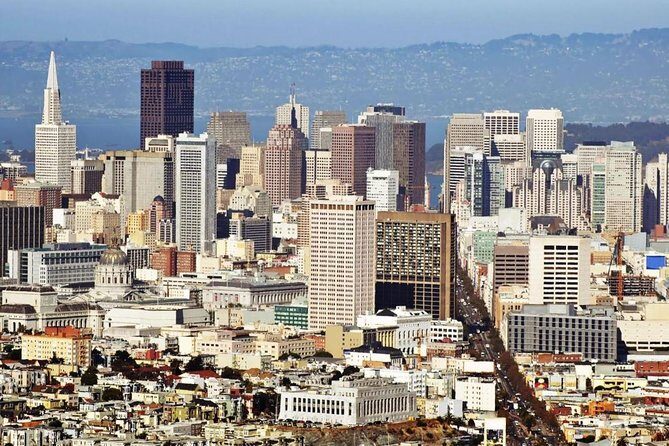
The route includes the Financial District with mentions of skyscrapers like the Transamerica Pyramid and Salesforce Tower, plus a note about Jackson Square Historic District and remnants of the Barbary Coast.
Even from a moving bus, it helps to know that San Francisco isn’t only tech-forward and modern. The city has layers, and the tour nudges you toward noticing them.
Chinatown and North Beach: Views From the Bus, Not a Full Wander
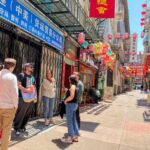
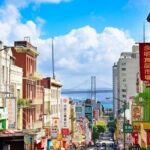
Chinatown is one of the biggest stops on the drive and includes background tied to the Gold Rush and “Gold Mountain” stories, plus the idea of Chinatown as a city-within-a-city formed by immigration patterns and tensions.
The tour also highlights Old St. Mary’s Cathedral built in 1854. That’s a useful anchor if you’re trying to spot one landmark while everything else passes.
Then North Beach comes in, described through the Beat Movement connection (Jack Kerouac is specifically mentioned) and its Italian dining reputation.
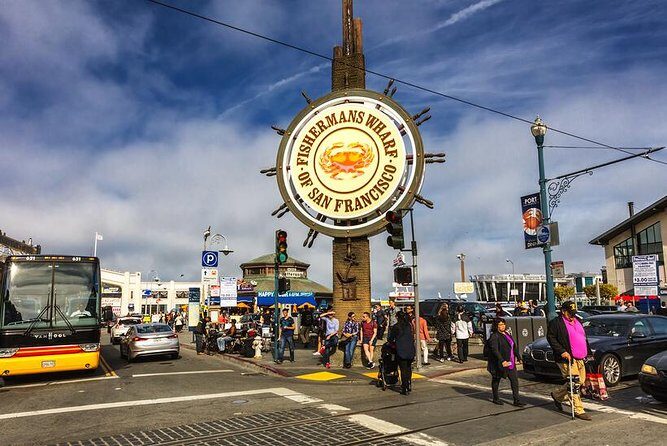
One important heads-up: Chinatown and Fisherman’s Wharf are presented in a way that often means bus views rather than extended time on foot. If you want deep wandering time in either place, plan to do that on your own after the tour.
Mission District Photo Stop and Fisherman’s Wharf Landing at Pier 39
You’ll hit a Mission District photo stop connected to Mission San Francisco de Asis. That’s one of the named photo opportunities, and it’s valuable because it adds a different “SF flavor” from the hills and waterfront stops.
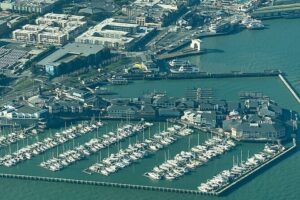
Then the bus portion finishes at Pier 39, Fisherman’s Wharf area. After you disembark, you’re directed to the Escape from the Rock cruise landing.
This is where the pace changes. The tour is bus-fast, then the boat becomes your main time block.
Escape from the Rock at Pier 39/Pier 41: How the Alcatraz Loop Works
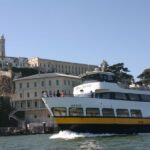
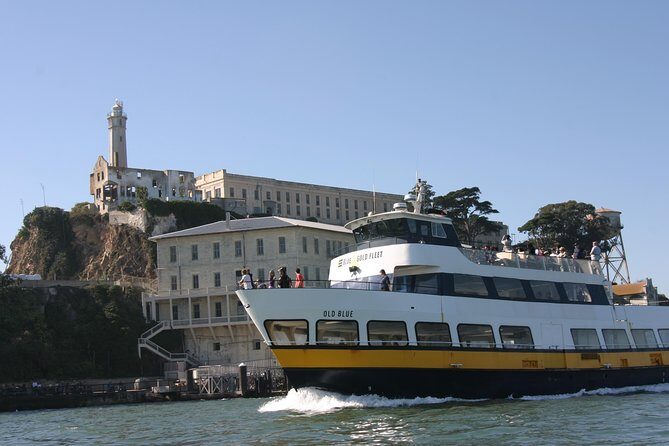
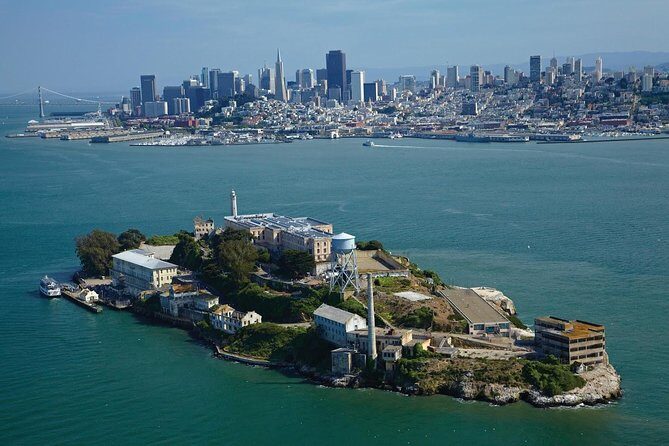
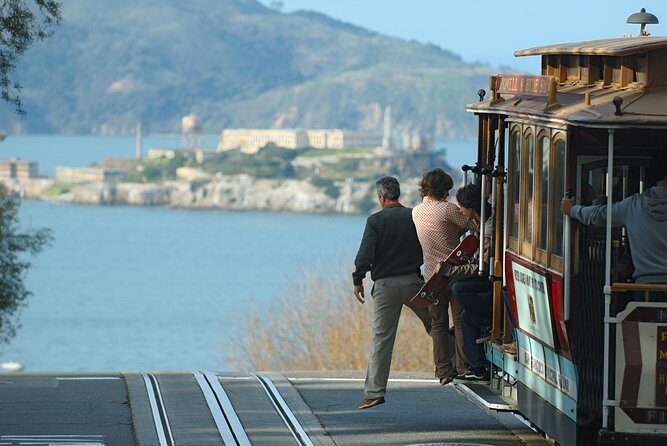
The Escape from the Rock cruise is your big-ticket view moment. The boat circles Alcatraz Island twice, giving you multiple angles—front, side, and as the island shifts across your view as you go around.
The cruise is described as bringing you close to the prison island, with stories included about former prisoners and escape attempts, plus prison history.
Two practical things you should know before you set your expectations:
- It does not land on Alcatraz Island.
- It does not include the prison interior.
So treat this as an outside-looking experience. It’s still dramatic—Alcatraz is a visual magnet—but it’s not the inside tour.
Seating, Boarding, and the Real-Life Comfort Check
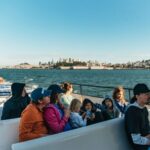
Boat operations can get crowded. There’s a chance you’ll end up with standing room depending on loading order, especially if you’re later in the boarding line.
And in busy periods, even with a ticket, you might wait for the next departure if the boat’s first boarding window is full. Because the boarding rules aren’t spelled out in the tour details, I’d plan for flexibility and bring a layer for wind and ocean air.
Weather and Photo Planning: Fog, Wind, and the Best Moments
San Francisco is a temperature roller coaster. You’ll go from city streets to high viewpoints to ocean-facing ruins, sometimes all in one morning.
Here’s how to make your photos work:
- For the Golden Gate Bridge stop, aim to shoot both with and without the skyline in frame. Depending on haze, the bridge can look either crisp or ghostly.
- For Twin Peaks, your photo success is weather-dependent. If fog rolls in, pivot to broader city layout shots rather than chasing perfect clarity.
- For Land’s End, wind can be stronger than you expect. If you’re using a phone, take photos in bursts so you’re not fighting unstable grip on windy gusts.
If you care about the sharpest views, keep your expectations flexible. This tour packs in a lot, and the best shots often come from adapting quickly.
Who This Tour Is Best For (and Who Should Rethink)
I think this works best for people who want a single half-day plan that combines city highlights with an Alcatraz bay perspective.
It’s also a good choice if you don’t want to coordinate multiple tickets and transport pieces across town. The bus handles the “getting around” and the cruise handles the water-based sightseeing.
You might want to rethink it if:
- You want long walking time in Chinatown or at Fisherman’s Wharf. This day is mostly drive-by viewpoint coverage, with time focused on the listed photo stops.
- You want a guaranteed seated boat experience with minimal waiting. Boarding can be first-come and space can be limited.
Should You Book This Grand City Bus + Escape from the Rock Combo?
If you’re short on time and you want the big San Francisco picture—Golden Gate Bridge, hilltop views, neighborhood context, then an outside Alcatraz cruise—this is a solid booking. The pairing makes sense, and the photo stop structure gives you several chances to get your best shots instead of only watching from a bus window.
My biggest caution is not the sights. It’s the execution details: understand that some stops are drive-bys, the boat experience is separate, and the day ends at Pier 41/Pier 39 with no built-in return to hotels. If that fits your plan, you’ll likely feel like you got your money’s worth.
FAQ
FAQ
How long is the tour?
The total duration is about 5 hours 30 minutes.
Where does the tour start and end?
It starts at the San Francisco Pier 41 Ferry Terminal and ends at Pier 41/Pier 39 (near the Escape from the Rock cruise landing).
What’s included in the price?
You get a narrated bus tour with 5 photo stop opportunities and the Escape from the Rock bay cruise around Alcatraz Island and the bay.
Does the boat tour land on Alcatraz Island?
No. The cruise does not land on Alcatraz Island and it does not include the prison interior.
How many times does the boat circle Alcatraz?
The cruise circles Alcatraz Island twice.
Are there hotel pick-ups included?
No, hotel pick-up and drop-off are not included.
What language is the tour offered in?
The tour is offered in English.
What are the main photo stops during the bus portion?
The photo stops include Golden Gate Bridge, Palace of Fine Arts, Twin Peaks, Land’s End Ocean Beach (Sutro Baths area), and Mission San Francisco de Asis (Mission District).
What about gratuities?
Gratuities are not included.
Do I need to choose a departure time for the cruise?
Yes. The tour notes you should check the boat tour schedules on Blue & Gold and pick the best departure time.
How large is the group?
The tour has a maximum of 45 people.