REVIEW · SAN FRANCISCO
San Francisco Technology and History Tour: South of Market
Book on GetYourGuide →Operated by Heck Wes Tours · Bookable on GetYourGuide
SoMa has a way of surprising you with depth. This 70-minute South of Market tour connects startups to city-building decisions, then tops it off with rooftop views you can actually use. I like how the guide, Wes, works the neighborhood like he lives in it, and how the route keeps you moving through the city’s big turning points. You’ll also get a clear sense of why San Francisco keeps calling itself the world’s startup capital.
My favorite part is the mix of tech fingerprints and older industrial stories, from the hill-flattening history along 2nd Street to the human side of urban renewal at Yerba Buena Gardens. I also like that South Park offers seating and shade, so your walk doesn’t start with you standing around. The main drawback is simple: this is a focused SoMa walk, so if you’re hoping for the city’s classic tourist stops, you’ll need a different day.
In This Review
- Key highlights to look forward to
- SoMa’s tech story, told where it actually happened
- South Park’s benches, shade, and venture capital origins
- 2nd Street: where shipping history meets the modern startup corridor
- Folsom Street and the city’s social history thread
- Yerba Buena Gardens: urban renewal’s big footprint and the people behind it
- Salesforce Park rooftop garden: skyline views with a complicated past
- California High Speed Rail: spotting the next layer of change
- Price and time: good value for a concentrated 70 minutes
- Logistics that make the walk easier (and who should go)
- The guide factor: why Wes changes how you see SoMa
- Should you book this South of Market tour?
- FAQ
- FAQ
- How long is the South of Market technology and history tour?
- Where does the tour start?
- Where does the tour end?
- Is the tour wheelchair accessible?
- What sights and areas will I see during the walk?
- Will I see any tech-related locations?
- Do you cover future infrastructure like California High Speed Rail?
- What should I bring?
- Is the tour conducted in English?
- What public transit options are nearby at the end?
Key highlights to look forward to
- Wes, local and startup-aware: he brings the neighborhood to life with personality and real context.
- South Park’s era-by-era transformation: gold rush encampments to refugee history to venture capital.
- 2nd Street’s shipping and land-reclamation story: a road shaped by flattening one of the city’s largest hills.
- Yerba Buena Gardens and the eviction fallout: how urban renewal changed local politics.
- Salesforce Terminal rooftop garden views: skyline + Bay views over a site that used to be Tar Flat.
- Future California High Speed Rail alignment clues: you’ll see where the next big change may run.
SoMa’s tech story, told where it actually happened
South of Market is one of those parts of San Francisco where the present never fully covers the past. You can walk a straight line from venture capital roots to shipping history to urban renewal, and the city explains itself in layers.
This tour is built for that kind of seeing. It stays mostly flat, runs about 70 minutes, and ends near major transit. The payoff is not just facts—it’s perspective, like you finally understand why certain blocks became power centers, while others got erased.
You can also read our reviews of more historical tours in San Francisco
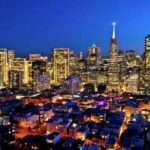


South Park’s benches, shade, and venture capital origins
You start in South Park, one of San Francisco’s oldest neighborhoods, shaped in the 1850s after a British Garden Square. The guide gives you a quick orientation and then you’ll spend about 10–15 minutes here before you head north.
This stop matters because South Park is where you can watch San Francisco reinvent itself without leaving the street. In the 2010s, it was home to early offices of Instagram and Twitter, but it also hosted a gold rush encampment, luxury development during the Gilded Age, a refugee camp after the 1906 earthquake, the city’s Japanese community, and later an industrial community. Now it’s strongly identified with the financial development side of tech.
I love that this isn’t taught as a straight line from past to present. The guide emphasizes the back-and-forth—how the neighborhood keeps getting redefined—and you get a stronger feel for how tech grew out of an already crowded, already changing city.
Practical tip: South Park has seating and shade, so if you’re pacing yourself, this is a good place to catch your breath before the walking kicks in.
2nd Street: where shipping history meets the modern startup corridor
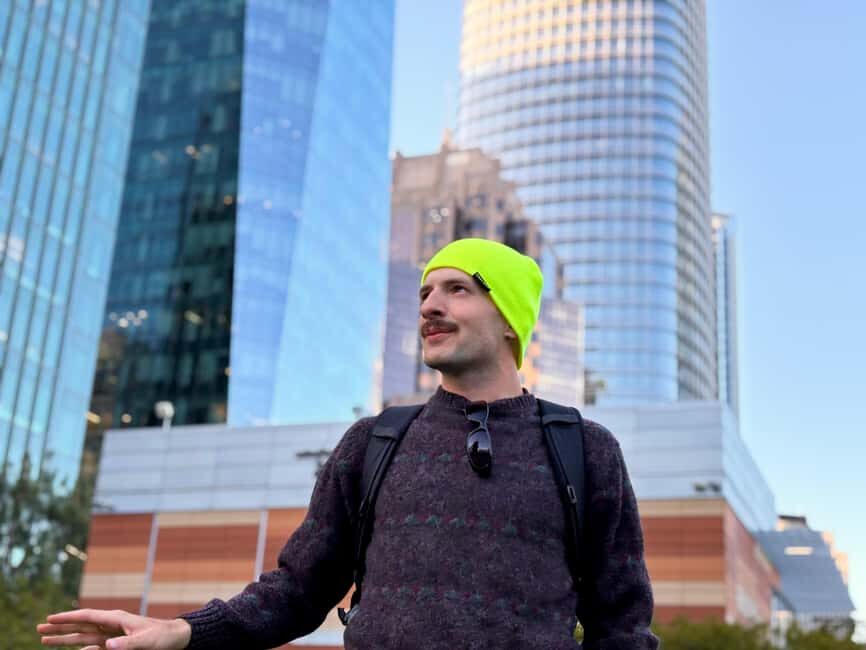
Next you move along 2nd Street, one of the city’s most historically significant streets because it linked downtown to the Pacific Mail Steamship Company’s docks. That dock-connected role shaped SoMa’s industrial energy long before today’s office towers.
Then comes one of the most memorable turning points: 2nd Street was also the site of the first large land reclamation project, when one of San Francisco’s largest hills was flattened to make room for the commercial thoroughfare. That kind of change isn’t abstract. It’s a reminder that modern tech neighborhoods were physically manufactured—by moving the earth, reshaping access, and redesigning what was possible.
You’ll also pass a tight cluster of current names in the startup world, including LinkedIn, DoorDash, and Anthropic. That’s helpful if you’re curious about the present, but the tour also keeps you anchored to the why: the street’s old economic purpose is still echoed in what businesses want today—traffic flow, proximity, and centrality.
One more angle you’ll likely appreciate here is the route’s connection to industrial heritage at the port area. The story of ships and docks is part of why this area became a workhorse part of the city, even before the tech wave arrived.
And yes, the walk is mostly flat, which makes it easier to focus on details instead of fighting your footing.
Folsom Street and the city’s social history thread
As you keep moving through SoMa, you’ll cover Folsom Street, known for its role in San Francisco’s gay history. This isn’t presented as a side note. The point is that neighborhoods aren’t only shaped by money and infrastructure. They’re also shaped by community, identity, and who has had space to gather and build a life.
It’s a nice counterweight to the tech-heavy parts of the route. Even if you’re primarily here for startups and development, this section helps you understand SoMa as a place where cultures and power dynamics have always been in motion.
Yerba Buena Gardens: urban renewal’s big footprint and the people behind it
Yerba Buena Gardens is where the tone shifts. This is one of San Francisco’s largest Urban Renewal projects, and the guide doesn’t treat it like a neutral landmark.
Instead, you’ll learn about the people who lived there before the renewal and how eviction affected San Francisco’s political climate. That matters because urban renewal wasn’t just about new buildings. It changed who had influence, what communities could protect, and what future leaders had to argue about.
If you’ve ever seen the city’s redevelopment debates and wondered why people still feel strongly, this stop gives you a grounded reason. It connects policy to real households, and it shows how the effects can echo for generations.
There’s a practical benefit too: Yerba Buena Gardens can act like a mental pause. You get a chance to look around, take in the current layout, and then let the guide layer the lost community underneath it.
You can also read our reviews of more shopping tours in San Francisco
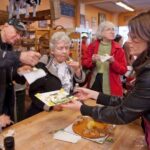
Salesforce Park rooftop garden: skyline views with a complicated past
The end of the tour lands near Market Street at the rooftop garden of Salesforce Terminal. This is the “wow” moment, but it’s not just scenery. From here you get views across the city skyline and out toward the Bay.
And the story keeps going. The Salesforce development is described as the most visible imprint of the tech industry in San Francisco, and it’s also one of the city’s largest developments in recent history. That makes this final stop more than a photo op. You’re standing in a place that represents the newest chapter of SoMa’s reinvention.
Even better, you’re shown how the site’s past didn’t vanish—it changed names and functions. It was built over a beachfront natural gas refinery, and before the current wave of investment, it was home to Tar Flat, which the tour frames as the city’s poorest neighborhood. That contrast hits harder when you’re looking at the skyline from above, because the height makes the transformation feel extra obvious.
You may also spot Klockar’s blacksmith, a reminder of the early days when metalworking shaped the neighborhood. It’s a small detail, but it’s the kind of detail that makes the city feel honest.
California High Speed Rail: spotting the next layer of change
One of the highlights is that you’ll follow the future path of California High Speed Rail as part of the walk. Even if you’re not tracking infrastructure news, this adds value because it connects today’s tech-and-development story to what planners are trying to build next.
The way the guide frames it matters: rail isn’t just transport. It’s land use, job location, and the long-term gravity of where people will want to be. In a neighborhood like SoMa, that kind of shift can change the market faster than most people expect.
Price and time: good value for a concentrated 70 minutes
At $30 per person for a 70-minute walking tour, this price feels fair for what you’re getting: live guidance, multiple major SoMa sites, and a story that ties them together into something you can remember.
You’re not paying for a single museum stop. You’re paying for a guided route that moves between venture capital-era South Park, the shipping corridor past, the urban renewal impact at Yerba Buena Gardens, and the rooftop city views at Salesforce Terminal. If you’re short on time, that’s the kind of value that actually helps on a busy trip.
Timing-wise, you’ll start with a short guided segment in South Park and then spend the rest of the tour walking between stops. The total pace is manageable, especially since SoMa is known as one of the flatter neighborhoods in the city.
Logistics that make the walk easier (and who should go)
This is a wheelchair-accessible tour, and South of Market being flat helps a lot. It also ends near BART and MUNI lines, so your next step is easy once the tour wraps up. The Powell Street cable car is about a 15-minute walk away.
Language is English, and private group options are available if you want a smaller setting.
Who is this best for? I’d point you toward it if you want more than postcard San Francisco. This tour suits people who like city planning, want a practical sense of how the tech economy formed, or enjoy learning how neighborhoods evolve through policy, industry, and money.
The guide factor: why Wes changes how you see SoMa
The strongest praise centers on the guide himself. Wes is local, works in the neighborhood, and brings a genuine passion for urban history and development. He’s also known for connecting the big trends to real experience, including how startups fit into the local ecosystem.
That kind of guide matters because SoMa can feel like a blur of offices and street signs if you go without context. Here, you’re shown why those choices happened where they did, and you’re encouraged to think about the cost of change, not just the success story.
He also uses techniques like comparing historical photos to what you see now, which makes the transformation feel real rather than theoretical.
Should you book this South of Market tour?
Book it if you want a smart, human-sized walk that turns SoMa into a story you can follow. It’s especially worth it if you’re visiting for the first time and want the tech angle without losing the city’s older industrial and political threads.
Skip it if your ideal day is all classic landmarks and big sightseeing stops, because this experience is focused and intentionally place-based. Also consider your walking comfort: it’s a city walk for 70 minutes, even though the area is mostly flat.
If you like seeing how San Francisco gets remade—block by block—this one is a strong bet.
FAQ
FAQ
How long is the South of Market technology and history tour?
The tour lasts about 70 minutes.
Where does the tour start?
It starts in South Park, with meeting point options that include 162 S Park St. Meeting point may vary depending on the option you book.
Where does the tour end?
It ends near Market Street at the rooftop garden of Salesforce Terminal.
Is the tour wheelchair accessible?
Yes, the tour is wheelchair accessible, and South of Market is described as one of the flattest neighborhoods.
What sights and areas will I see during the walk?
You’ll pass through South Park, walk along 2nd Street and Folsom Street, visit Yerba Buena Gardens, and finish at Salesforce Park/Saleforce Terminal rooftop garden.
Will I see any tech-related locations?
Yes. The tour includes areas connected to the tech industry, and you’ll walk past companies including LinkedIn, DoorDash, and Anthropic.
Do you cover future infrastructure like California High Speed Rail?
Yes. One of the tour highlights is following the future path of California High Speed Rail.
What should I bring?
Bring comfortable shoes and comfortable clothes.
Is the tour conducted in English?
Yes, the live tour guide is English.
What public transit options are nearby at the end?
At the end, you’ll have easy access to both BART and MUNI lines. The Powell Street cable car is about a 15-minute walk away.