
REVIEW · SAN FRANCISCO
The Escape Game San Francisco: Epic 60-Minute Adventures Downtown
Book on Viator →Operated by The Escape Game San Francisco · Bookable on Viator
60 minutes can feel like a whole mini-adventure. This game turns a San Francisco night into a real team challenge, with five storylines to choose from and a timed mission you’ll feel from the moment you start. I especially like the idea that you can grab a slot at a convenient time instead of waiting around for a late-night bar plan, and I like that the Financial District location makes it easy to reach.
You’ll also get clear structure: a guide brings you in, gives you what you need, and keeps the clock moving while you and your team solve puzzles to finish the mission. The one drawback to consider is the possibility of a shared experience unless you book a full group, which can change the dynamic if you’re hoping for a private team.
In This Review
- Key things to know before you go
- San Francisco Financial District: arriving at 150 Kearny St
- Five missions for one hour: pick the right vibe
- How the 60-minute mission clock works
- Entering the room: locked doors, help from a guide, and exit options
- Inside each storyline: what teamwork actually looks like
- Shared experiences vs private teams: know what you might walk into
- Price and value: what $45.99 buys you in real time
- Who should book this game (and who should think twice)
- The night-out advantage: skip the bar line, play instead
- Tips to help your team escape (even if you’re new)
- Should you book The Escape Game San Francisco?
- FAQ
- How long is the experience?
- Where does the experience start?
- How much does it cost?
- What language is the game offered in?
- What game choices are available?
- Is a mobile ticket used?
- Can I leave the room during the game?
- Is this suitable for children?
- Are service animals allowed?
- Is the experience sometimes shared with other people?
- What’s the cancellation policy?
Key things to know before you go

- Five themed adventures: Gold Rush, Prison Break, Special Ops: Mysterious Market, The Heist, and Playground
- A real 60-minute mission plus brief briefing and debrief time for photos
- Financial District meeting point at 150 Kearny St, near public transportation
- Guides like Chris and Dan are often praised for being friendly and helpful
- You can exit anytime using the exit button even with a locked door
- Recommended age is 13+, with adult supervision rules for younger players
San Francisco Financial District: arriving at 150 Kearny St

The Escape Game San Francisco starts at 150 Kearny St in the Financial District. That area is built for easy transit, and this plan works well if you want something fun that does not depend on taxis or long rides.
Timing matters here, because you’re not just paying for a “room.” You’re paying to play a mission inside a tight window. Plan to be there a bit early so your team briefing lands smoothly and you don’t lose minutes to confusion.
You’ll meet at the same place at the end too, since the experience wraps back where you start. That’s practical in a city where “getting home” can be the hardest part of a night out.
One more detail worth noting: there’s no hotel pickup or drop-off. So you’ll want your plan to include how you’ll reach 150 Kearny St on your own (walking, transit, or rideshare).
You can also read our reviews of more tours and experiences in San Francisco.



Five missions for one hour: pick the right vibe
What makes this experience feel different from the usual escape-room pitch is that you choose your story. There are five games, and each one leans into a different kind of challenge and theme:
- Gold Rush: find hidden gold in the California hills
- Prison Break: complete a daring escape from the evil warden
- Special Ops: Mysterious Market: uncover the truth as a secret agent
- The Heist: recover a stolen masterpiece from an art thief
- Playground: complete your report card and get to summer break
If you’re going with friends, you can pick a theme that matches your group humor level. Want something more serious? Go for heist or special ops. Want something lighter and more school-themed? Playground can fit that mood.
If you’re new to escape games, I’d lean toward whichever story sounds fun to talk about during the drive over. You’ll spend the hour decoding clues, so picking a theme you actually like helps your team stay engaged when the puzzles get tough.
One caution: the games are designed for about one hour of intense fun, and the content is recommended for ages 13 and up. Younger players can join, but some puzzles may be harder depending on the game you choose.
How the 60-minute mission clock works

This is not a slow, wandering activity. You get an organized rhythm:
You arrive, meet your game guide, and get set up. Then you have exactly 60 minutes to complete the mission and escape. The schedule also includes time before and after for the full experience: plan on about 15 minutes before each game for prep and briefing, and about 15 minutes after for debriefing and photos.
That timing is part of the value. You’re not spending your whole evening in a waiting area, and you’re not stuck in a marathon session that drains the group. It’s long enough to feel like a real challenge, but short enough that you can still do dinner or drinks afterward.
Also, the experience is in English, which is straightforward if your group wants the clues and guide communication to land clearly.
Finally, you’ll be working as a team to find clues and solve puzzles. The goal is not just figuring out one answer. The hour pushes you to communicate, assign roles, and keep moving when one path doesn’t work.
Entering the room: locked doors, help from a guide, and exit options

You’ll be in a space with a locked door as the game starts. The key detail is that the room setup is designed for safety and control: every door has an exit button, and you’re welcome to leave if you need to.
That matters more than you might think. Escape rooms can feel intimidating when you’re unsure what will happen. Here, the rules acknowledge that sometimes you need a break—whether that’s for nerves, mobility needs during the activity, or just a quick reset.
You’re not totally on your own either. A dedicated game guide comes in with you, helps as needed, and keeps the adventure running. Even when you’re struggling, you can still expect guidance that keeps the experience moving.
Another big point for comfort: these games are described as not scary or dark. They’re more exciting and adventurous than horror-style. So this is usually a better fit for mixed groups who want fun challenge without jump-scare vibes.
Inside each storyline: what teamwork actually looks like
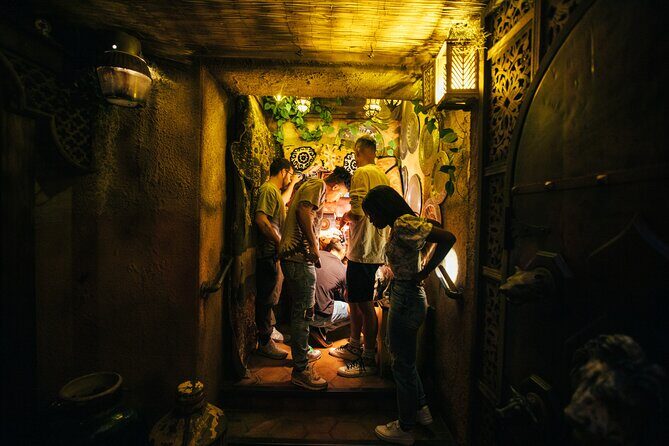
Escape games live or die on teamwork, and this one is built around that reality. You and your group will work together to spot clues, interpret what they might mean, and solve puzzles that link to the mission goal.
Practically, that means:
- Someone needs to pay attention to details in the room
- Someone needs to communicate what they notice to the rest of the team
- Someone needs to test ideas and keep the group from getting stuck on one wrong turn
I like that the experience description makes the expectations plain: you’ll need communication, wits, and a sense of adventure. That’s a good match for groups like families, coworker teams, and friend groups who enjoy light competition and “we figured it out together” moments.
The vibe also seems friendly. People often highlight that the staff are accommodating and that guides can keep the tone upbeat while you play. Named examples include Chris and Dan, who are specifically praised for being helpful and nice.
If your group includes first-timers, don’t assume you’ll breeze through. The mission is designed to challenge even those who are new, so you’ll likely rely on clues and hints more than you expect. The upside is that you still get that satisfying escape outcome when your teamwork clicks.




Shared experiences vs private teams: know what you might walk into
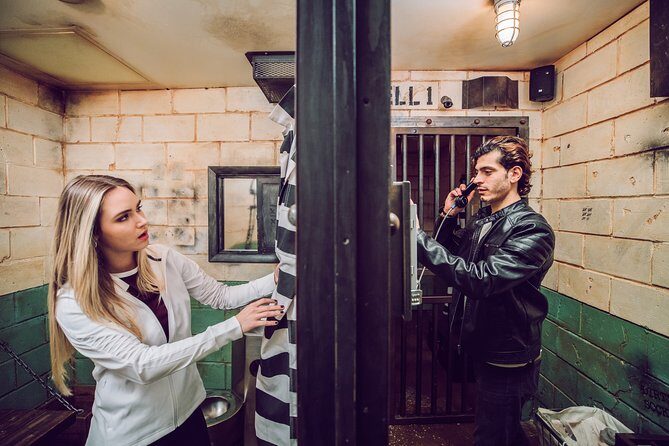
One consideration that can make or break your night: the games have the potential to be shared unless you book all the spots in that game. That means you might be teamed up with other people during your mission.
The experience still caps the overall activity at a maximum of 12 travelers, which helps keep things from getting chaotic. But “shared” can still change the social dynamic inside your team.
So here’s my practical advice. If you’re booking for:
- a family group that wants to stay together,
- a work team that needs tight coordination,
- or a group that’s celebrating and wants full control of participation,
then it’s worth confirming how your booking will be handled and whether you can secure the only team in your game.
If you’re flexible and just want fun and challenge with friendly strangers, a shared setup can also feel like a bonus. Either way, it’s smarter to know than to hope.
Price and value: what $45.99 buys you in real time

At $45.99 per person, this isn’t the cheapest way to spend an hour. No surprise there—San Francisco pricing tends to be its own creature.
What makes the price feel more reasonable is what you’re actually buying:
- A full one-hour mission (not a short demo)
- A dedicated guide who runs the experience
- A choice among five different game storylines
- A structure that includes briefing time and a quick debrief/photos
When an activity is timed tightly and guided well, it tends to feel more “complete” than open-ended entertainment. In other words, you don’t just show up and hope you’re entertained. You’re handed a mission and your group earns the ending.
Is it still pricey? Yes, and someone explicitly noted the cost as the main negative. But if your goal is a memorable group activity that’s active, social, and different from sitting at a bar, the value can make sense.
Also, you get mobile ticketing. That’s small, but it saves you from extra hassle when you’re figuring out what time to arrive.
Who should book this game (and who should think twice)

This is best for people who like puzzles, teamwork, and a clear goal. It also fits groups that want a shared experience with a built-in start and finish.
Because the experience is recommended for ages 13 and up, I’d see it as a great teen-and-adult activity, and a solid family outing only if you’re comfortable that some content might be challenging for younger kids.
There are specific rules:
- An adult (18 or older) must participate with anyone 14 and under
- Any participant under 18 will need an adult to sign their waiver
So if your group includes kids, plan around supervision and waiver signing so you don’t lose time at the start.
If you’re someone who hates time pressure, this might not be your thing. The whole point is a clock: you’ll have 60 minutes, and the game is designed around solving before the mission ends. That said, if your group enjoys light challenge and friendly frustration, you’ll probably have a good time.
The night-out advantage: skip the bar line, play instead
One of the more underrated benefits here is the simple strategy: if you want a fun thing to do late, you can book a slot and have an activity that does not depend on crowded bars or waiting for a table.
This kind of plan works especially well as:
- a pre-dinner activity (play, debrief, then head out),
- a team outing for coworkers,
- or a birthday or group meet-up that needs structure.
The Financial District location also makes it easier to keep your whole night compact. You’re not sending people across town after work to meet at a random venue.
Also, since the experience wraps right back at the meeting point, it’s easier to plan what comes next without guessing how far you’ll be from transit.
And because the rooms are not described as scary or dark, it’s a safer pick for groups where people have different comfort levels.
Tips to help your team escape (even if you’re new)
If this is your first time doing an escape-style game, you’re not alone. The experience is described as a challenge even for newcomers, and people report finishing with seconds to spare, which tells you the puzzles are not trivial but they are fair.
Here’s how to set yourself up for success:
- Assign roles fast: one person scans, another tests ideas, another keeps track of what you’ve tried
- Talk out loud: even half-formed thoughts can trigger a clue connection
- Don’t get trapped in one puzzle: if something stalls, rotate roles and keep moving
- Use the guide when needed: the guide’s job is to keep things on track, not to watch you suffer
- Stay calm during the final stretch: the end is often about putting the pieces together quickly
One detail that helps: the process includes time for briefing and time after for debriefing and photos. That means even if you’re moving fast, you still get a moment to process what happened.
Also, if you want a comfortable experience, remember the room has an exit button. You can step out if your group needs a breather. That makes it easier to keep the mood positive.
Should you book The Escape Game San Francisco?
If your group wants a fun, structured challenge in the middle of San Francisco—without the uncertainty of finding plans last minute—I think this is a strong pick. The clear format, five themed adventures, and a genuine 60-minute mission make it feel like a full experience rather than a casual pastime.
I’d book it if:
- you’re planning a group activity and want everyone involved,
- you like puzzle-solving and teamwork,
- and you’re okay with time pressure and a guided challenge.
I’d hesitate if:
- you specifically need a private, no-surprises team setup (because games can be shared),
- or you’re bringing younger kids who might struggle with recommended age content and supervision requirements.
If you can align your expectations—especially around shared participation—this can be one of those “we’ll remember this” evenings that’s different from the usual San Francisco circuit.
FAQ
How long is the experience?
The mission game runs for 60 minutes, with additional prep/briefing time and debrief/photos time around the game.
Where does the experience start?
It starts at The Escape Game San Francisco (Downtown), 150 Kearny St, San Francisco, CA 94108, USA.
How much does it cost?
It costs $45.99 per person.
What language is the game offered in?
The experience is offered in English.
What game choices are available?
You can choose from five games: Gold Rush, Prison Break, Special Ops: Mysterious Market, The Heist, or Playground.
Is a mobile ticket used?
Yes, you receive a mobile ticket.
Can I leave the room during the game?
Yes. You’ll be in a room with a locked door, but there is an exit button, and you’re welcome to leave if you need to.
Is this suitable for children?
Games are recommended for ages 13 and up. Younger players may be allowed, but some content may be too difficult. An adult age 18 or older must participate with anyone 14 and under, and adults must sign waivers for participants under 18.
Are service animals allowed?
Yes, service animals are allowed.
Is the experience sometimes shared with other people?
Yes. Unless you book all the spots in a game, it has the potential to be a shared experience, meaning others could join your team.
What’s the cancellation policy?
You can cancel for a full refund up to 24 hours in advance of the experience’s start time. Free cancellation is available up to that window.