REVIEW · SAN FRANCISCO
San Francisco Chinatown Walking Tour
Book on Viator →Operated by All About Chinatown Tours · Bookable on Viator
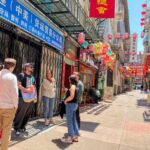
Lanterns, herbs, and fortune cookies await. This San Francisco Chinatown Walking Tour is a compact, small-group way to see why the neighborhood still feels like a living community, not a theme set. You’ll start at Old St. Mary’s Cathedral, then move through streets where decorations, pagoda-style details, and old-school traditions are part of the daily scene.
I love how the walk mixes big, recognizable landmarks with the kind of storefront you’d usually pass without a second look. The herbal pharmacy stop is especially memorable, with items like ginseng root, pearl pills, and gecko lizards discussed in cultural context. I also like that you get a real moment at the Golden Gate Fortune Cookies Co, where you watch the process and get to sample.
One thing to consider: at $59 per person for about 2 hours, it’s best if you enjoy stories, anecdotes, and a steady strolling pace over a fast, high-density facts-only format.
In This Review
- Key points that make this Chinatown walk worth your time
- Why a Chinatown walk beats a quick drive-by
- Price and timing: what $59 buys you (and what it doesn’t)
- Getting your bearings at Old St. Mary’s Cathedral
- Portsmouth Square: the neighborhood courtyard with San Francisco firsts
- Stockton Street Food Markets: seafood and specialty ingredients you can point at
- The herbal pharmacy and dried goods stop: ginseng, pearl pills, and more
- Golden Gate Fortune Cookies Co: watching the process and getting a sample
- Waverly Place and the Street of the Painted Balconies: temples and secret clubs
- Grant Avenue storefront variety: party supplies, stationery, and why it matters
- Pagoda-style architecture and what the East West Bank building reveals
- Where you finish and how to use the rest of your day
- Who should book this Chinatown walking tour
- Practical tips before you go (so the walk feels easy)
- Should you book this San Francisco Chinatown Walking Tour?
- FAQ
- Where does the tour start?
- What time does the tour begin?
- How long is the walking tour?
- How much does the tour cost?
- Is the tour offered in English?
- What is included in the price?
- Does the tour run in bad weather?
- How many people are in the group?
- Can I cancel for a full refund?
Key points that make this Chinatown walk worth your time

- Small group (max 15) keeps it chatty enough for questions without turning into a slow shuffle.
- Herbal pharmacy and dried-goods storefronts show unusual items up close, including ginseng, bird’s nests, and abalone.
- Fortune cookie factory sampling means you don’t just look at a landmark; you see how it works.
- Waverly Place + Street of the Painted Balconies brings you into a two-block alley with temples and secret clubs, plus architecture details.
- Architecture lessons and language tidbits cover pagoda-style building design and the complexity of Chinese spoken and written language.
- Stockton Street food markets give you a strong sense of what people buy day to day, from seafood to specialty ingredients.
Why a Chinatown walk beats a quick drive-by
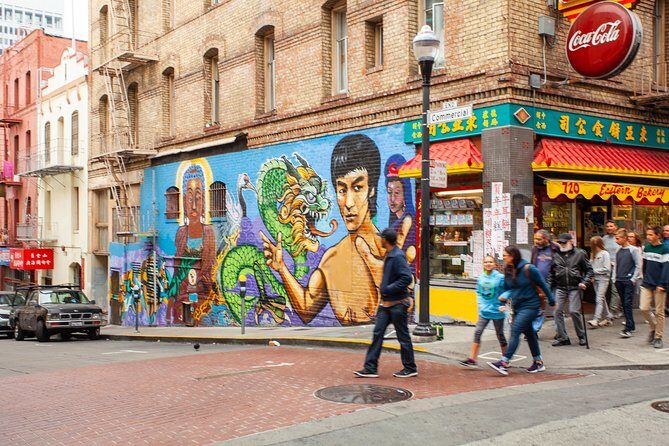
Chinatown is one of those places where the details do the talking. On this tour, you’ll see Chinese decorations on the streets, pass buildings designed like pagodas, and learn how the area keeps its character.
The format helps you absorb it. It’s a 2-hour walking circuit that starts in a clear landmark spot and ends nearby, so you can keep exploring on your own right after. And because it runs rain or shine, you’re not stuck waiting out the weather.
You can also read our reviews of more walking tours in San Francisco
Price and timing: what $59 buys you (and what it doesn’t)
At $59 per person, this isn’t the cheapest way to see Chinatown. But the ticket does cover a professional guide, and the itinerary is built around specific stops, including the fortune cookie factory and places focused on herbal and dried-goods buying.
It also stays efficient. You’re moving between stops for about 2 hours, with frequent pauses to look, listen, and ask questions. If you’re the type who wants a fast sprint through attractions only, you may feel the pace is gentler than you’d like. One piece of feedback in the mix calls out that some found the timing could feel too long for the depth they expected.
Planning-wise, it’s smart to reserve ahead since the average booking window is about 26 days. Confirmation comes within 48 hours, and the tour runs with a minimum group size of 2 people—if it doesn’t meet that, you’ll be offered alternate dates or a full refund.
Getting your bearings at Old St. Mary’s Cathedral
Your tour starts at Old Saint Mary’s Cathedral, 660 California St. This is a good anchor point because you begin with context before you wander into the street-level maze.
Right out of the gate, the guide frames what you’re about to see: Chinatown’s history and culture, and how Chinese traditions have been preserved and celebrated in San Francisco. You also get a quick orientation for what to notice as you walk—decorations, building styles, and the kinds of shops that make the neighborhood feel practical, not staged.
Tip for you: arrive a few minutes early. With a small group and a set starting time of 10:00 am, being on time means fewer delays and more time for the good parts.
Portsmouth Square: the neighborhood courtyard with San Francisco firsts
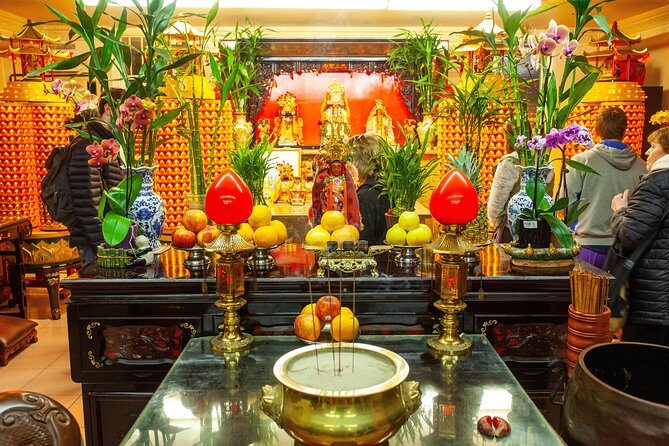
One of the earliest stops is Portsmouth Square, often called Chinatown’s outdoor living room. This is where the tour connects street life to civic milestones.
You’ll learn that Portsmouth Square is tied to San Francisco’s first American flag, its first public school, and the first cable car line. That mix matters because it shows the neighborhood wasn’t created in isolation; it became part of the city’s earliest public story.
If you like to understand a place through its public spaces, this stop does the job quickly. It also gives you a brief moment to look around before heading into the shop-and-market streets.
Stockton Street Food Markets: seafood and specialty ingredients you can point at
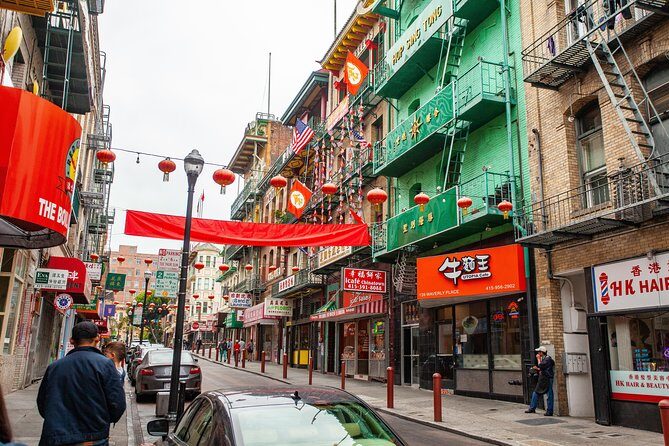
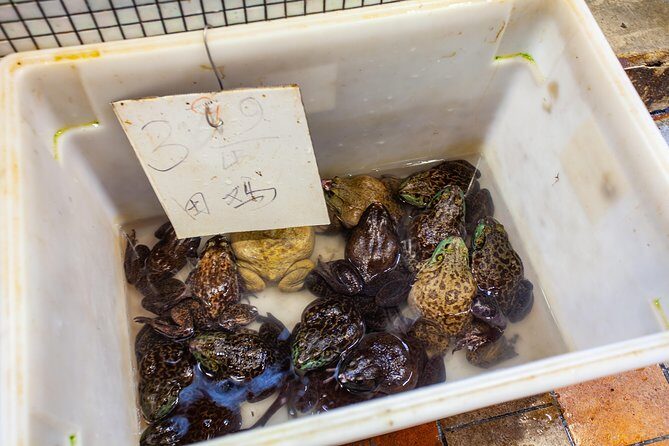
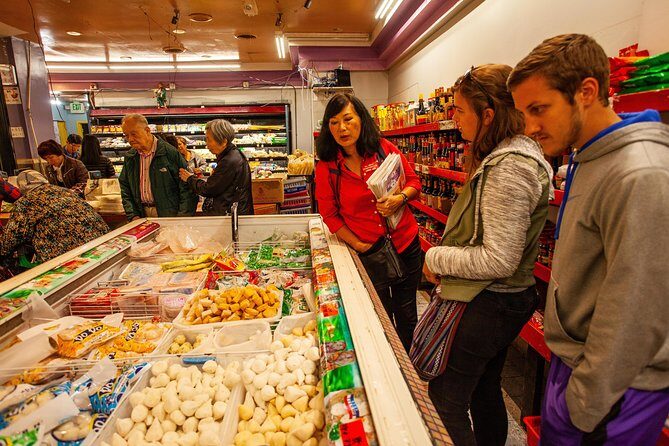
Next you’ll spend time on Stockton Street, where you can see the food world of Chinatown in action. You’re looking at the kind of market browsing locals actually do: seafood, produce, and specialty foods.
This portion works well for first-timers because it turns your senses on. You’ll be surrounded by visual signage, displays, and ingredients that look unfamiliar until you learn what they are and why people buy them.
A practical caution: markets mean crowds and uneven sidewalks. Wear shoes with grip, and don’t plan to stop dead center in the walkway for photos. Keep moving with the group so you don’t get stuck behind slower traffic.


The herbal pharmacy and dried goods stop: ginseng, pearl pills, and more
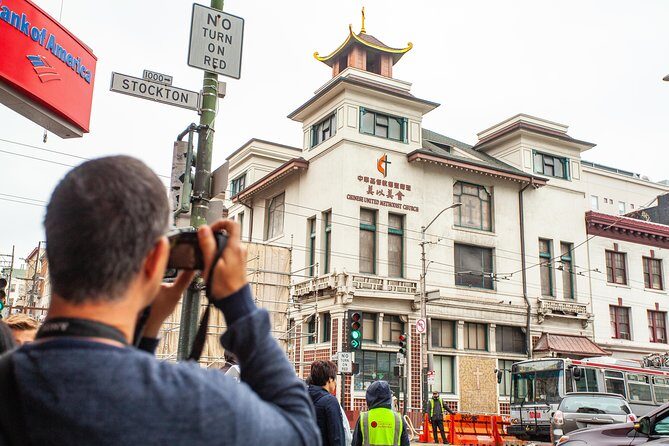
One of the most talked-about parts of this tour is the stop in a place that sells traditional remedies and herbal products. You’ll see items like ginseng root, pearl pills, and gecko lizards, and hear about medicinal uses from the guide’s cultural perspective.
Important note for you: traditional medicine is a big topic, and the guide is sharing how these items are used and understood, not making it a modern medical recommendation. Think of it as cultural literacy—what people believe, what they buy, and how those practices show up in a storefront.
Also, this stop is where curiosity meets real-life product choices. If you’re squeamish about animal-derived ingredients or you just prefer plant-based products, you may want to mentally prepare for seeing items like bird’s nests, fish bladders, sea cucumbers, and abalone later in the same area.
Golden Gate Fortune Cookies Co: watching the process and getting a sample
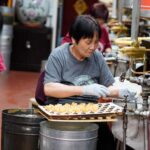
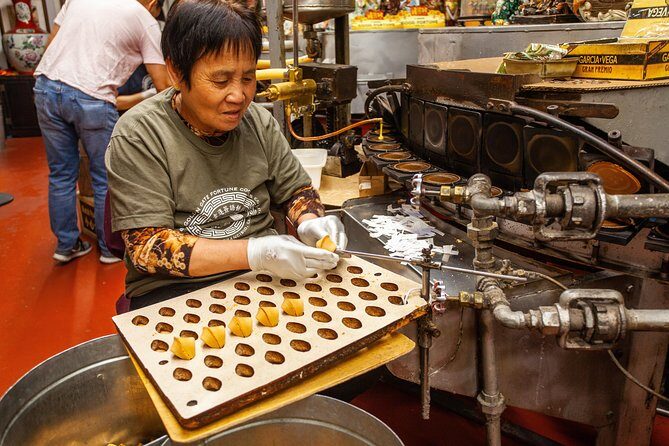
Then comes the fun, hands-on stop: Golden Gate Fortune Cookies Co. Here, you’ll sample fortune cookies and also watch how the cookies are made.
This is one of those “simple but effective” moments. It breaks up the food-market focus and gives you something tangible to take away. Even if you know fortune cookies already, seeing the process makes it more than a gimmick.
If you’re traveling with kids or you’re the kind of adult who still likes silly surprises, this is usually the easiest sell in Chinatown. It turns the neighborhood into a story you can taste.
Waverly Place and the Street of the Painted Balconies: temples and secret clubs
This is where the tour earns its reputation for steering you off the most obvious path.
You’ll visit Waverly Place, a two-block alley lined with temples and secret clubs. The guide also talks about secret institutions, and you’ll get architectural details along the way, including what makes the area feel hidden even while you’re in the middle of Chinatown activity.
Next, you’ll move to the Street of the Painted Balconies. This section centers on architecture and atmosphere—small details on façades, the sense of old-school privacy, and the way different kinds of buildings shape the feel of the street.
Time permitting, you may also visit a secluded Buddhist temple. If it’s included that day, it’s a quiet pause from shopping streets and a reminder that Chinatown is also spiritual space, not just commerce.
Practical note: alleys can be tight. Keep your group pace, watch your step, and treat any temple space with extra respect.
Grant Avenue storefront variety: party supplies, stationery, and why it matters
As you continue, you’ll spend time around Grant Avenue, where the tour slows down for smaller shopfront stories.
One stop focuses on a store that sells stationery or party goods supply items. The guide explains what the store sells and why it fits the neighborhood’s rhythm. That might sound small, but it’s exactly how you learn to read Chinatown like a local: by understanding what people buy for everyday celebrations, school needs, or family events.
This is also where you start noticing how business choices reflect culture and community needs. It’s not just what’s sold; it’s why that kind of store belongs here.
Pagoda-style architecture and what the East West Bank building reveals
Another key Grant Avenue moment is a look at the East West Bank building for pagoda-style architecture. The guide explains what was here before the bank and connects the discussion to the complexity of Chinese language, both spoken and written.
That language angle is a smart addition because it changes how you see signage. Even if you can’t read Chinese characters, you’ll start understanding that spoken and written language work differently—and that history influences both.
This portion pairs well with your earlier architecture observations. Once you learn what to look for, you can spot design features faster as you walk independently afterward.
Where you finish and how to use the rest of your day
The walk ends near your start point, around 800 Clay St, and specifically close to Grant Ave—about two blocks from Old St. Mary’s Cathedral.
Your guide may share ideas for local shops and lunch options, but at your own expense. I like ending near the starting neighborhood because it makes the tour feel like a starting chapter, not a final destination. You can return to whatever caught your attention, whether that’s markets, bakeries, or small specialty stores.
Who should book this Chinatown walking tour
This is a strong match if you want:
- A clear 2-hour introduction to Chinatown that doesn’t require museum-level stamina.
- A stop sequence that mixes history markers with storefront culture, including herbal products and food markets.
- A guide who can handle both adults and kids with the same energy.
In the feedback you were given, the most praise repeatedly points to a guide style that’s warm, funny, and good at keeping different ages interested—especially when the group includes children or young adults. Many high marks also mention Linda Lee by name, described as engaging and able to adapt her stories to the audience.
Who might skip it?
- If you want a high-speed, super-dense, purely historical lecture, the leisurely pace could feel like too much time at each stop.
- If you’re very budget-driven, you’ll probably compare it to cheaper self-guided walks. That’s fair. This tour is paying for guidance and specific access moments like the fortune cookie factory sampling.
Practical tips before you go (so the walk feels easy)
- Wear comfortable shoes. Sidewalks can be uneven and you’ll be on foot for about 2 hours.
- Expect to walk rain or shine. Dress for the weather, because the tour keeps going.
- Bring your phone for the mobile ticket. The tour uses a mobile ticket.
- If you’re using public transportation, plan an extra buffer. The meeting spot is near transit, but Chinatown navigation can still take time.
- If you have a service animal, this tour allows them.
Should you book this San Francisco Chinatown Walking Tour?
Yes, if you want a guided walk that connects street-level shopping culture with a few anchor stories, and you’ll enjoy a guide who’s part educator, part storyteller. For $59, the value is in the professional guidance, the structured stop sequence, and the “watch-and-sample” moment at the fortune cookie factory.
If you’re the type who hates any slow-down, or you expect a longer lecture packed with dense detail, consider whether another, more history-heavy Chinatown option fits you better. Otherwise, this one is a solid, practical way to see Chinatown as more than a photo stop.
FAQ
Where does the tour start?
You meet at Old Saint Mary’s Cathedral, 660 California St, San Francisco, CA 94108.
What time does the tour begin?
The start time is 10:00 am.
How long is the walking tour?
It’s about 2 hours, approximate.
How much does the tour cost?
The price is $59.00 per person.
Is the tour offered in English?
Yes, it’s offered in English.
What is included in the price?
The professional guide is included. You’ll also sample fortune cookies at the fortune cookie factory as part of the experience.
Does the tour run in bad weather?
Yes, tours operate rain or shine, so dress appropriately.
How many people are in the group?
The tour has a maximum of 15 travelers.
Can I cancel for a full refund?
Yes. You can cancel up to 24 hours in advance for a full refund. If you cancel less than 24 hours before the experience starts, the amount paid is not refunded.