REVIEW · SAN FRANCISCO
Castro District LGBTQ+ History Tour
Book on Viator →Operated by The Native Experience · Bookable on Viator
San Francisco tells queer history in blocks. This 90-minute Castro District LGBTQ+ History Tour threads major landmarks, memorials, and community milestones into one easy walking story from start to finish.
I especially like how it stays focused on meaning, not just dates, and how you pass real places tied to people you’ll recognize. Another plus: it’s offered in English with a max group size of 30, so you’re not lost in a crowd.
I love the stop-by-stop mix of symbols and streets: the original rainbow flag, a piece of the HIV/AIDS Memorial Quilt, and Jose Sarria items. You’ll also notice the tour’s delivery is built for clarity—guides such as Miguel and Eric are praised for a steady pace and for answering questions in a straightforward way.
One possible drawback: with only about 1 hour 30 minutes, you’ll cover key corners and stories, not every chapter. If you want a long, museum-style deep study, you may wish you had more time after the tour ends.
In This Review
- Key highlights you’ll get on this walk
- Why the Castro District Tour Works in 90 Minutes
- Starting at 3:00 pm: Harvey Milk Plaza sets the tone
- Stop 1: The original rainbow flag, quilt fragment, and Jose Sarria items
- Harvey Milk Plaza: the place where community energy met political danger
- The iconic gay bar that kept its windows open
- The first store in San Francisco to hire openly gay workers
- A palatial-style theater from the 1920s and why gathering spaces matter
- Price and logistics: what $39 gets you (and why that’s fair)
- How guides like Miguel and Eric shape the experience
- Practical details that help you plan your afternoon
- Who this tour suits best (and who might want something else)
- Should you book the Castro District LGBTQ+ History Tour?
- FAQ
- How long is the Castro District LGBTQ+ History Tour?
- What is the tour price?
- Where does the tour start and end?
- What time does the tour begin?
- Is the tour offered in English?
- Do I get a mobile ticket?
- Can I bring a service animal?
- What is the cancellation policy?
Key highlights you’ll get on this walk
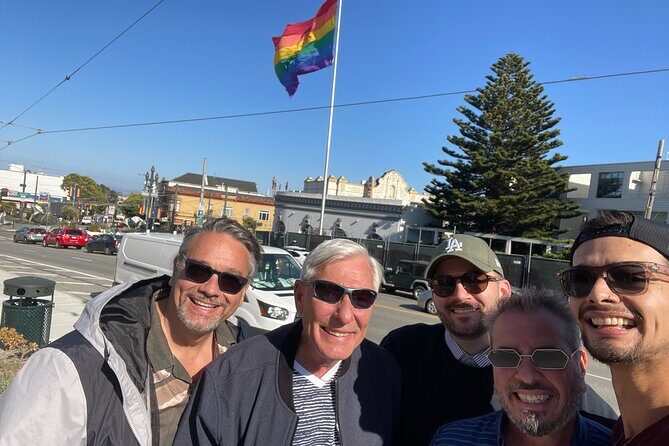
- Original rainbow flag and AIDS Memorial Quilt connection right at the start
- Harvey Milk Plaza as a center point for community and political change
- A classic gay bar with over 50 years in business that kept its windows
- A first-in-San-Francisco hiring milestone for openly gay workers
- A 1920s palatial-style theater setting that shows how gathering spaces matter
Why the Castro District Tour Works in 90 Minutes
This tour works because it treats the Castro like a map of turning points. Instead of one generic “history lecture,” you move from site to site and each stop adds a new layer: symbols, activism, public visibility, community life, and the spaces where people gathered.
For you, that means you leave with more than trivia. You get a sense of why certain buildings and street corners became important—and why the neighborhood’s LGBTQ+ story isn’t separate from San Francisco’s broader story. It’s also a good length for busy trip days: you can slot it into an afternoon and still have time to explore on your own after.
You can also read our reviews of more historical tours in San Francisco


Starting at 3:00 pm: Harvey Milk Plaza sets the tone
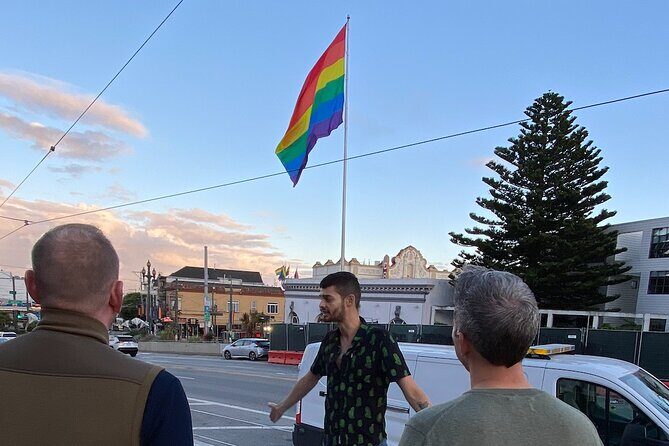
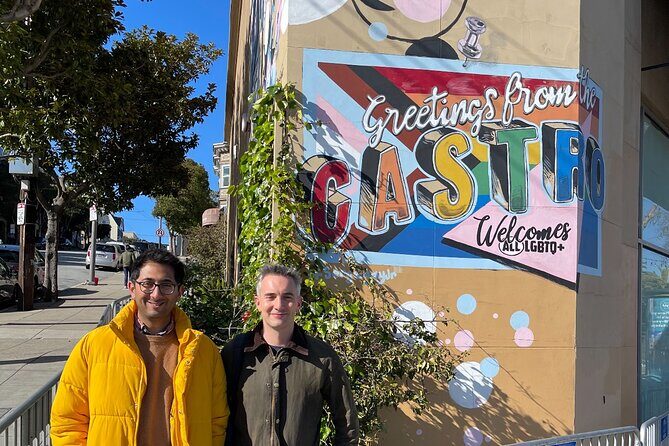
You begin at Harvey Milk Plaza (start time 3:00 pm), and that choice is smart. The plaza is described as a gathering place of the gay community that helped set the stage for the White Night Riots, so you’re thrown into the heart of civic action right away.
One practical benefit: you’ll also get a quick window to orient yourself. The tour is designed to take you through the Castro’s most meaningful blocks with an end point at 18th Street & Castro Street, so you can finish and continue walking in the same area without needing to relocate.
Stop 1: The original rainbow flag, quilt fragment, and Jose Sarria items
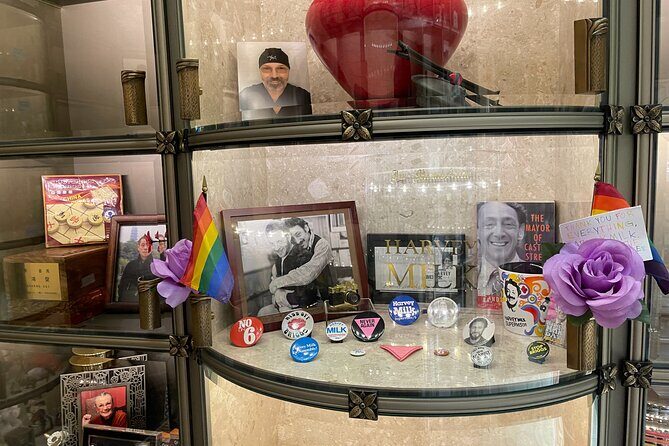
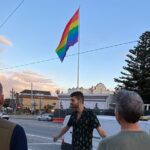
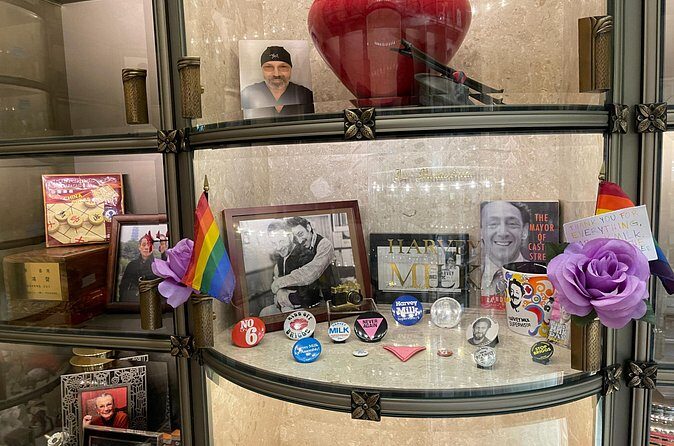
Early on, you reach a stop tied to three powerful anchors of queer history. You’ll see the home to the original rainbow flag, a piece of the HIV/AIDS Memorial Quilt, and Jose Sarria’s personal items.
Here’s what that trio does for you as a visitor. The rainbow flag works as a visual shorthand for pride and identity. The quilt fragment adds the mourning and survival part of the AIDS era—remembrance made physical. And Jose Sarria’s personal items ground the story in a real person tied to visibility and activism in San Francisco.
This stop is also one of the reasons the tour feels more authentic than “point-and-snap” sightseeing. It nudges you to look at what’s preserved, not just what’s gone.
Harvey Milk Plaza: the place where community energy met political danger
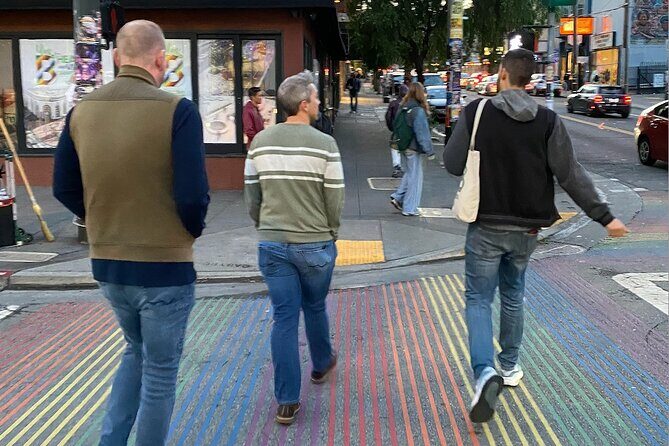
At Harvey Milk Plaza, the story goes beyond symbolism. You’re told about how the gathering of the gay community helped lead to the White Night Riots.
It’s a heavy topic, but the way a walking tour handles it can be more approachable than a purely indoor talk. You get the context while standing in the neighborhood where public visibility mattered. That helps you understand why stakes were high: activism wasn’t abstract, and safety wasn’t guaranteed.
A good consideration for you: if you’re sensitive to tense political history, you might want to be mentally prepared for the emotional weight that comes with the White Night context. The walk makes room for it, but it won’t soften it.
The iconic gay bar that kept its windows open
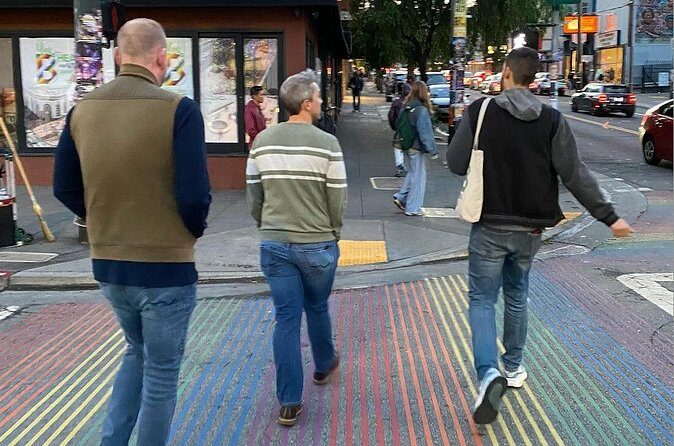
One stop centers on an iconic gay bar that’s been operating for over 50 years. The detail that stands out is that it did not block out its windows when it originally opened, which goes against what was customary for gay bars at the time.
For you, this is more than an anecdote about architecture or old business habits. It’s a story about visibility and risk. Keeping windows unblocked reads like a quiet refusal to hide, especially in eras when many LGBTQ+ spaces had to conceal themselves to survive.
If you like learning how everyday choices reflect bigger movements, you’ll probably enjoy this portion a lot. It’s the kind of detail that makes the neighborhood feel lived-in, not staged for visitors.
You can also read our reviews of more tours and experiences in San Francisco
The first store in San Francisco to hire openly gay workers
Next, you hear about a store that was the first in San Francisco to hire openly gay workers. That kind of milestone matters because it’s not just about who shows up in public spaces—it’s about who gets paid, who gets treated fairly, and who gets a chance to work without hiding.
You’ll get a clearer view of LGBTQ+ progress when you connect the dots between community life and employment. Pride isn’t only a parade-day event; it also shows up in whether people can work without fear and whether employers change their practices.
A palatial-style theater from the 1920s and why gathering spaces matter
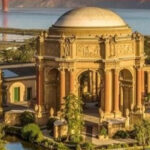
The later stop highlights one of the last palatial-style theaters from the 1920s. Even without a long lecture, the point comes through: spaces built for performance and public gatherings often become places where communities form, meet, and share culture.
For you, this is a useful lens. When you look at architecture and venue types, you start noticing how the right room can make activism easier—because people need someplace to gather, and they need places that feel inviting enough to return to.
Also, it helps to remember that queer history doesn’t only happen in political offices. It happens in theaters, bars, and ordinary streets where community bonds get stronger.
Price and logistics: what $39 gets you (and why that’s fair)
At $39.00 per person for about 1 hour 30 minutes, this tour is priced like a focused neighborhood guided experience. The value comes from the combination: multiple meaningful stops, a dedicated guide, and a tight time window that doesn’t require you to “work the schedule” yourself.
You’re also not paying for a huge bus ride or a day-long itinerary. You’re paying for a local walk with context, aimed at turning what you see into something you understand. When you consider how many key LGBTQ+ story points sit close together in the Castro, that’s a strong use of money for the time.
There’s one more practical value: the group size is capped at 30, which generally makes it easier to hear your guide and ask questions without fighting for attention.
How guides like Miguel and Eric shape the experience
The tour’s reviews point to a consistent theme: guides keep it moving at a good pace and explain clearly. Names that come up include Miguel and Eric, both praised for being engaging and for handling questions directly.
What you should care about as a visitor is the way the guide’s style affects your attention. When a tour runs smoothly—without awkward pauses or confusing tangents—you spend less time checking the clock and more time absorbing what you’re seeing. The goal is for you to walk away with a coherent story you can repeat later.
If you’re someone who likes asking follow-ups, this is likely your kind of format. The pacing is described as steady, and the tour flow seems built to keep questions from derailing the walk.
Practical details that help you plan your afternoon
This experience is offered in English, and you’ll receive a mobile ticket. It’s set up for people to join without complicated effort, and it notes that service animals are allowed.
It’s also near public transportation, which matters in San Francisco. You don’t want your day to depend on one parking spot or one ride app moment. Starting at Harvey Milk Plaza and ending at 18th Street & Castro Street also makes it easy to continue exploring right after.
And if your schedule might shift, the tour offers free cancellation up to 24 hours in advance for a full refund. That’s the kind of flexibility that can save your plans when weather or timing changes.
Who this tour suits best (and who might want something else)
This is a strong choice if you want:
- A first time overview of the Castro’s LGBTQ+ milestones
- A walk that connects symbols (like the rainbow flag) to real places
- A neighborhood tour format where the guide helps you interpret what you’re seeing
It may be less ideal if you’re looking for a long, museum-level program. The timing is about 90 minutes, so you’ll get important anchors, but you won’t get every detail or every related street story.
Also, because the topics touch politics and the AIDS era, it’s best if you’re ready for thoughtful, sometimes intense history. If you want only light sightseeing, you might prefer a different kind of Castro walk.
Should you book the Castro District LGBTQ+ History Tour?
I think you should book it if you want a meaningful introduction to the Castro that doesn’t waste your time. The original rainbow flag, the HIV/AIDS Memorial Quilt piece, and the connection to Jose Sarria, plus the stories about Harvey Milk Plaza and milestones in visibility and hiring, make the tour feel purposeful.
One good way to decide: if you’re the type of traveler who reads a plaque and then wonders what it meant in its moment, this tour is built for you. You’ll leave with context you can carry as you continue walking.
If your schedule is tight, that’s another reason to choose it. For $39 and about 1.5 hours, you can cover major stops in a small-group format and still have time for your own Castro wandering afterward.
FAQ
How long is the Castro District LGBTQ+ History Tour?
The tour lasts about 1 hour 30 minutes.
What is the tour price?
It costs $39.00 per person.
Where does the tour start and end?
It starts at Harvey Milk Plaza, San Francisco, CA 94114, and ends at 18th Street & Castro Street, San Francisco, CA 94114.
What time does the tour begin?
The start time listed is 3:00 pm.
Is the tour offered in English?
Yes, it’s offered in English.
Do I get a mobile ticket?
Yes, the tour includes a mobile ticket.
Can I bring a service animal?
Service animals are allowed.
What is the cancellation policy?
Free cancellation is available up to 24 hours in advance for a full refund. If you cancel less than 24 hours before the experience starts, the amount you paid is not refunded.